

How to plan a trip on a budget 2026 starts with one shift in thinking: your destination choice is the single biggest lever you have. A week in Bangkok on $35 a day costs the same as two nights in Paris. Everything downstream — flights, accommodation, daily spending — becomes dramatically easier once you’ve chosen a destination where the cost of living works in your favor. This guide walks through the complete planning framework I use for every trip, from choosing where to go to what to do once you’re there.
Step 1: Choose a Destination Where the Math Works
Before looking at flights or hotels, I ask one question: what’s the daily cost of living at this destination? A beautiful, well-located city where accommodation runs $15-20 a night and a full meal costs $3-5 gives you much more room to travel well than an expensive city where you’re fighting for every dollar.
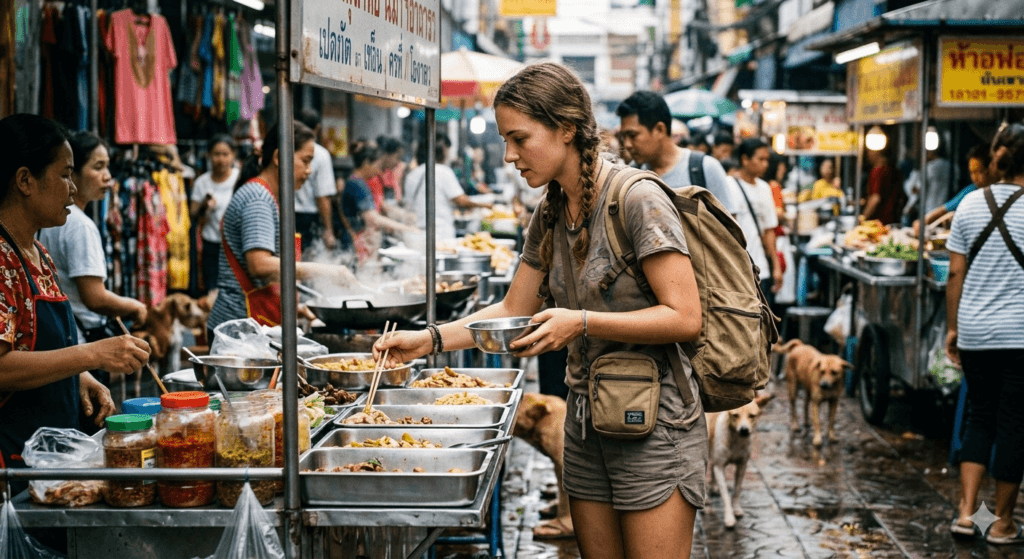
The destinations that consistently deliver the best budget-to-experience ratio:
- Southeast Asia (Thailand, Vietnam, Cambodia, Indonesia) — $25-45/day covers comfortable private accommodation, good food, and local transport
- Eastern Europe and the Balkans (Albania, North Macedonia, Bosnia, Serbia) — $40-60/day in cities with genuine cultural depth and almost no tourist markup
- Central America (Guatemala, Nicaragua, Honduras) — $35-55/day, undervisited, genuinely beautiful
- Georgia and Central Asia — $40-65/day, extraordinary value, increasingly connected
If your heart is set on an expensive destination, the answer isn’t to abandon it — it’s to apply the strategies below more aggressively, or to offset it with cheaper surrounding destinations.
For destination inspiration built around this exact principle, the 6 Europe Travel Dupes Under $50/Day guide covers the European version of this framework in detail.
Step 2: Set a Realistic Total Budget
Most budget travel guides tell you to set a budget without telling you what realistic looks like. Here are actual 2026 daily ranges by tier, verified across multiple destinations:
| Tier | Daily Budget | What It Covers |
|---|---|---|
| Shoestring | $25-40/day | Dorm or cheap private room, street food, local transport |
| Budget | $40-65/day | Private guesthouse or apartment, local restaurants, activities |
| Mid-range | $65-120/day | Boutique hotel, mix of dining, some tours |
| Comfort | $120-200/day | Quality hotel, restaurant dining, private transport |
The biggest budget killers most people underestimate:
- Airport transfers (can add $20-50 per arrival/departure)
- SIM cards and data plans ($5-20 per country)
- Checked baggage fees on budget airlines ($50-100 each way)
- Entrance fees to major sites ($10-30 per attraction, daily)
- Travel insurance ($1-4/day — non-negotiable for international travel)
Build these into your daily figure rather than treating them as extras. The destination average daily cost for accommodation (30-40%), flights amortized over the trip (20-30%), and food (15-25%) account for roughly 65-95% of total spend. Everything else fills the remaining gap.
Step 3: Find the Cheapest Flights
Flights are usually the highest single cost on any international trip — and the most variable. The same route can cost $200 or $800 depending purely on when you book and how flexible you are.
The rules I follow:
- Book transatlantic routes 2-4 months out. Earlier rarely helps; later almost always costs more.
- Book short-haul and domestic 3-6 weeks out. Sweet spot between availability and price.
- Use Google Flights’ price graph to visualize fare movement over a 6-month window before setting an alert.
- Fly into secondary airports when the ground transfer cost is less than the fare saving. London Stansted vs Heathrow, Paris Beauvais vs CDG.
- Consider open-jaw routing — fly into one city, out of another. Often the same price as a return but eliminates backtracking.
For the full flight-saving toolkit including fare alerts, hidden-city ticketing rules, and the myth of incognito mode, see the Travel Hacks for Saving on Flights guide.
For timing flights around seasonal demand, the Finding Flights Off Peak Season guide covers the regional breakdown in detail.
Step 4: Find Affordable Accommodation
Accommodation is the second-biggest cost lever after destination choice. The strategies that actually work:
Book directly with the property whenever possible. Hotels and guesthouses avoid paying a 15-25% OTA commission on direct bookings, and many pass some of that saving back as a discount, upgrade, or added perk. The rate parity rules that once prevented this have been weakened or banned in key markets — ask directly. Full breakdown in the How to Book Hotels Without Paying Booking Fees guide.
Stay in residential neighborhoods, not tourist zones. Two metro stops from the center typically cuts accommodation costs 30-50%. The Where to Stay in Major Cities on a Budget guide covers the specific neighborhoods for 12 major cities with transit links and nightly rate comparisons.
Stay longer. Weekly and monthly rates are dramatically cheaper per night than nightly rates. A furnished studio in Chiang Mai running $80/night as a hotel can drop to $15-20/night on a monthly booking. This is the core financial argument for slow travel, covered in detail in the Slow Travel Guide for Southeast Asia.
Step 5: Plan Your Daily Spending
Once flights and accommodation are locked, the daily budget has three main components:
Food: The single most variable cost based on behavior, not destination. Eating where locals eat — street stalls, market lunch counters, neighborhood restaurants — consistently costs 60-80% less than eating in tourist-facing restaurants even in the same city. The Food Tour Alternatives for Local Eating Travel guide covers exactly how to find these places using native-script search and Google Maps review language ratios.
Transport: Local public transit almost always beats rideshare and taxis for daily movement. For getting from airports to city centers specifically, the savings between a $5 metro ride and a $40 taxi are real — always research the cheapest airport transfer option before you land, not after.
Activities: Many of the best travel experiences are free or nearly free — walking a city, visiting public parks, attending local markets, exploring neighborhoods. For the paid activities worth doing, buying entrance tickets online in advance is consistently cheaper than at the door.
Step 6: Time Your Trip Around Shoulder Season
The same trip, the same hotel, the same flights — 30-50% cheaper by shifting the dates by 4-6 weeks. Shoulder season (just before or after peak season) delivers nearly identical conditions at significantly lower prices and with meaningfully fewer crowds.
Key shoulder windows:
- Southern Europe: September-October and late April-May
- Southeast Asia: April-May and October-November
- Central America: November and April-May
- Caribbean: May and November
The full regional breakdown with specific dates is in the Best Time to Visit Popular Destinations guide.
Step 7: Sort Out Travel Insurance
This is the one cost I never skip and never minimize. A $15,000 emergency medical evacuation on a $40/day trip ends the trip and the budget simultaneously. Standalone policies from digital-first providers like SafetyWing or Heymondo run $1-4/day for basic coverage — the cheapest insurance against the worst outcomes.
The full comparison of providers, tiers, and what to look for is in the Travel Insurance Comparison for Budget Trips guide.
Step 8: Handle Visas and Entry Documents Early
Entry requirements are the part of trip planning that most people leave too late. Apply for visas as early as possible — processing backlogs for popular destinations can extend to weeks or months during peak travel periods.
Key resources:
- Visa-Free Travel Countries for Long-Term Stays — the complete list of destinations accessible without a visa application, organized by passport
- 183-Day Residency Rule Guide — the tax mechanics of staying long-term across multiple countries
The Complete Pre-Departure Checklist
Before any international trip:
- Destination daily cost confirmed against your budget
- Flights booked with correct lead time for the route type
- Accommodation booked directly where possible, in the right neighborhood
- Travel insurance policy active before departure
- Visa or eTA/ESTA confirmed for every country on the itinerary
- Local transit research done (airport transfer, city transit options)
- Checked baggage minimized or eliminated — carry-on only where possible
- Food strategy: know how to find local spots before you land, not after
Essential Internal Resources
Every article below goes deeper on one specific piece of this framework:
- 6 Europe Travel Dupes Under $50/Day — destination selection by value
- Finding Flights Off Peak Season — flight timing by region
- Travel Hacks for Saving on Flights — the full flight-saving toolkit
- Where to Stay in Major Cities on a Budget — neighborhood-by-neighborhood accommodation guide
- How to Book Hotels Without Paying Booking Fees — direct booking tactics
- Food Tour Alternatives for Local Eating Travel — eating well without tourist pricing
- Best Time to Visit Popular Destinations — shoulder season timing
- Travel Insurance Comparison for Budget Trips — coverage by trip type
- Visa-Free Travel Countries for Long-Term Stays — entry without a visa application
- Day Trip Alternatives to Popular Tourist Sites — avoiding crowds and tourist pricing
- Balkan Budget Rotation Guide — applying this framework to a specific region
- Slow Travel Guide for Southeast Asia — the extended-stay version of this framework
Master Your Destination: City Budget Guides
These city guides apply this exact framework to 24 specific destinations — with neighborhood recommendations, transit breakdowns, and daily cost benchmarks:
European Budget Hubs
Madrid · Paris · Rome · Dublin · Lisbon · Budapest · Prague · Vienna · Istanbul · Amsterdam · Milan · Barcelona · Berlin
Asia-Pacific and Americas Budget Hubs
Bangkok · Tokyo · Sydney · Toronto · Singapore · Mexico City · Seoul · Buenos Aires · Cape Town · Chicago · New York
How to Plan a Trip on a Budget 2026: FAQ
What is the cheapest way to plan a trip?
Choose a destination where the cost of living is low, travel during shoulder season, fly carry-on only on a budget carrier booked 6-10 weeks out, stay in a residential neighborhood rather than a tourist zone, and book accommodation directly rather than through an OTA. Applied together, these five moves consistently deliver the biggest total savings.
How much money do I need to plan a budget trip?
A realistic budget trip in Southeast Asia or Eastern Europe runs $40-65/day covering accommodation, food, and local transport. Add flights (amortized across the trip), travel insurance ($1-4/day), and activity costs. A 10-day trip to Thailand all-in, including flights from the US, typically runs $1,200-1,800 for a solo traveler doing it properly.
How far in advance should I start planning a trip on a budget?
For international trips: start 3-4 months out. Book flights first (the most price-sensitive element), then accommodation. Visas should be applied for as early as possible — some countries have 4-8 week processing times. For shoulder-season trips to popular destinations, hotels in specific neighborhoods can sell out 2-3 months ahead.
Is slow travel actually cheaper than regular travel?
Yes, significantly. Every time you move between destinations you pay transfer costs, one-night accommodation premiums, and airport meals. A two-week stay in one city unlocks weekly rental rates that can cut accommodation costs by 50-70% compared to nightly hotel pricing. The Slow Travel Guide for Southeast Asia covers the full financial breakdown of this approach.
Want More Free Travel Resources?
Grab the free 2026 Travel Dupes Cheat Sheet for budget-friendly destination ideas to start applying this framework immediately. Subscribe at the top of parandjahtravels.com to download it instantly.
Conclusion
Knowing how to plan a trip on a budget isn’t about cutting corners — it’s about making smart choices at the beginning that compound across the whole trip. Choose a destination where the math works, book flights at the right window, stay two stops from the tourist zone, eat where locals eat, and protect the trip with insurance. The rest is just execution. Every guide linked above goes deeper on one specific piece — use them as the working documents for planning your actual trip, not just as reading material.

Marsha Rowe is the Founder and Travel Strategist at Parandjah Travels. She uncovers high-intent travel intelligence, specializing in slow travel frameworks and sports event logistics.