
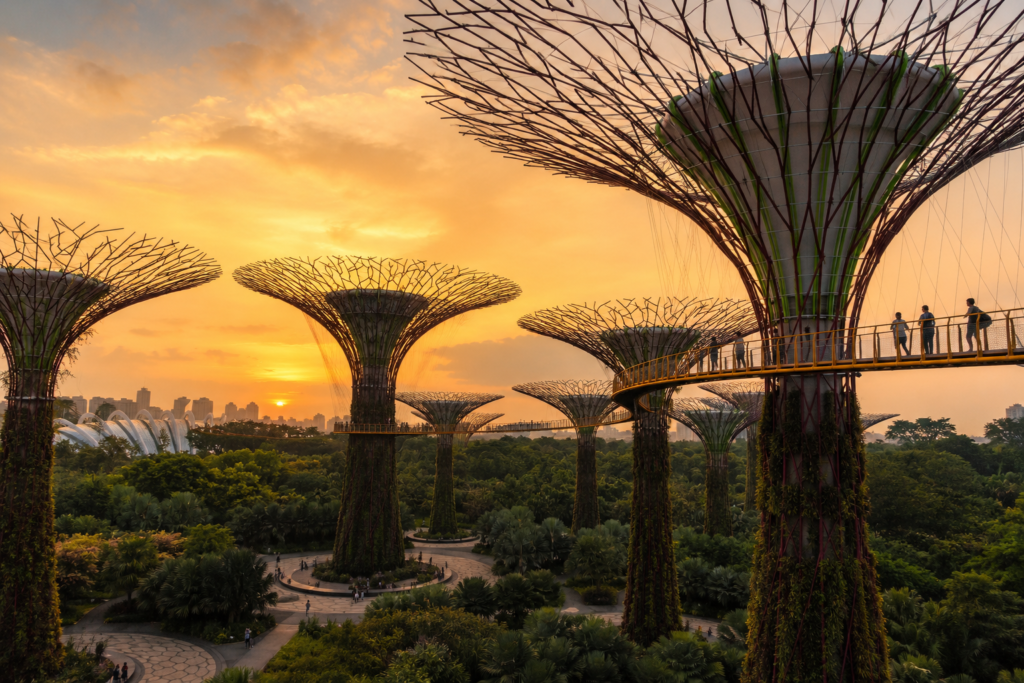
Singapore on a budget works best when you plan food, accommodation and paid attractions separately. Hawker centres offer a way to explore local cooking, while free garden walks can balance days with expensive tickets. This guide compares neighborhood choices, corrects the Tourist Pass calculation and gives a worked budget in Singapore dollars (S$).
| Base | Useful for | Check before booking |
|---|---|---|
| Little India | Markets and food around Tekka Centre | Actual station walk, room type and noise |
| Chinatown | Food centres and downtown plans | Facilities, taxes and exact station exit |
| Bugis / Bencoolen | Central connections | Door-to-door routes and total room price |
| Marina Bay / Orchard | Specific waterfront or shopping plans | Compare full quotes with other connected bases |
Why Hawker Centres Are the Move, Not the Compromise
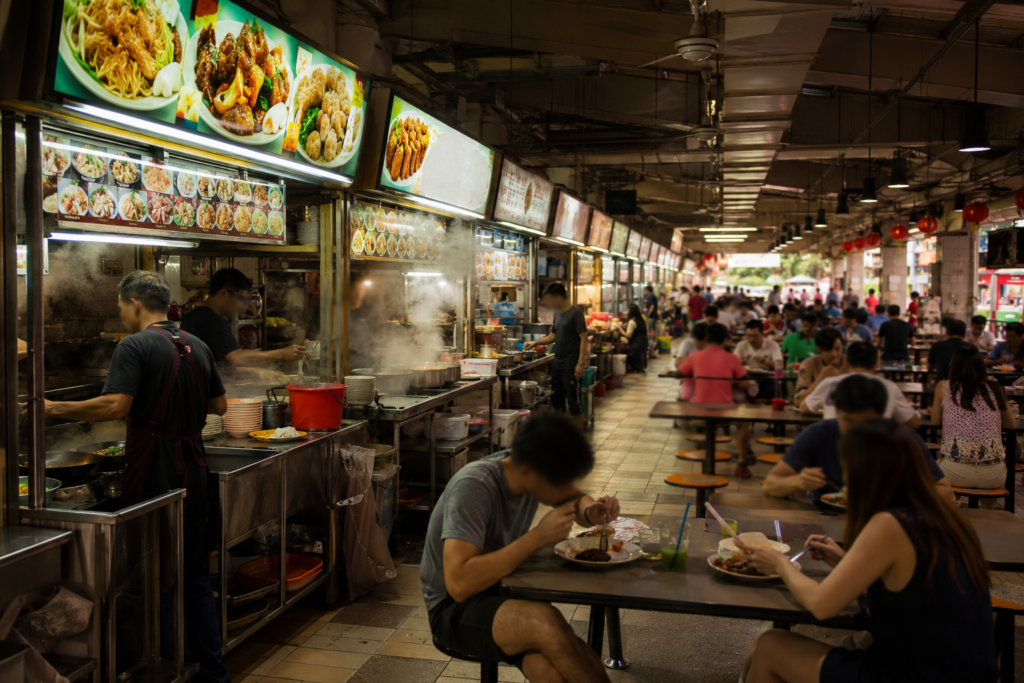
Hawker centres let you compare many stalls and cuisines in one place. Check the posted price, portion size, drinks and any extras instead of assuming every meal fits a fixed S$3–6 range. Tekka Centre in Little India is a market and food destination; it is distinct from Tekka Place, the shopping development linked in some guides. Chinatown Complex offers another food-centre stop. Check individual stall hours and choose dishes that suit your dietary needs rather than treating recognition or a neighborhood as a guarantee of every meal’s quality.
Little India vs. Chinatown: The Real Comparison
Little India and Chinatown both give you food options and MRT connections, but neither guarantees the cheapest room. Compare a dorm bed with another dorm bed, or a private room with another private room, including taxes and any shared-bathroom tradeoff. Little India suits time around its markets and cultural streets; Chinatown can suit downtown walks. Bugis and Bencoolen are also worth comparing by exact address. Map your route to the station and allow for heat and rain.
What a Realistic Singapore Trip Actually Costs in 2026
Write your budget in S$ to avoid confusing Singapore dollars with US dollars. Use current room quotes, meal allowances and the specific attraction tickets you want. Separate airport journeys, mobile data and shopping from an ordinary city day. Comparing Singapore with another city only helps if accommodation type, meals and inclusions are equivalent; broad claims of guaranteed savings over Tokyo or London do not replace your own quotes.
Free Attractions That Do the Heavy Lifting
Gardens by the Bay has free outdoor areas, including the Heritage Gardens, but conservatories, elevated attractions and some experiences are separately ticketed. The National Orchid Garden is at Singapore Botanic Gardens, not Gardens by the Bay. Jewel’s Rain Vortex can be viewed from public areas during operating hours; Canopy Park and related attractions have separate admission. Check current closures and waterfall hours, and include the journey to Jewel if it is not part of your airport day.
Getting Around: The Singapore Tourist Pass
The standard Singapore Tourist Pass currently lists S$17 for one day, S$24 for two days and S$29 for three days, covering MRT, LRT and basic bus services subject to its terms. It is not automatically worthwhile after three or four rides. Compare the price with your actual pay-as-you-go journeys and check validity, exclusions and sales locations; do not assume every MRT station sells it. For illustration, four journeys priced at S$2 each total S$8, below the S$17 one-day pass. S$2 is a comparison assumption, not a universal fare.
Worked Singapore Day Budget
An illustrative solo day is S$65 accommodation + S$6 breakfast + S$8 lunch + S$10 dinner + S$8 pay-as-you-go transport allowance + S$20 admissions = S$117. These are planning allowances, not live room quotes or a fixed transit fare. If you instead choose the cited S$17 one-day Tourist Pass, this example totals S$126. Check whether your planned rides justify the extra S$9; add flights, airport-specific costs, mobile data and shopping separately.
Essential Internal Resources
Before you finalize your Singapore trip, these guides cover the planning layers around it:
- For timing flights around seasonal pricing: Finding Flights Off Peak Season
- For protecting your trip financially: Travel Insurance Comparison for Budget Trips
- For eating well without overspending: How to Save Money on Food While Traveling
- For the full trip-planning framework: How to Plan a Trip on a Budget
More Asia-Pacific Budget Guides
Combining Singapore with a longer trip through the region? These guides cover costs and planning for other Asia-Pacific cities:
Tokyo · Seoul · Bangkok · Sydney
Frequently Asked Questions
Is eating at hawker centres actually safe and good, or just cheap?
Hawker centres are a way to explore local cooking. Check the individual stall, dietary information and posted prices; quality and suitability vary.
Little India or Chinatown for a budget stay?
Compare equivalent rooms for your dates and the station walk. Little India suits market visits; Chinatown can suit downtown walks. Neither guarantees the lowest rate.
Is the Singapore Tourist Pass worth it?
Compare your actual journeys with the current pass price. The standard one-day pass is S$17, so three or four rides do not automatically make it cheaper.
What’s genuinely free to do in Singapore?
Some outdoor Gardens by the Bay areas and public waterfront walks are free. Separate those from paid conservatories, elevated attractions and Jewel’s Canopy Park; check operating hours and closures.
Want More Free Travel Resources?
Find more travel planning resources at Par & Jah Travels.
Conclusion
Choose a connected room, compare hawker-stall menus and decide which paid attractions matter to you. Check the Tourist Pass against the journeys you will actually take, and keep Singapore dollars explicit throughout the budget. Free outdoor visits can balance the cost without assuming a pass or neighborhood always delivers a saving.

Marsha Rowe is the Founder and Travel Strategist at Parandjah Travels. She uncovers high-intent travel intelligence, specializing in slow travel frameworks and sports event logistics.