
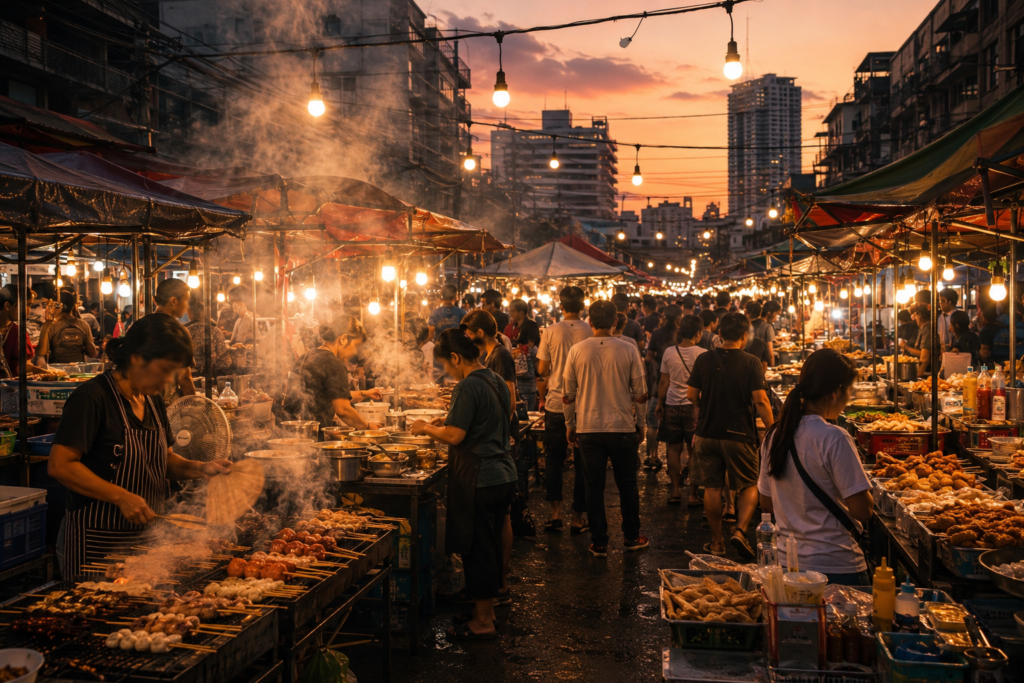
Bangkok on a budget comes down to a single rule nearly every experienced traveler agrees on: stay within walking distance of a BTS Skytrain or MRT station, full stop. Bangkok’s traffic is notorious enough that a cheaper hotel off the rail network can cost you more in time, stress, and Grab fares than it saves on the room. I’ve laid out why that rule matters more than neighborhood choice itself, the one famous exception that breaks it, and what a realistic 2026 Bangkok trip costs.
| Neighborhood | Nightly Rate Range | On Rail Network? | Vibe |
|---|---|---|---|
| On Nut | $15-35 | Yes, direct BTS | Best value, local, authentic |
| Ari | $22-45 | Yes, BTS (20-30 min from center) | Quiet, hipster, expat-favorite |
| Siam / Silom | $20-50 | Yes, BTS/MRT | Central, shopping, street food |
| Khao San Road | $8-20 | No, 30-min walk to nearest MRT | Cheapest, backpacker hub |
Why Rail Access Beats Everything Else on This List
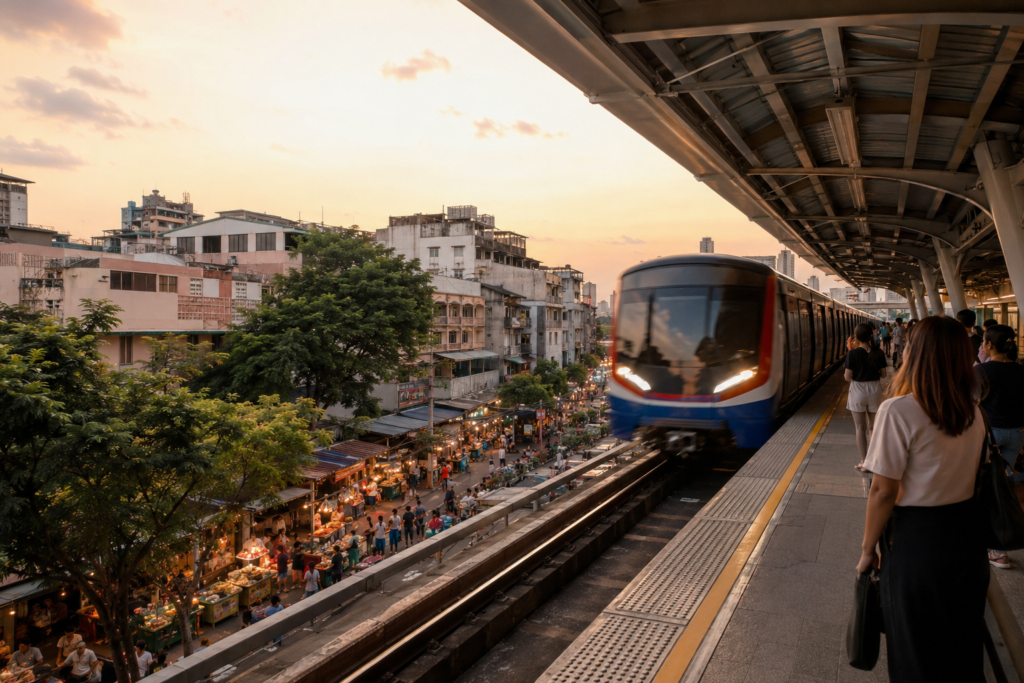
Bangkok is genuinely massive, and its traffic can turn a short-looking distance on a map into an hour-long crawl. Every serious guide to this city converges on the same advice: proximity to a BTS or MRT station matters more than almost any other factor in choosing where to stay, because it’s what actually determines whether you spend your trip seeing the city or sitting in it. On Nut consistently comes up as the strongest value pick specifically because it delivers direct BTS access at rates noticeably below Sukhumvit, with genuine local street food and a much lower price tag for an equally practical location.
The Famous Exception: Khao San Road
Khao San Road is Bangkok’s legendary backpacker hub, the cheapest beds in the city, hostels and guesthouses running $8-20 a night, loud, social, and packed with budget travelers from around the world. It’s also the one genuinely notable exception to the rail-access rule: the nearest MRT station, Sam Yot, sits roughly a 30-minute walk away. That’s a real tradeoff worth going in with eyes open about: Khao San Road wins hard on price and backpacker atmosphere, but it means leaning on Grab rides or longer walks for anything requiring the rail network, which is most of the city’s major attractions and malls.
Ari and Siam/Silom: The Balanced Alternatives
Ari offers a quieter, more residential alternative that still sits directly on the BTS line, roughly 20-30 minutes north of the city center, with independent coffee shops and neighborhood Thai restaurants where you’re often the only foreigner around, genuinely local rather than built for tourists. Siam and Silom both deliver a good selection of hostels and budget hotels within walking distance of BTS and MRT stations, with Silom adding Lumphini Park, Bangkok’s largest green space, and Chinatown, technically its own area but easily reached from Silom, delivering some of the best affordable street food in the country.
What a Realistic Bangkok Trip Actually Costs in 2026
Bangkok hotel rates genuinely span from $8 a night in a Khao San dorm to $600+ at a riverside five-star, with a comfortable mid-range sweet spot around $60-90 a night. If you want to map your own trip’s real cost against your actual dates, budgettripai.com is a free calculator built for exactly that, worth running your Bangkok numbers through before booking. Booking accommodation 6-8 weeks ahead of your trip can cut mid-range rates by up to 20% compared to booking last-minute, a meaningful gap worth planning around if your dates are flexible.
Getting Around Without the Traffic
The BTS Skytrain and MRT subway are Bangkok’s real budget lifeline, fast, air-conditioned, and immune to the street-level traffic that can turn a taxi ride into an ordeal. Grab, the regional rideshare app, remains affordable and useful specifically for the last-mile connection between a rail station and your final destination, rather than as a primary way to cross the city. Whatever neighborhood you choose, mapping your accommodation against the nearest BTS or MRT stop before booking is the single most valuable five minutes you’ll spend planning this trip.
Essential Internal Resources
Before you finalize your Bangkok trip, these guides cover the planning layers around it:
- For timing flights around seasonal pricing: Finding Flights Off Peak Season
- For protecting your trip financially: Travel Insurance Comparison for Budget Trips
- For eating well without overspending: How to Save Money on Food While Traveling
- For the full trip-planning framework: How to Plan a Trip on a Budget
More Asia-Pacific Budget Guides
Combining Bangkok with a longer trip through the region? These guides cover costs and planning for other Asia-Pacific cities:
Tokyo · Seoul · Singapore · Sydney
Frequently Asked Questions
What’s the most important rule for choosing where to stay in Bangkok?
Stay within walking distance of a BTS Skytrain or MRT station. Bangkok’s traffic is notorious enough that this matters more than almost any other factor in your accommodation choice.
Is Khao San Road worth staying at despite being far from the MRT?
It depends on your priorities. It offers the cheapest beds in the city and legendary backpacker atmosphere, but the nearest MRT station is roughly a 30-minute walk, meaning more reliance on Grab rides for rail-dependent attractions.
What’s the best-value neighborhood that follows the rail-access rule?
On Nut, offering direct BTS access at rates noticeably below Sukhumvit, with genuine local street food and easy connections to the rest of the city.
How much does a realistic Bangkok trip cost in 2026?
Hotels range from $8 a night in a Khao San dorm to $600+ at a luxury riverside property, with a comfortable mid-range sweet spot around $60-90 a night.
Want More Free Travel Resources?
Grab the free 2026 Travel Dupes Cheat Sheet for workarounds on booking early and picking the right BTS-connected neighborhood to stretch your Bangkok budget further. Subscribe at the top of parandjahtravels.com to download it instantly.
Conclusion
Bangkok on a budget really comes down to one decision that outweighs almost everything else: pick a neighborhood on the rail network, and the rest of the city opens up affordably and efficiently. On Nut delivers the best all-around value, Ari suits a quieter pace, and Khao San Road remains a legitimate choice if backpacker energy and rock-bottom prices matter more to you than easy rail access. Whichever you choose, book a few weeks ahead, lean on the BTS and MRT over taxis, and Bangkok delivers exceptional value without the traffic headache that catches less-prepared visitors.

Marsha Rowe is the Founder and Travel Strategist at Parandjah Travels. She uncovers high-intent travel intelligence, specializing in slow travel frameworks and sports event logistics.