
To save money on food while traveling, compare the meals you would actually buy and plan a few lower-cost alternatives before you get hungry. A supermarket breakfast, a good-value lunch special and one restaurant meal you really want can make a workable day. There is no universal tourist markup or guaranteed saving from walking two streets away. Prices depend on the city, neighborhood, dish, portion and what is included.
| Option | What to compare | What can erase the saving |
|---|---|---|
| Lunch special | Included dishes and drinks against dinner | Extras, service charges or an unwanted set menu |
| Simple grocery breakfast | Groceries against breakfast already included | Waste, missing refrigeration or a higher room cost |
| Market meal | Portion, price and preparation | A tourist-priced stall or unsuitable food handling |
| Surprise Bag | Price, contents information and pickup time | Extra transport, unsuitable ingredients or missed collection |
| Kitchen accommodation | Room premium against realistic meals prepared | Cleaning fees, groceries left over or cooking every meal unwillingly |
Start with current local menus
Find two or three realistic places close to your accommodation or sightseeing route. Use menus from the restaurant or recent menu photos, and check whether they apply to your travel dates and service time. Record prices in the local currency before converting them to your trip budget. A number from an old review is a lead to verify, not a current quote.
Compare a similar meal: main course or set menu, drinks, portion size and any required charges. Read whether taxes and service are included and check local tipping practice. Lunch specials may cost less than an evening meal, but they can be limited to weekdays or exclude drinks. A smaller or simpler meal is a useful choice only if it suits your appetite and plans.
Restaurants near attractions can be expensive, but distance alone does not predict price or quality. Compare nearby side streets when convenient. An English menu, plastic chairs or a handwritten board does not establish value. Use actual menu prices and specific recent feedback instead.
Build a daily food budget you can adjust
Choose a realistic mix of breakfast, lunch and dinner, then add snacks, water, drinks and required charges. Include arrival and departure days: airport meals and late check-ins can change what is practical. Set aside enough for a fallback meal when a planned place is closed or full.
Here is a hypothetical USD example for one traveler, not a destination price estimate. Restaurant breakfast at $12, lunch at $15, dinner at $20 and drinks or snacks at $8 total $55 a day. Replacing breakfast with $5 of groceries and choosing a $10 lunch special makes the same day $43, a $12 saving. Over five comparable days that is $60. Different portions, fees or drinks will change the result.
Avoid adding the same saving twice. “Eat locally,” “avoid tourist restaurants” and “choose street food” may describe one meal rather than three separate discounts. Check your actual spending after the first day and adjust the plan. For Jamaica, use the Jamaica budget guide as a planning starting point and verify current menu prices for your chosen area.
Choose lunch specials and simple breakfasts
If a lunch special offers dishes you want at a lower complete price, consider making lunch your main restaurant meal. Check the service hours and whether each person must order the set menu. A light dinner can then fit your day, but there is no fixed daily saving across Spain, France, Italy or Latin America.
Before paying for groceries, check whether breakfast is already included in your room rate. For a simple breakfast without a kitchen, choose foods you can safely store and eat. Do not assume a minibar is suitable for keeping perishables cold. Factor in a kettle, utensils, fridge access and any accommodation rules. Buy manageable portions so unused food does not eat up the saving.
Calculate whether a kitchen pays for itself
Kitchen access can help on either a short or long trip; there is no five-night minimum. Compare the accommodation premium with the meals you will realistically prepare. Include mandatory cleaning fees and whether the property provides usable cooking equipment. Cooking can be a preference as well as a price decision.
For example, suppose a kitchen-equipped room costs a hypothetical $20 more per night and you expect to save $10 on breakfast and $12 on dinner. That leaves only $2 per night before grocery waste or extra fees. If you cook only breakfast, the room costs $10 more overall per night. A higher room rate is not automatically recovered by cheaper food.
Use Too Good To Go as an optional extra
Too Good To Go lists surplus food from participating shops and restaurants as Surprise Bags. Reserve and pay through the app, then collect during the specified pickup window. Check the destination map and each listing rather than assuming availability in every city.
The contents and quantity depend on what is available. A bag might contain bakery items rather than a balanced meal, and the collection time may conflict with sightseeing. Add the cost of getting there before deciding it saves money. Keep a backup meal plan. The user terms place responsibility for ingredient and allergen information with the store; confirm suitability directly if you have dietary requirements and do not assume a surprise selection is safe for an allergy.
For other useful travel tools, see the budget travel apps guide.
Markets and street food: assess more than the queue
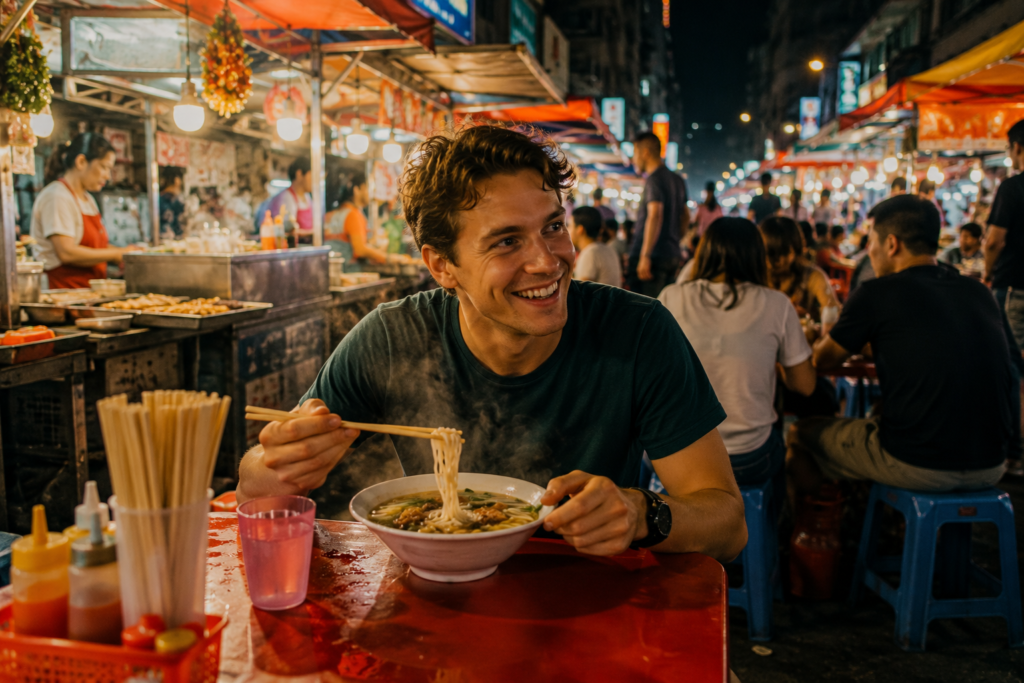
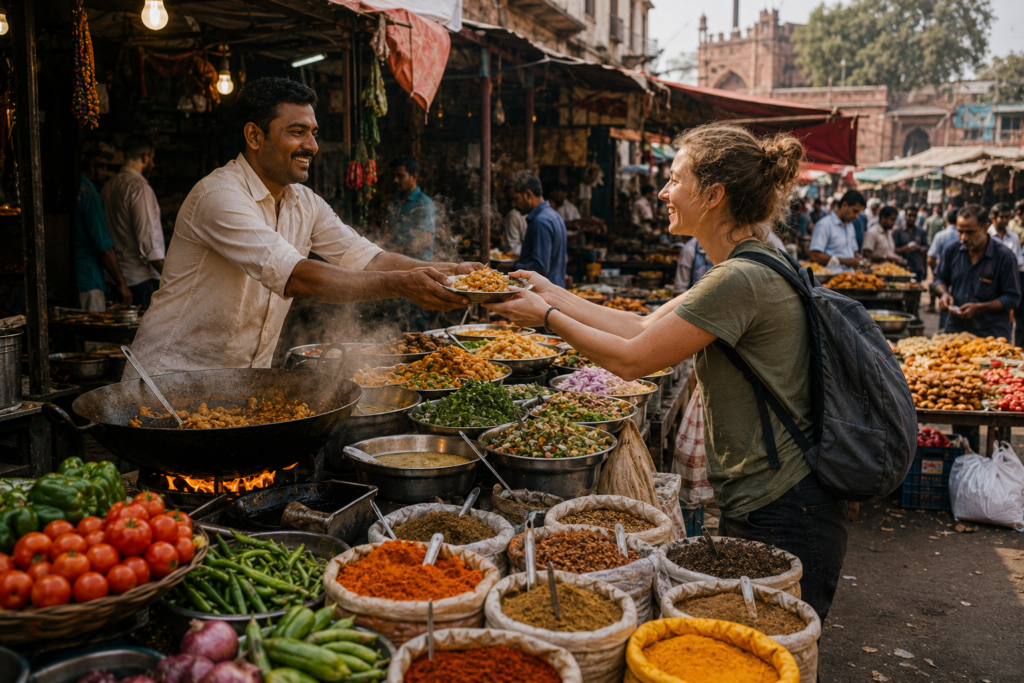
Markets may offer affordable prepared meals, but some are premium food destinations. Read the menu and confirm the price before ordering. Ask about the dish and ingredients when unfamiliar. A popular stall can be worth investigating, but customer turnover does not prove safe preparation or water quality.
The CDC food and drink guidance advises avoiding food from street vendors. If you choose it, follow food-safety precautions, including selecting food cooked and served steaming hot. The CDC Yellow Book notes that street-vendor food increases illness risk. Where hygiene or water safety is uncertain, avoid raw or undercooked foods, unpasteurized dairy and unsafe water or ice. Use factory-sealed bottled water or appropriately disinfected water when necessary.
Cheap food is useful only when it suits your dietary needs and can be stored safely. Choose options that fit your accommodation and the time until you eat them. Do not plan to carry perishable food around all day without suitable cooling.
Find places without relying on stereotypes
- Ask a host or hotel staff: “Where nearby serves this dish within my price range?” Check their suggestion against a current menu.
- Search for a dish or neighborhood; use local-language terms only when you know what they mean. Search language does not guarantee local prices.
- Read recent reviews for specific information on portions, charges and service. Review language does not prove whether diners are residents.
- Check opening hours, reservation needs and payment methods before making a special journey.
- Have a second nearby option. Going across a city for a small saving can add transport costs and consume your afternoon.
Keep drinks and travel-day costs visible
Coffee, snacks, alcohol and bottled water can accumulate even when main meals stay within budget. Compare the prices you will actually pay rather than assuming local beer or house wine is always cheap. Refill a reusable bottle only where the water is safe. Do not assume every restaurant offers free tap water.
For travel days, plan food around airport security, carrier rules and destination entry restrictions. Where permitted, a suitable snack bought ahead may help avoid an unplanned expensive purchase. Convenience can still be worth paying for when it keeps your itinerary manageable.
Frequently Asked Questions
What is the single most effective way to save money on food while traveling?
Compare nearby menus and decide which meals matter most to you. A simple breakfast or lunch special may reduce spending, but there is no fixed saving from walking a particular distance from an attraction. Include drinks, taxes and service charges.
Is street food safe to eat while traveling?
Street food is not automatically safe. CDC advises avoiding street vendors; if you choose to eat from one, select fully cooked food served steaming hot and avoid raw items or unsafe water. A queue does not establish food safety.
How do I find where locals eat in an unfamiliar city?
Ask a host or hotel staff for a specific dish, neighborhood and price range. Compare current menus, opening hours and recent reviews. Review language, chair style and menu length do not prove quality, price or who eats there.
Does Too Good To Go work outside Europe?
Yes, it operates in markets outside Europe, including the United States. Availability depends on participating businesses and your destination. Check the app map, collection time and listing before reserving; do not depend on a Surprise Bag for a guaranteed meal.
Make room for the meals you value
Set your budget around current menus, mix simple meals with the experiences you want, and review spending as you go. The useful saving is the difference between two complete meals you would be happy to buy—not a promised percentage for an entire region.

Marsha Rowe is the Founder and Travel Strategist at Parandjah Travels. She uncovers high-intent travel intelligence, specializing in slow travel frameworks and sports event logistics.