
Best Destinations for Slow Travel in Europe: Stay Longer, Spend Less

Slow travel Europe feature image — relaxed traveler at a sunlit European café table with laptop coffee and notebook on a quiet residential street representing the unhurried rhythm and deep contentment of slow travel

Slow travel Europe means choosing fewer destinations and staying longer in each — and it consistently delivers a better experience at lower total cost than the classic multi-city sprint. The economics are straightforward: a traveler who visits seven European cities in two weeks pays for seven sets of inter-city transport and spends more nights in expensive city-center hotels trying to see everything in 48 hours. A traveler who spends two weeks in two or three places pays for one or two transport legs, finds weekly accommodation rates significantly below nightly rates, and actually experiences the cities rather than photographing them. This guide covers the best European destinations for slow travel in 2026, what each costs at a genuine slow travel pace, and the visa considerations that matter for longer stays.

DestinationDaily Budget (slow travel)Best ForSlow Travel Sweet Spot
Lisbon, Portugal€55-90/dayDigital nomads, culture, food2-4 weeks
Budapest, Hungary€35-60/dayBudget travelers, thermal baths, nightlife2-3 weeks
Tbilisi, Georgia€25-45/dayBudget maximum, wine culture, hiking1-3 months
Plovdiv, Bulgaria€20-35/dayOff-the-beaten-path, art scene, Old Town2-6 weeks
Seville, Spain€55-85/dayFood, flamenco, architecture2-3 weeks
Bologna, Italy€60-90/dayFood capital of Italy, university city2-3 weeks
Valletta, Malta€50-80/dayEnglish-speaking, Mediterranean, compact2-4 weeks
Kotor, Montenegro€35-60/dayAdriatic coast, medieval old town2-4 weeks
Chiang Mai alternative: Plovdiv€20-35/dayClosest European equivalent to Chiang Mai slow travel pricing1-3 months

Why Slow Travel Costs Less Than It Seems

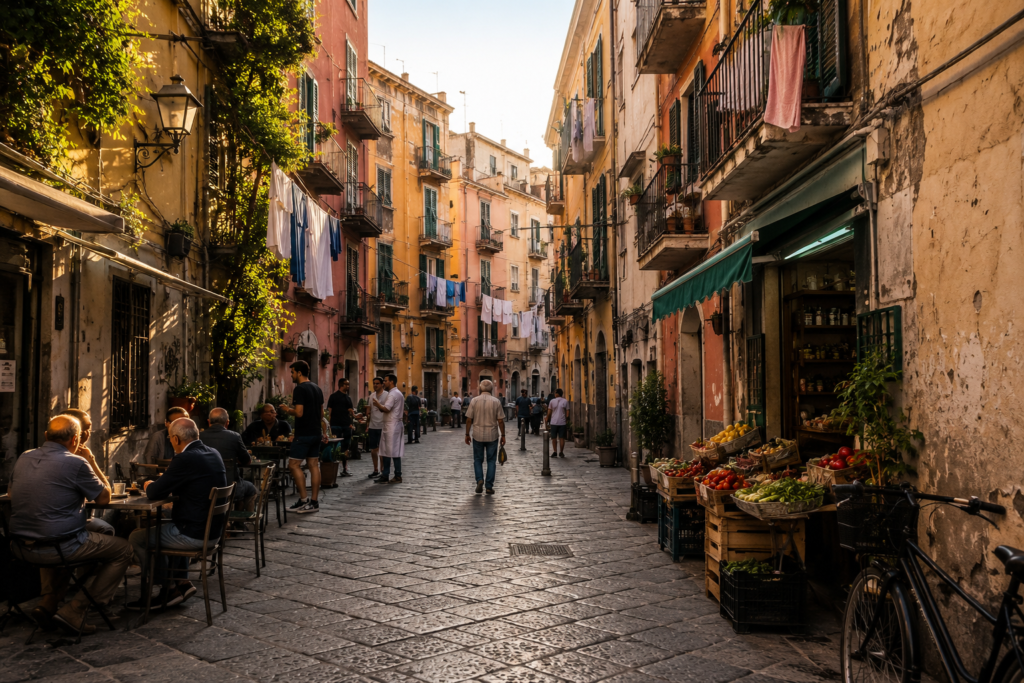
Slow travel Europe destinations local neighborhood — charming European cobblestone alley with colorful apartments, laundry between windows, local café with residents, small grocery shop and bicycle representing authentic slow travel neighborhood life
Slow travel transforms a series of tourist attractions into a genuine experience of how somewhere actually feels to live in — the neighborhood bakery knows your order, you have a preferred café, and the tourist-facing premium that applies to every transaction in the first few days gradually disappears.

The counterintuitive truth about slow travel is that spending more time somewhere costs less per day than moving quickly. Three mechanisms drive this:

Weekly and monthly accommodation rates: Hotels and serviced apartments offer significant discounts for stays of 7+ nights. Airbnb weekly rates typically run 20-30% below the equivalent nightly rate. Monthly rates run 30-50% below. A €90/night apartment in Lisbon that costs €630 for a week becomes €1,800-2,200 for a month — roughly €60-73/night.

Eliminated inter-city transport: A two-week itinerary visiting seven European cities pays for six inter-city transport legs — flights, trains, or buses that each cost €30-150 and consume half a travel day. Slow travel eliminates most of these costs, redirecting that budget into accommodation, food, and local experiences.

Local rather than tourist pricing: Travelers staying for weeks rather than days find the local supermarket, discover the neighborhood restaurant where residents eat, and stop paying tourist premiums for everything. The difference between tourist-facing and local pricing in European cities runs 30-60% across food, coffee, and daily services.

The Schengen Zone consideration: Non-EU visitors using tourist visas can stay a maximum of 90 days in the Schengen Zone within any 180-day period. For slow travel stays longer than 90 days in Schengen countries, a digital nomad visa or long-stay visa is required. Portugal, Spain, Germany, and several other EU countries offer dedicated digital nomad or freelancer visa programs for this purpose. Georgia (Tbilisi) and Montenegro (Kotor) are non-Schengen, which makes them particularly useful for longer slow travel stays.

Lisbon, Portugal: The Slow Travel Standard-Bearer

Lisbon has become the European slow travel benchmark — and for good reason. It combines genuine affordability by Western European standards, excellent English fluency, a walkable historic center, outstanding food culture, and the warmest average winter temperatures of any Western European capital.

What makes Lisbon work for slow travel:

  • Weekly Airbnb rates in Mouraria, Intendente, or Mouraria neighborhoods: €500-800/week for a private apartment
  • Excellent café culture with co-working-friendly spaces throughout the city
  • Day trips within 30-60 minutes: Sintra, Cascais, Setúbal Natural Park, Évora
  • Portugal’s D8 Digital Nomad Visa for stays beyond 90 days
  • Affordable food — a pastel de nata costs €0.80-1.20 at a local bakery, a lunch menu (soup, main, drink) costs €8-12

Daily budget at slow travel pace: €55-90/day including weekly-rate accommodation, local eating, transport, and activities. Monthly total: €1,650-2,700 — significantly below what two weeks of fast European travel would cost.

Best neighborhoods for slow travel: Mouraria (most local, best value), Intendente (up-and-coming, excellent food), Estrela (quieter, residential), Mouraria and Alfama (historic but increasingly touristy — best for shorter stays within a longer Lisbon trip).

For the full Lisbon accommodation breakdown, the Lisbon Budget Guide covers neighborhoods, transport, and daily costs.

Budapest, Hungary: Best Value in Central Europe

Budapest offers the strongest combination of beauty, culture, and affordability in Central Europe — and at slow travel pace, the daily costs are genuinely low by European standards.

What makes Budapest work for slow travel:

  • Weekly apartment rates in districts VII, VIII, and IX (Jewish Quarter and surrounding areas): €350-550/week
  • Thermal bath culture — day passes at Széchenyi or Gellért cost €20-28 and represent several hours of the best leisure infrastructure in Europe
  • Excellent food scene at local prices — a lángos (fried dough) costs €1.50-2.50, a sit-down lunch at a local étterem costs €6-10
  • Hungary is EU but not Eurozone — Hungarian Forint means prices feel lower than the exchange rate suggests
  • Strong digital nomad infrastructure with extensive co-working spaces

Daily budget at slow travel pace: €35-60/day. Monthly total: €1,050-1,800.

The ruin bar culture — Budapest’s famous converted building bars in the Jewish Quarter — is one of the most distinctive social environments in Europe and particularly well-suited to the slow traveler who has time to explore it properly rather than rushing through in one evening.

For the full Budapest breakdown, the Budapest Budget Guide covers accommodation zones, transport, and daily costs.

Tbilisi, Georgia: Europe’s Most Affordable Slow Travel Base

Georgia (the country) sits at the intersection of Europe and Asia and represents arguably the best value slow travel base accessible from Europe. Tbilisi is increasingly well-known among digital nomads and slow travelers for a specific combination: very low cost, distinctive culture, excellent wine (Georgia is the birthplace of wine), and 365-day visa-free access for most nationalities with no time limit.

What makes Tbilisi exceptional for slow travel:

  • Georgia offers visa-free entry for up to 365 days for citizens of most countries including US, UK, EU, Canada, Australia — no digital nomad visa required
  • Weekly apartment rates in Vera, Vake, or Saburtalo neighborhoods: €200-350/week
  • Food costs among the lowest in the region — a khinkali (dumpling) costs $0.30-0.50 each, a full restaurant meal costs $5-10
  • Outstanding day trip infrastructure: Kazbegi mountains (2 hours), Mtskheta UNESCO town (30 minutes), wine region Kakheti (1.5 hours)
  • Strong and growing digital nomad community

Daily budget at slow travel pace: €25-45/day. Monthly total: €750-1,350 — genuinely exceptional value for a culturally rich, visually stunning city.

Non-Schengen advantage: For slow travelers who have used their 90-day Schengen allowance, Georgia is a logical next base — far enough from the typical tourist trail to feel genuinely different, close enough to re-enter Schengen from when ready.

Plovdiv, Bulgaria: The Hidden Slow Travel Gem

Plovdiv is one of Europe’s most underrated cities — a UNESCO World Heritage old town, a thriving contemporary art scene, Roman amphitheater ruins in the city center, and daily costs that rival Southeast Asia rather than Western Europe.

What makes Plovdiv work:

  • Weekly apartment rates in Kapana (the Creative District) or the Old Town: €200-350/week
  • Bulgaria uses the Lev, not the Euro — prices feel low even by Balkan standards
  • Kapana district’s café and art scene is genuinely distinctive — not a tourist replica of somewhere else
  • Day trips: Bachkovo Monastery (30 minutes), Rhodope Mountains (45 minutes), Sofia (2 hours by train)
  • Bulgaria is EU/Schengen — the 90-day limit applies

Daily budget at slow travel pace: €20-35/day. Monthly total: €600-1,050.

Seville, Spain: Slow Travel in Southern Europe

Seville is the argument for slow travel in a destination most travelers rush through in 48 hours. The city’s food culture — tapas bars where drinks come with free food, mercados with local pricing, restaurant lunches at menú del día prices — is genuinely one of Europe’s best. The architecture, the flamenco culture, the pace of life, and the heat of the summers all reward staying rather than rushing.

What makes Seville work for slow travel:

  • Weekly apartment rates in Triana, Macarena, or San Bernardo neighborhoods: €500-750/week
  • Tapas culture — drinks at many traditional bars come with a free tapa; a full evening of eating while drinking costs €15-25 per person
  • Menú del día lunch: three courses with wine for €10-14
  • Day trips: Córdoba (45 minutes by AVE), Cádiz (1.5 hours), Doñana National Park (1 hour)
  • Spain’s Digital Nomad Visa for stays beyond 90 days

Daily budget at slow travel pace: €55-85/day. Monthly total: €1,650-2,550.

Summer note: Seville in July and August regularly exceeds 40°C — slow travel here makes most sense in spring (March-May) and autumn (September-November).

For the full Madrid slow travel framework as an alternative Spanish base, the Madrid Budget Guide covers the accommodation zones.

The Slow Travel Visa Framework for Europe

Schengen Zone (90/180 rule): Non-EU citizens can spend a maximum of 90 days in the Schengen Area within any rolling 180-day period. This applies across all Schengen countries combined — not 90 days per country.

Non-Schengen European slow travel destinations: Georgia (365 days visa-free for most nationalities), Montenegro (90 days), Albania (90 days), North Macedonia (90 days), Serbia (90 days), Kosovo (90 days). These destinations allow you to extend your European slow travel experience beyond the Schengen 90-day limit.

Digital nomad visas for extended Schengen stays: Portugal (D8 visa), Spain (Digital Nomad Visa), Germany (Freelancer Visa), Croatia (Digital Nomad Visa), Greece (Digital Nomad Visa), and several others offer formal long-stay options for remote workers. Each has income requirements and application processes — research your specific nationality and situation.

For the full visa-free and long-stay destination framework, the Visa-Free Travel Countries for Long-Term Stays and 183-Day Residency Rule guides cover the complete picture.

The Slow Travel Mindset: What Changes When You Stay Longer

You stop being a tourist and start being a temporary resident. The neighborhood bakery knows your order. You have a preferred café. You know which market day has the best produce. These aren’t small things — they’re what transforms travel from a series of attractions into a genuine experience of how people live somewhere.

Your daily cost drops significantly. The tourist-facing premium that applies to every transaction in the first few days of a visit — the airport café, the hotel breakfast, the restaurant next to the main attraction — gradually disappears as you find where residents actually go.

You slow down the planning. The anxiety of fitting everything in that characterizes fast travel simply doesn’t exist when you have three weeks rather than three days. You can miss a museum this week and go next week. You can visit the recommended restaurant when there’s a table rather than rushing to queue. This is the thing slow travelers describe most consistently as the fundamental shift.

For the full slow travel framework applied to Southeast Asia — the region where slow travel costs least — the Slow Travel Guide for Southeast Asia covers the complete approach.

Essential Internal Resources

These guides on Parandjah Travels cover the related planning layers:

Master Your Destination: City Budget Guides

These city guides cover accommodation zones, transport, and daily costs for slow travel planning across 24 major European and global destinations:

European Slow Travel Hubs

Lisbon · Budapest · Prague · Vienna · Madrid · Barcelona · Rome · Paris · Berlin · Amsterdam · Istanbul · Dublin · Milan

Global Slow Travel Hubs

Bangkok · Tokyo · Singapore · Seoul · Buenos Aires · Cape Town · Mexico City · Sydney · Toronto · New York · Chicago

Frequently Asked Questions

What is slow travel in Europe?

Slow travel in Europe means staying in fewer destinations for longer periods — typically 2-4 weeks in each city rather than 2-4 days. It delivers lower daily costs through weekly accommodation rates, eliminated inter-city transport, and local rather than tourist pricing. It also delivers a more genuine experience of each destination.

Which European country is cheapest for slow travel?

Bulgaria (particularly Plovdiv) and Georgia (Tbilisi, technically South Caucasus but accessible from Europe) offer the lowest daily costs — €20-45/day at a comfortable slow travel pace. Hungary (Budapest) is the most affordable EU Schengen destination at €35-60/day. Portugal (Lisbon) offers the best value among Western European capitals at €55-90/day.

How long can I stay in Europe as a non-EU citizen?

Non-EU citizens can stay in the Schengen Area for a maximum of 90 days within any 180-day rolling period. Non-Schengen European destinations — Georgia, Montenegro, Albania, Serbia — offer separate allowances, often up to 90 days each, allowing extended European slow travel beyond the Schengen limit. Several EU countries also offer digital nomad visas for longer stays.

Is slow travel actually cheaper than fast travel?

Yes — significantly. The main savings come from weekly/monthly accommodation discounts (20-50% below nightly rates), eliminated inter-city transport costs, and local rather than tourist-area pricing that develops naturally after the first week in any destination. A two-week slow travel stay in Lisbon typically costs 20-35% less than a two-week fast-travel itinerary covering six European cities.

Want More Free Travel Resources?

Grab the free 2026 Travel Dupes Cheat Sheet for budget-friendly slow travel destination ideas across Europe and beyond. Subscribe at the top of parandjahtravels.com to download it instantly.

Conclusion

Slow travel Europe works financially because weekly accommodation rates, eliminated inter-city transport, and local pricing all reduce the daily cost below what fast travel produces. It works experientially because staying longer transforms a series of tourist attractions into a genuine experience of how somewhere actually feels to live in. The best European slow travel destinations in 2026 are Lisbon for Western European quality at reasonable cost, Budapest for Central European value, Tbilisi for maximum affordability and visa flexibility, Plovdiv for the hidden gem experience, and Seville for the best food and lifestyle balance in Southern Europe. Start with two weeks somewhere that genuinely interests you — and see what happens when you stop rushing.

Leave a Comment

Your email address will not be published. Required fields are marked *