
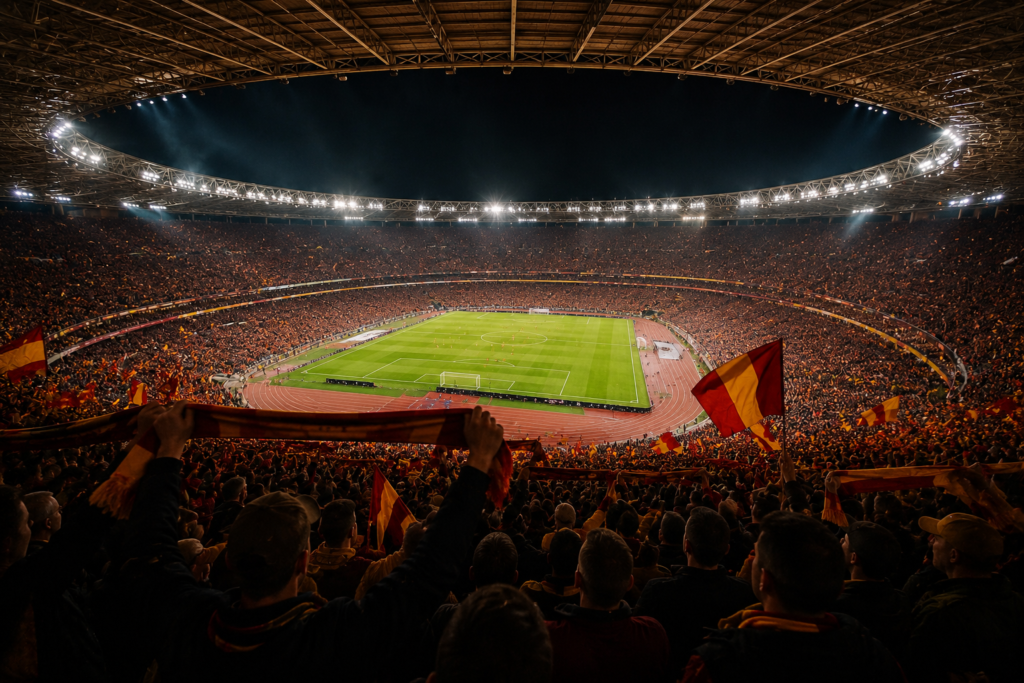
Knowing how to plan a sports trip means building the trip around the event first — not booking flights before you’ve confirmed tickets, and not choosing a hotel before you understand game-day transportation reality. The hotel that sold out in two days, the flight that doubled in price overnight, and the stadium that turned out to be 45 minutes from downtown in event-day traffic are all avoidable problems. They happen when enthusiasm gets ahead of sequence. Build the trip around the event first, then lock in the logistics that matter most. This guide covers that sequence from start to finish.
| Planning Stage | What to Do | When |
|---|---|---|
| Event confirmation | Date, venue, schedule flexibility | Before any other booking |
| Tickets | Secure before flights or hotels | As soon as available |
| Hotel | Choose based on transit access, not just price | After tickets confirmed |
| Flights | Book with realistic arrival buffer | After hotel location is clear |
| Transfers and transport | Match to arrival time and group size | After flights confirmed |
| Game-day plan | Gates, venue policy, pregame logistics | Week before departure |
| Budget | Full experience cost, not just headline items | Before any non-refundable booking |
Start With the Event, Not the Excitement
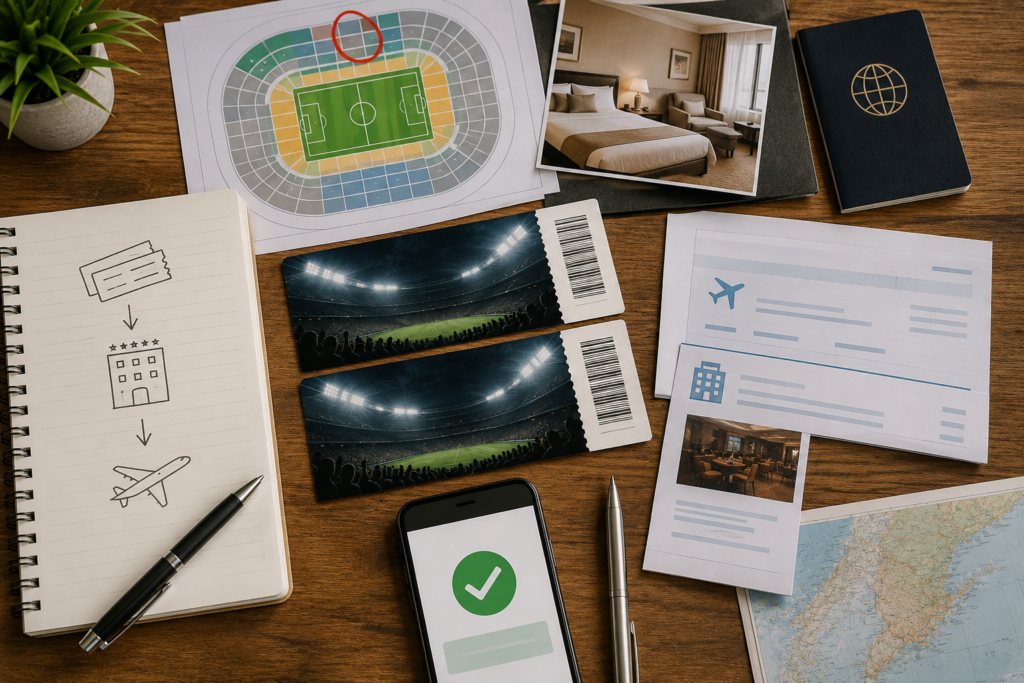
The event is the center of the trip — every other decision should follow it. That sounds obvious, but many travelers book flights or hotels before confirming the schedule, venue, or ticket availability. That’s how budgets get stretched and plans fall apart.
Before anything else, confirm:
- The exact date and venue — not approximate, exact
- Whether the schedule could shift (playoffs, tournament progression, weather, broadcast windows)
- Whether tickets are realistically available at a price that fits your budget
- What kind of trip you want — one headline event with a comfortable weekend around it, or a full tournament itinerary with multiple matches and fan zones
The last question matters because it determines the booking timeline, budget, and how much structure the itinerary needs. A single regular-season game in a large market with flexible friends looks completely different from a World Cup knockout match where every seat, room, and transfer is in simultaneous demand.
For tournament-specific conditional booking strategy — where your next destination depends on which team advances — the Follow My Team World Cup 2026 guide covers the bracket planning mechanics in detail.
Buy Tickets Before You Build Anything Else
This is the part where excitement gets ahead of common sense most often. Before committing to flights, hotels, and car rentals, confirm that event tickets are real, available, and in a section that works for your group.
Why tickets come first:
- A cheap flight is worthless if the game is sold out or remaining tickets are above budget
- Hotel location decisions depend on which venue section you’re in and how you’ll get there
- Flight arrival timing depends on when gates open and how long the pregame experience you want takes
Evaluating ticket options: Don’t focus only on face value. A lower-priced ticket may come with a poor view, a location that’s harder to reach from your hotel, or a section that affects the group’s experience significantly. Premium seating isn’t always worth it either — if your group plans to spend half the day exploring the city and only wants the core in-stadium experience, a standard seat often delivers equal or better value.
When to buy: Major sporting events create demand in waves — first tickets tighten, then hotel rates climb, then flight options shrink. For finals, rivalry matches, international tournaments, and host-city events, buy as early as you can reasonably commit. For regular-season games in large markets, more flexibility exists but waiting carries increasing risk as the event approaches.
Choose Your Hotel Based on Game-Day Reality
One of the most common sports trip planning mistakes is booking accommodation that looks good on a map but creates game-day friction. On event weekends, transit access matters more than it does on a standard city break.
The core hotel location question: How do I get to the venue and back — including after the event ends at 10pm with every other fan trying to do the same thing?
A property that’s technically close to the stadium can still be poorly positioned if the surrounding area has limited post-event transit and surge-priced rideshares. A hotel in a lively downtown district with a direct Metro line to the venue often delivers a better total experience than one that’s geographically nearer but logistically harder.
The trade-off to assess:
- Near-stadium hotels: fast venue access, but surrounding areas can be sparse for restaurants, walkability, and post-game atmosphere once crowds disperse
- City-center or lively neighborhood hotels: better overall trip experience, but require confirmed and reliable venue transit
Check cancellation terms carefully for sports travel — schedules can shift, events can be affected by external factors, and flexibility has real value when the whole trip is built around one fixture.
For the full stadium accommodation decision framework including noise, parking, and transit analysis, the Stadium Area Hotels Comparison guide covers every variable in detail.
Flights and Transfers Need to Work Together
A sports trip is rarely just about getting into the city — you need a clean arrival plan and a realistic way to move around once you land. Booking flights without thinking through airport transfer timing, hotel check-in windows, and game-day transport often creates the most avoidable stress.
Arrive with genuine buffer: If the game starts Friday evening, landing Friday afternoon is not always smart — delays, traffic, baggage, and transfer time can put the whole evening at risk. Landing Thursday night or Friday morning gives you flexibility to enjoy the lead-up rather than race to it.
Car rental vs transfer: In dense urban areas with strong event transit or official shuttles, a transfer service is usually better than driving — parking near stadiums is limited, expensive, and often unavailable on event days. For road-trip-style sports getaways or destinations where the stadium is suburban and public transit is limited, a rental car makes more sense.
For groups, shared private transport often changes the economics significantly — a private van split between four to six people can cost less per head than individual rideshares while eliminating surge pricing and keeping the group together.
For the full airport-to-city transport comparison, the Cheapest Way to Get From Airport to City guide covers every mode and when each makes sense.
Budget for the Full Experience, Not Just the Headline Items
Sports travel looks affordable until the extras arrive. Tickets, flights, and hotels are only the beginning.
What the full budget actually includes:
- Event tickets (face value plus any service or delivery fees)
- Flights (including baggage fees for checked luggage)
- Accommodation (including resort fees or parking if applicable)
- Airport transfers both directions
- Game-day transport to and from the venue
- Food and drinks — stadium concessions are priced at a significant premium
- Official merchandise — budget separately if this matters to your group
- A contingency buffer for same-day decisions and premium pricing during peak periods
The priority allocation approach: Decide what matters most to your group before setting category budgets. If being in the stadium is the priority, spend more on the seat and less on the hotel. If the trip is as much about the city as the event, a better hotel and longer stay may justify a more modest ticket tier.
Leave margin. Event weekends consistently produce premium pricing on same-day decisions — upgraded transport, last-minute restaurant bookings, weather gear, postgame celebrations. A 10-15% contingency buffer prevents those moments from creating stress.
Before any non-refundable booking, run the complete trip cost through budgettripai.com to verify the full picture across all categories.
Build a Game-Day Plan Before Game Day
The difference between a fun sports trip and a frantic one usually comes down to the hours before the event starts. That’s when cities get crowded, transit fills up, and every small delay feels magnified.
What to confirm before departure:
- Gate opening time and the realistic time needed to be at your seat
- Venue bag policy — restrictions vary significantly between venues and affect what you carry all day
- Parking rules if driving — many venues require advance purchase of parking
- Entry procedure — some major events require mobile tickets only, ID verification, or security procedures that add significant time
Pregame logistics: If you want time at fan zones, tailgates, team merchandise shops, or a specific pregame restaurant, build that into the day’s timeline explicitly. Groups that leave pregame food to chance consistently end up making rushed, expensive decisions.
The one meeting point rule for groups: Establish one fixed meeting point at the venue in case anyone gets separated. Mobile signal near major stadiums on event day is often unreliable — agree on a physical location before you need it.
For the complete event day coordination framework, the Guide to Planning Event Travel Itineraries covers the full event-day logistics in detail.
Planning a Group Sports Trip
Group sports trips are among the most enjoyable travel experiences and among the easiest to complicate. Different budgets, seat preferences, and travel habits can turn a simple weekend into an endless group chat with no decisions.
The fixes that work:
Settle the big choices early: What budget range works for everyone? Does the group need to sit together or just arrive together? Are flights coordinated or are people coming from different cities?
Appoint one coordinator: Not to pay for everything — to keep dates, confirmations, and the timeline organized. For a sports weekend, that clarity saves days of back-and-forth.
Give people freedom on extras: Shared flights or shared accommodation location are usually the non-negotiables. Dining, nightlife, seat tier choices, and day-trip decisions can often be left to individual preference without affecting the core trip experience.
Calculate group transport properly: A private van for six people split per head often competes with or beats individual rideshares — while keeping the group together and eliminating surge pricing risk on game day.
For the complete group travel coordination framework, the Group Travel Booking Tips guide covers every coordination decision in detail.
Leave Room for the Destination, Not Just the Scoreboard
The best sports trips feel bigger than the final result. The event is the headline but the city, the local food, the neighborhood atmosphere, and the extra day well-spent are often what make the trip genuinely memorable.
What to build in if time allows:
- One local food experience that isn’t stadium concessions
- One neighborhood worth exploring before the crowds take over
- One day-trip or activity on a gap day between fixtures
- Time to absorb the city’s sports culture beyond the venue itself
This approach also protects the trip from disappointment. Not every game is thrilling. Not every team wins. But if the full itinerary works — the hotel is right, the logistics are smooth, the pregame is enjoyable — the trip still feels worth every part of it.
For day-trip ideas from all 16 World Cup 2026 host cities, the Best Things to Do Near Host Cities guide covers the full gap-day framework.
Essential Internal Resources
These guides on Parandjah Travels cover the related planning layers:
- For the full event travel itinerary framework: Guide to Planning Event Travel Itineraries
- For stadium hotel location strategy: Stadium Area Hotels Comparison
- For group coordination mechanics: Group Travel Booking Tips
- For World Cup bracket planning: Follow My Team World Cup 2026
- For day trips between fixtures: Best Things to Do Near Host Cities
Master Your Destination: City Budget Guides
These city guides cover accommodation zones, transit options, and daily cost benchmarks across 24 major destinations — including several current World Cup host cities:
World Cup and Sports Hub Cities
New York · Chicago · Toronto · Mexico City · Buenos Aires · Cape Town
European Budget Hubs
Madrid · Paris · Rome · Dublin · Lisbon · Budapest · Prague · Vienna · Istanbul · Amsterdam · Milan · Barcelona · Berlin
Asia-Pacific Budget Hubs
Bangkok · Tokyo · Sydney · Singapore · Seoul
Frequently Asked Questions
What should I book first for a sports trip?
Tickets — before flights, hotels, or anything else. Confirm that tickets are available at a realistic price before committing to any other non-refundable booking. Everything else in the trip is built around the event, so the event needs to be confirmed first.
How far in advance should I book a sports trip?
For major events — finals, international tournaments, rivalry matches, and host-city events — book as soon as tickets become available. Demand creates waves: tickets tighten first, then hotel rates climb, then flight options narrow. For regular-season games in large markets, 4-8 weeks ahead is usually sufficient.
Should I stay near the stadium or in the city center for a sports trip?
It depends on the city and the trip. Near-stadium accommodation gives fast venue access but surrounding areas are often sparse for restaurants and post-game atmosphere. City-center hotels with direct transit to the venue usually deliver a better total experience. Always evaluate transit access to the venue — not just map distance — before booking.
How do I plan a group sports trip without it becoming complicated?
Settle the big choices early (budget range, whether the group sits together, shared or separate flights), appoint one coordinator to keep the timeline organized, give people freedom on extras like dining and nightlife, and calculate group transport per head — a shared private vehicle often competes with individual rideshares while keeping the group together.
Want More Free Travel Resources?
Grab the free 2026 Travel Dupes Cheat Sheet for budget-friendly destination ideas to build your next sports trip around. Subscribe at the top of parandjahtravels.com to download it instantly.
Conclusion
Knowing how to plan a sports trip means following the right sequence: confirm the event, secure tickets, choose accommodation based on transit access rather than just price, book flights with realistic buffer time, coordinate transport for game day, and budget for the full experience rather than just the headline items. Build in one or two things beyond the event itself — the city, the food, the atmosphere — because the best sports trips always feel bigger than the final score.

Marsha Rowe is the Founder and Travel Strategist at Parandjah Travels. She uncovers high-intent travel intelligence, specializing in slow travel frameworks and sports event logistics.