
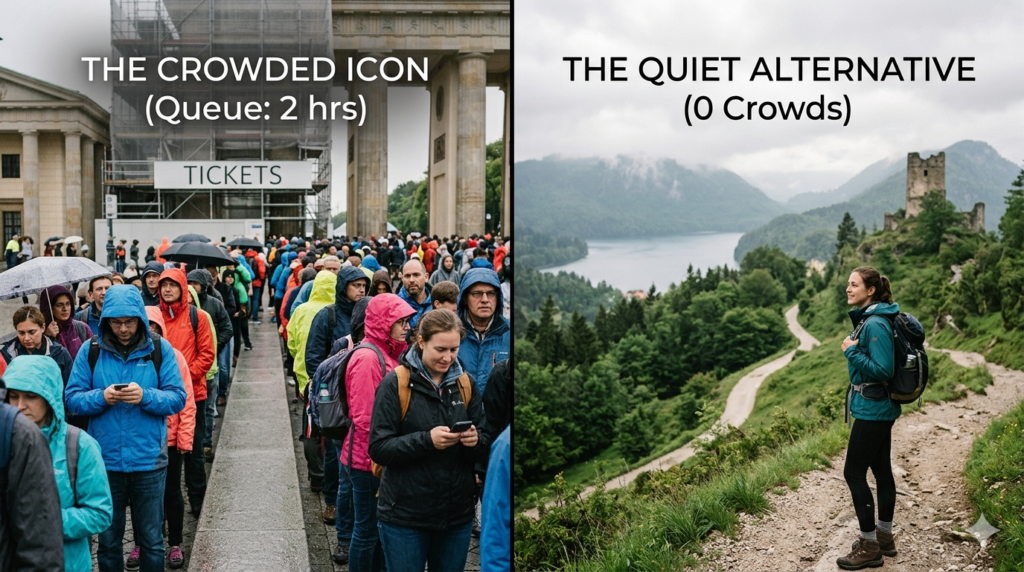
Useful day trip alternatives to popular tourist sites start with your actual overnight base. Kamakura from Tokyo, Pisac from Cusco, or a gorge walk from a suitable New York base can offer a different day out. If your base is in northern Michigan, our Mackinac Island guide explains the ferry, parking and cost checks for a possible island day trip. Milos, Porto and Ljubljana are usually choices for a separate stay. This guide distinguishes those options so a supposed budget swap does not become an expensive journey or an impossible return trip.
Choose the Experience, Then Test the Journey
Ask what you want from the day: ancient ruins, a coastal walk, waterfalls, a museum or rides. An alternative can be rewarding without recreating the famous attraction. Nikko’s shrines do not offer the same experience as DisneySea, and Watkins Glen’s gorge is different from Niagara’s enormous falls.
- Calculate door-to-door time in both directions, including transfers and the final walk.
- Compare transport, admission, food and any guide or equipment charge for the whole party.
- Confirm there is enough time on site after accounting for the last return service.
- Check opening notices and access rules directly, then decide whether an overnight stay is more realistic.
| Your base or trip | Consider | Experience | Main planning check |
|---|---|---|---|
| Tokyo | Kamakura or Nikko | Temples, shrines and town walks | Check actual rail times and local transfers |
| Cusco | Pisac and the Sacred Valley | Inca heritage and valley scenery | Separate town transport from access to the ruins |
| Siem Reap | Koh Ker | A different archaeological site | Arrange return transport and check visitor access |
| Western New York / Finger Lakes | Letchworth or Watkins Glen | Gorge scenery and waterfalls | Check your starting point and trail opening notices |
| Greek island holiday | Milos or Naxos | Different Cycladic island experiences | Usually choose as an overnight base; verify ferries |
| European city break | Porto or Ljubljana | A different city itinerary | A destination choice, not a day trip from Paris |
| Adriatic holiday | Kotor or Šibenik | Historic coastal towns | Check distance, borders and any overnight need |
Practical Outings From an Existing Base
Tokyo: Kamakura or Nikko for a Cultural Day
The Japan National Tourism Organization includes both as Tokyo day-trip options. Kamakura offers temples, shrines and the Great Buddha; Nikko offers a shrine-focused day with a different setting. Choose one based on the rail journey from your actual accommodation and the places you want to see.
Check the train operator’s current timetable rather than relying on a fixed minute count. Add station access and local buses or walking after arrival. Busy weekends can affect both places, so neither should be sold as a guaranteed crowd-free escape.
Cusco: Pisac and the Sacred Valley
Peru’s tourism board includes Pisac among the destinations in the Sacred Valley. Decide whether you want the town, market, archaeological site or a combination. A vehicle reaching the town does not necessarily take you to the entrance or route you want for the ruins.
Confirm current admission arrangements and arrange a return journey with enough daylight. Include local transfers and time at altitude when planning. Compare the experience on its own merits rather than presenting Pisac as an identical replacement for Machu Picchu.
Choquequirao belongs in a separate trekking plan. Peru’s tourism information describes access as a trek. It should not appear as an ordinary same-day outing from Cusco. Confirm the current route, duration, support and conditions with a suitable operator before building it into an itinerary.
Siem Reap: Consider Koh Ker With a Return Plan
Koh Ker is a distinct UNESCO-listed archaeological site. If you want an excursion beyond Angkor, check current ticketing, opening hours and transport from Siem Reap. Obtain a full return quote and clarify waiting time and included stops.
Do not assume a long-distance tuk-tuk journey or a dawn visit to any temple is automatically practical. Choose transport suitable for the route and confirm the site allows access at your intended time. Visitor numbers and road conditions can change.
New York: Match the Park to Your Starting Point
Watkins Glen State Park is in the Finger Lakes and is known for its gorge and waterfalls. Its Gorge Trail is seasonal. Check the park’s live alerts before traveling, and do not rely on the earlier claim that it is an easy three-hour drive from New York City.
Letchworth State Park offers a different gorge-and-waterfall outing in western New York. The park has several entrances, so choose the one serving your intended falls or trail. Calculate the route from your actual base and include parking, walking and the journey home.
Both parks can be busy. Check current entry or parking charges, trail closures and weather rather than assuming lower visitor numbers or no advance planning. Their walks are a different experience from Niagara’s viewpoints and boat attractions.
Destination Swaps That Usually Need a New Base

Greek Islands: Milos or Naxos
Milos has volcanic coastal formations, including Sarakiniko and Kleftiko. Naxos offers a different Cycladic island setting. Neither should be described as an interchangeable Santorini day trip without checking the exact ferry or flight timetable.
Compare a separate island stay, including arrival and departure transfers, accommodation and the trips needed to reach your chosen beach or village. Ferry frequency and crossing time vary by route, vessel and season. Do not assume a daily connection will permit a useful same-day visit.
European Cities: Porto or Ljubljana
Treat Porto and Ljubljana as alternative city breaks rather than nearby substitutes for Paris. Price the whole journey from your departure city. A lower hotel quote may be offset by flights, transfers or an extra night.
Use Ljubljana’s official access guide and the relevant operator’s timetable. The earlier claim of a two-hour train journey from Vienna or Venice was not a reliable planning basis.
Adriatic Towns: Kotor or Šibenik
The Kotor World Heritage region includes historic architecture around its bay. It has its own visitor demand and is not guaranteed to be quieter than Dubrovnik. Šibenik is another destination choice; verify the specific heritage sites you want to visit rather than describing its entire old town as a single UNESCO listing.
For a proposed cross-border day trip, account for border requirements and delays as well as road time. For a longer coastal itinerary, compare an overnight stay. Check any island excursion separately; do not assume a direct public ferry serves every place you want to reach.
Season and Return Transport Matter
Shoulder season can be worth comparing, but weather and services vary by destination. A cheaper room has little value if the trail is shut or the last ferry leaves before your visit ends. Check local holidays, seasonal closures and the operator’s dated timetable.
- Save the first practical outward departure and the last safe return.
- Book any required entry slot and make sure it fits the transport.
- Keep the return fare and a contingency amount separate from sightseeing spending.
- Choose a fallback near your base if weather or a cancellation prevents the trip.
Related Planning
For a broader comparison of destinations, see our Europe travel alternatives guide. Use its ideas as a shortlist, then price your own dates and starting point.
Frequently Asked Questions
What is a day trip alternative to a popular tourist site?
A practical alternative offers an activity you want and lets you return to your actual accommodation the same day. It need not copy the famous attraction or sit close to it. Compare the complete return journey, admission and time on site before choosing.
Are these alternative destinations as good as the originals?
That depends on your priorities. A temple town does not replace a theme park, and a gorge walk does not reproduce Niagara Falls. Choose an alternative for the experience it offers, rather than assuming it is a cheaper replica.
When is the best time to visit these alternative destinations?
Check the specific destination’s weather, opening calendar, holidays and transport schedule. Shoulder season can reduce demand, but it can also mean closed trails, fewer ferries or poor conditions. There is no single best month for every place in this guide.
Do I need any special planning to visit these alternatives instead of the famous originals?
Yes: confirm the first usable outward service, the last return, transfers, admission requirements and a fallback. Cross-border travel needs additional checks. Trips that require a new overnight base or a demanding trek belong in a separate itinerary.
Make the Alternative Fit Your Day
Choose the outing that matches your interests, complete return journey and available time. Keep a genuine local day trip separate from a new city or island stay. The useful saving is the total you can confirm, not a promise that every less-famous place is cheaper, quieter or equivalent.

Marsha Rowe is the Founder and Travel Strategist at Parandjah Travels. She uncovers high-intent travel intelligence, specializing in slow travel frameworks and sports event logistics.