Carry-On Only Packing Guide: How to Travel with Just One Bag

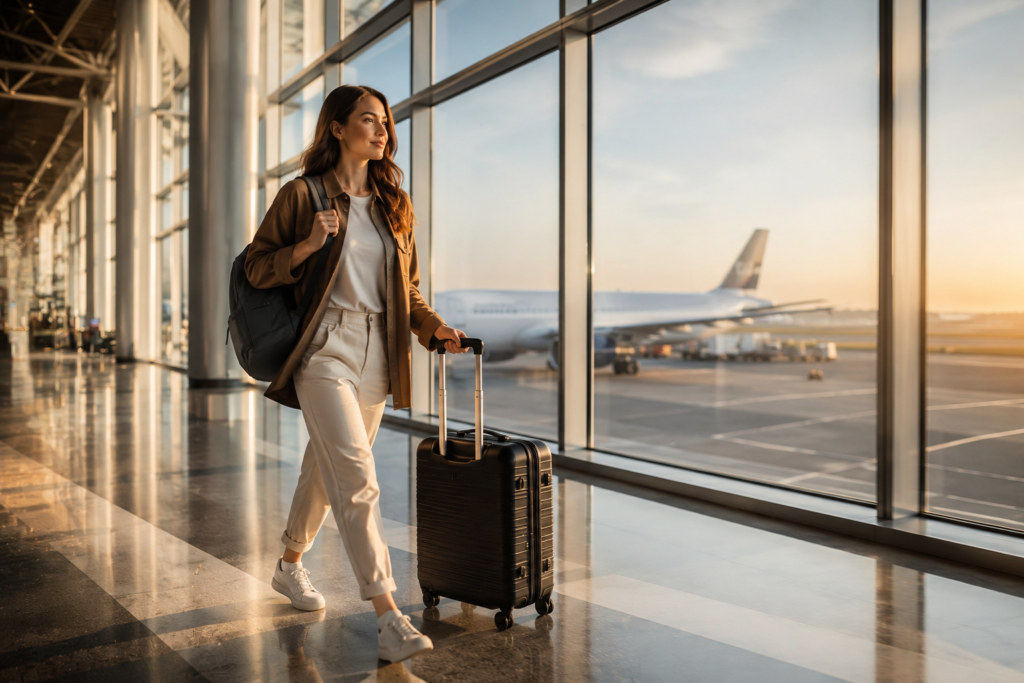
Carry-on only packing guide feature image — confident solo female traveler walking through a bright airport terminal with a single compact carry-on suitcase and backpack over one shoulder moving freely toward the gate representing the freedom and efficiency of one-bag travel

Carry-on only travel saves money on every single flight, eliminates the anxiety of lost luggage, lets you move faster through airports and cities, and forces a level of intentionality about what you actually need that makes the trip better rather than worse. The mental shift is the hardest part — most people pack for the trip they fear rather than the trip they’re actually taking. This guide covers the practical mechanics: airline size rules, the capsule wardrobe that works for two weeks in one carry-on, toiletries, tech, and the specific decisions that make the difference between a bag that fits and one that doesn’t.

Trip LengthCarry-On StrategyWhat to Adjust
Weekend (2-3 days)Personal item onlyLaptop optional, 1 outfit per day
1 weekCarry-on + personal item4 outfits, plan 1 laundry if needed
2 weeksCarry-on + personal item5-6 outfits, plan 1-2 laundry stops
3+ weeks (slow travel)Carry-on + personal item5 outfits max, laundry is part of the trip
Cold weather destinationCarry-on gets harderWear the bulk on the plane, ship or buy at destination

The Airline Size Rules: What Actually Fits

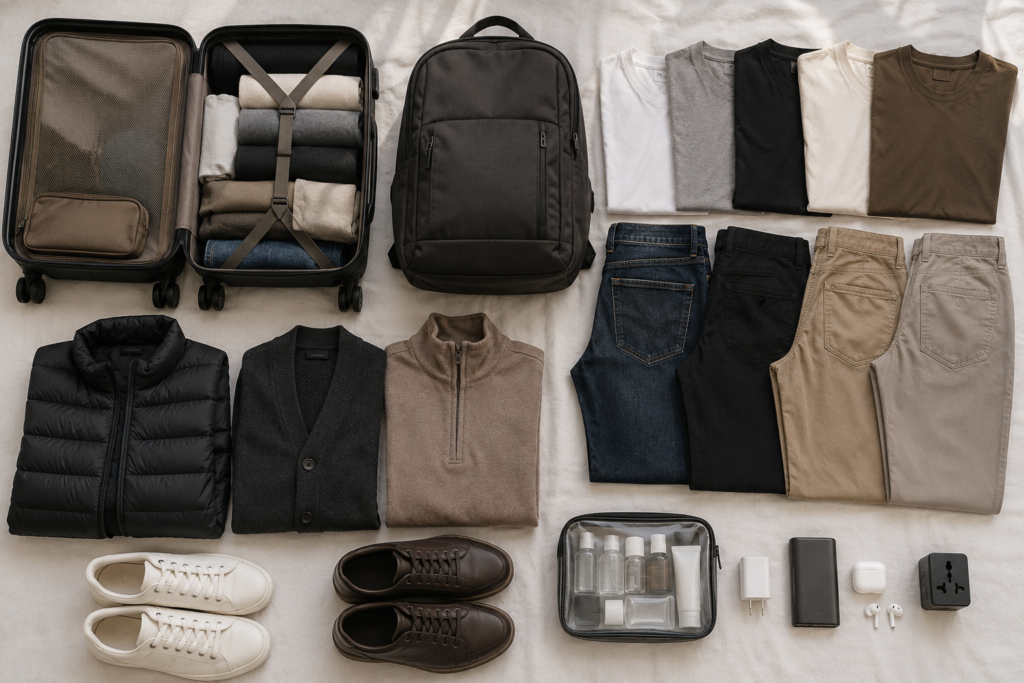
Carry-on only packing guide one bag capsule wardrobe — open carry-on suitcase and backpack personal item beside a neatly laid out capsule wardrobe of neutral tops bottoms layers shoes clear toiletry bag and compact tech kit representing the complete one-bag travel packing system
The 5-4-3-2-1 capsule wardrobe — five tops, four bottoms, three layers, two pairs of shoes, one universal adapter — handles two weeks of travel in a single carry-on when everything is chosen to mix and match rather than work as specific outfits.

Carry-on size limits vary by airline and matter more on budget carriers than full-service airlines. Full-service carriers (Delta, United, British Airways, Air France, Singapore Airlines) are generally lenient about carry-on dimensions. Budget carriers (Ryanair, EasyJet, Wizz Air, Spirit, Frontier) enforce limits strictly and charge significant fees for non-compliant bags at the gate.

Standard carry-on dimensions (most full-service carriers): 22″ x 14″ x 9″ (56 x 36 x 23 cm) including wheels and handles. A bag marketed as “carry-on size” at this dimension fits in most full-service airline overhead bins.

Budget carrier limits (verify before flying):

  • Ryanair: 40 x 20 x 25 cm for the free personal item; 55 x 40 x 20 cm for the carry-on (paid). The free bag is smaller than most think.
  • EasyJet: 45 x 36 x 20 cm for the free underseat bag; 56 x 45 x 25 cm for overhead carry-on (paid on basic fare).
  • Wizz Air: 40 x 30 x 20 cm free; 55 x 40 x 23 cm with cabin bag fee.
  • Spirit/Frontier (US): Personal item under seat free; carry-on overhead charged separately.

The practical rule: If your trip involves any budget carrier flights, verify the specific airline’s current size limits before purchasing a bag. A bag that works perfectly on full-service airlines may require a paid upgrade on Ryanair.

The personal item advantage: Every airline allows one free personal item that fits under the seat in front of you — typically 18″ x 14″ x 8″ (45 x 35 x 20 cm). A structured backpack or tote at these dimensions carries more than most people realize and is always free.

The Capsule Wardrobe: What Actually Works

The capsule wardrobe concept applied to travel means choosing pieces that mix and match with each other rather than bringing complete outfits. Five pieces that work together in multiple combinations beat ten pieces that only work as specific pairs.

The 5-4-3-2-1 framework for one week:

  • 5 tops (3 casual, 1 smart casual, 1 that works for dinner)
  • 4 bottoms (2 pants/jeans, 1 shorts or skirt, 1 versatile dress or trousers)
  • 3 layers (1 lightweight jacket, 1 sweater or cardigan, 1 that doubles as a pillow on the plane)
  • 2 pairs of shoes (1 comfortable walking shoe that works for most situations, 1 pair of sandals or dressier option)
  • 1 pair of shoes you wear on the plane (don’t pack these)

For two weeks: Add 1-2 tops and plan one laundry stop. Most guesthouses, hostels, Airbnbs, and even hotels have laundry service or nearby laundrettes. One load of laundry costs $5-15 in most destinations and takes 2-3 hours — significantly less time and cost than checking a bag on every flight.

Fabric choices that matter:

  • Merino wool is the single best fabric for carry-on travel — it’s temperature-regulating, odor-resistant (genuinely wearable 2-3 times between washes), packs small, and doesn’t wrinkle badly
  • Synthetic blends (polyester/nylon) dry fast after washing — useful if you’re hand-washing items in a sink
  • Avoid heavy cotton, linen (wrinkles badly), and anything that only looks good once

The shoe problem: Shoes are the heaviest and most space-consuming items in any bag. Two pairs maximum — one on your feet when you board, one in the bag. A versatile walking shoe (white sneaker, clean trail runner, or low-profile boot) handles 90% of travel situations. The second pair fills the remaining 10%.

Colors that mix: Choose a neutral color palette — navy, white, grey, black, camel — where everything works with everything else. One or two statement pieces in a brighter color add variety without creating combination problems.

Toiletries: The 100ml Rule and What to Buy at Destination

The 100ml / 3.4oz rule: All liquids, gels, and pastes must be in containers of 100ml or less and fit in one clear quart-sized bag per person for carry-on travel through security. This is the standard rule in the US, UK, EU, and most countries.

What to bring vs what to buy: For trips of 5+ days, buying toiletries at the destination supermarket is almost always better than packing full-sized items in mini containers. A bottle of shampoo in Bangkok costs $2. Sunscreen in Lisbon costs $8. Toothpaste everywhere costs $2-4. These purchases eliminate TSA liquid hassle and free significant bag space.

The essential toiletry carry list (what to always bring):

  • Prescription medications — always in carry-on, never checked
  • Contact lenses and solution if needed
  • A small tube of your preferred facial cleanser or moisturizer (harder to replace with an unfamiliar product)
  • Deodorant (solid stick preferred over gel/spray for liquid rules)
  • Travel toothbrush and small toothpaste for the first night
  • Any medication or supplement you take regularly

What to buy at destination: Shampoo, conditioner, body wash, full-size sunscreen, any skincare product you’re not particular about, a razor if needed.

Solid toiletry products: Solid shampoo bars and solid conditioner bars eliminate the liquid-rule problem entirely and last significantly longer per gram than liquid equivalents. Worth investing in for frequent travelers.

Tech Packing: The Minimum Viable Setup

Technology is where carry-on bags get unexpectedly heavy. A laptop, tablet, camera, three chargers, cables, power bank, and headphones can easily add 3-4kg to a bag before a single piece of clothing goes in.

The honest tech audit: Before every trip, ask honestly: what will I actually use, versus what am I bringing because I might theoretically need it? Most travelers bring a laptop they open once to check email and a camera they use less than their phone.

The minimum viable tech kit:

  • Smartphone (does 80% of what a laptop and camera do)
  • Universal travel adapter (single item covers all plug types — buy one quality adapter rather than multiple country-specific ones)
  • GaN charger (compact multi-port charger — charges laptop, phone, and tablet from one small unit)
  • 10,000mAh power bank (enough for 2-3 full phone charges, meets most airline carry-on battery rules)
  • Noise-canceling earbuds or headphones (worth the space on any flight over 3 hours)
  • USB-C cable x2 (one in bag, one in personal item as backup)

Laptop decision: If you genuinely need to work, bring the laptop. If you’re on holiday and need it for “just in case,” leave it. A tablet covers media consumption and light email at half the weight and a third of the bulk. For slow travel or workations of 2+ weeks, a laptop is justified — for a 10-day holiday, it usually isn’t.

Camera decision: Modern smartphones produce travel photography results that match or exceed dedicated cameras for 95% of travel use cases. A mirrorless camera with one lens is justified for photography-focused travel — a DSLR with multiple lenses is almost never justified for carry-on only travel.

The Packing Method: What Actually Saves Space

Rolling vs folding: Rolling clothes saves space compared to flat folding for most garments — particularly t-shirts, jeans, and casual trousers. Bundle wrapping (wrapping items around a central core) reduces wrinkles for formal or semi-formal clothing. Fold items with structure (blazers, structured shirts) rather than rolling them.

Packing cubes: Packing cubes don’t compress clothing significantly but they organize a bag so you can access items without unpacking everything. Two cubes — one for tops, one for bottoms — is sufficient. Compression cubes (with double zips that compress contents) do reduce volume meaningfully for soft items like fleeces and merino knitwear.

The shoes-in-bag question: Pack shoes in a shoe bag or shower cap, soles facing the exterior of the carry-on — this keeps the bag interior clean and protects clothing from sole contact. Place shoes along the wheeled base of a hardshell case or at the bottom of a soft bag.

What goes in the personal item: Items you need during the flight — headphones, water bottle, snacks, book or tablet, passport, travel documents, any medication — go in the personal item rather than the overhead carry-on. This means you don’t have to access the overhead bin during the flight.

Weight distribution: Heavy items (shoes, tech, toiletry bag) closest to the back of a backpack or the wheeled base of a suitcase. Lighter items (clothing) fill the remaining space. This makes carrying significantly more comfortable.

The Cold Weather Problem

Cold weather travel is the hardest case for carry-on only — bulky coats, thick jumpers, and warm boots take up disproportionate space. The solutions:

Wear the bulk on travel days: Your heaviest coat, thickest boots, and bulkiest sweater go on your body when you board the plane. Uncomfortable for a tropical arrival but completely legitimate — what you’re wearing doesn’t count against your bag allowance.

Merino layers instead of bulk: Three merino wool layers (base layer, mid-layer, and light outer) provide equivalent warmth to one heavy jacket at a fraction of the space and weight. More versatile for changing temperatures.

Buy or rent at destination: For ski trips or extreme cold destinations, renting equipment at the resort is almost always more practical than packing it. Buying a basic winter layer at a destination supermarket and donating it before departure saves significant bag space and hassle.

The packable down jacket: A quality packable down jacket compresses to roughly the size of a grapefruit and provides substantial warmth. Worth the investment for any traveler who regularly visits cold destinations.

Airline-Specific Baggage Fee Reality Check

Budget carrier checked baggage fees have increased significantly and can eliminate the savings from a cheap fare entirely.

What checked baggage actually costs in 2026:

  • Ryanair: €/£25-50 each way for a checked bag (depends on timing of purchase — buying at booking is cheaper than at the gate)
  • EasyJet: £25-45 each way
  • Spirit (US): $49-79 each way depending on timing
  • Frontier (US): $45-70 each way
  • Wizz Air: €15-40 each way

A round trip with one checked bag on Ryanair can cost €50-100 in fees on top of the fare. On a €20 Ryanair fare, that’s a 250-500% fee increase. Carry-on only makes the math obvious.

For the full baggage fee comparison across international carriers, the International Flight Baggage Fees guide covers every major airline’s current policy.

The Mindset Shift: Packing for the Trip You’re Taking

The single biggest barrier to carry-on only travel is packing for hypothetical situations rather than real ones. The formal dinner you might get invited to. The sudden cold snap that might happen. The extra shoes for the occasion that might arise.

The honest questions to ask before packing each item:

  • Have I used this on a previous similar trip?
  • Am I bringing it because I need it or because I fear not having it?
  • If I needed this and didn’t have it, what would actually happen? (Usually: you’d buy it locally for $10-20)
  • Does this item serve multiple purposes, or only one?

The 12-12-12 rule: Before closing the bag, identify 12 items you could remove. From those 12, remove at least 4. This forces a final honest audit that almost always results in a better-packed bag.

What happens when you leave something behind: Almost every experienced carry-on traveler has the same story — they forgot something or deliberately left something behind and realized within two days that they didn’t miss it. The item that seemed essential during packing becomes invisible within 48 hours of the trip starting.

For the complete trip planning and budget framework that connects to carry-on packing decisions, the How to Plan a Trip on a Budget guide covers the full approach.

Essential Internal Resources

These guides on Parandjah Travels cover the related planning layers:

Master Your Destination: City Budget Guides

These city guides cover what to wear in each destination’s climate — useful for building the right capsule wardrobe before you pack:

European Budget Hubs

Madrid · Paris · Rome · Dublin · Lisbon · Budapest · Prague · Vienna · Istanbul · Amsterdam · Milan · Barcelona · Berlin

Asia-Pacific and Americas Budget Hubs

Bangkok · Tokyo · Sydney · Toronto · Singapore · Mexico City · Seoul · Buenos Aires · Cape Town · Chicago · New York

Frequently Asked Questions

Can you really travel for two weeks with only a carry-on?

Yes — with a capsule wardrobe of 5-6 outfits and one planned laundry stop, two weeks in a carry-on is entirely comfortable. The laundry stop takes 2-3 hours and costs $5-15 in most destinations — significantly less time and money than checking a bag on every flight. Most slow travelers do this indefinitely.

What is the best carry-on bag size for international travel?

22″ x 14″ x 9″ (56 x 36 x 23 cm) works on most full-service international carriers. If your trip involves budget carriers (Ryanair, EasyJet, Wizz Air), verify that airline’s specific current limits before purchasing a bag — budget carrier limits are stricter and enforced at the gate.

How do you pack shoes in a carry-on without wasting space?

Pack a maximum of two pairs — one worn on travel days, one in the bag. Place shoes in a shoe bag or shower cap with soles facing outward, at the wheeled base of a suitcase or bottom of a backpack. Choose versatile shoes that handle multiple situations rather than packing situation-specific footwear.

What toiletries can you bring in a carry-on?

All liquids, gels, and pastes must be 100ml (3.4oz) or less per container and fit in one clear quart-sized bag. For trips of 5+ days, buying shampoo, body wash, and sunscreen at the destination is more practical than packing them — these items cost $2-10 at any destination supermarket and free significant bag space.


Want More Free Travel Resources?

Grab the free 2026 Travel Dupes Cheat Sheet for budget-friendly destinations that are perfect for carry-on only travel. Subscribe at the top of parandjahtravels.com to download it instantly.

Conclusion

Carry-on only travel works because packing intentionally forces better decisions about what you actually need rather than what you fear not having. The 5-4-3-2-1 capsule wardrobe handles two weeks. Merino wool handles temperature variation and multiple wears. Buying toiletries at destination handles the liquid rule. A GaN multi-port charger handles tech. And the money saved on checked baggage fees — £50-100 per round trip on budget carriers — goes toward the trip instead of the airline. Pack less. Move faster. The bag that fits in the overhead is the one that saves you two hours at baggage reclaim at the end.


Leave a Comment

Your email address will not be published. Required fields are marked *