
Tokyo Travel Guide 2026: Everything You Need to Know Before You Go

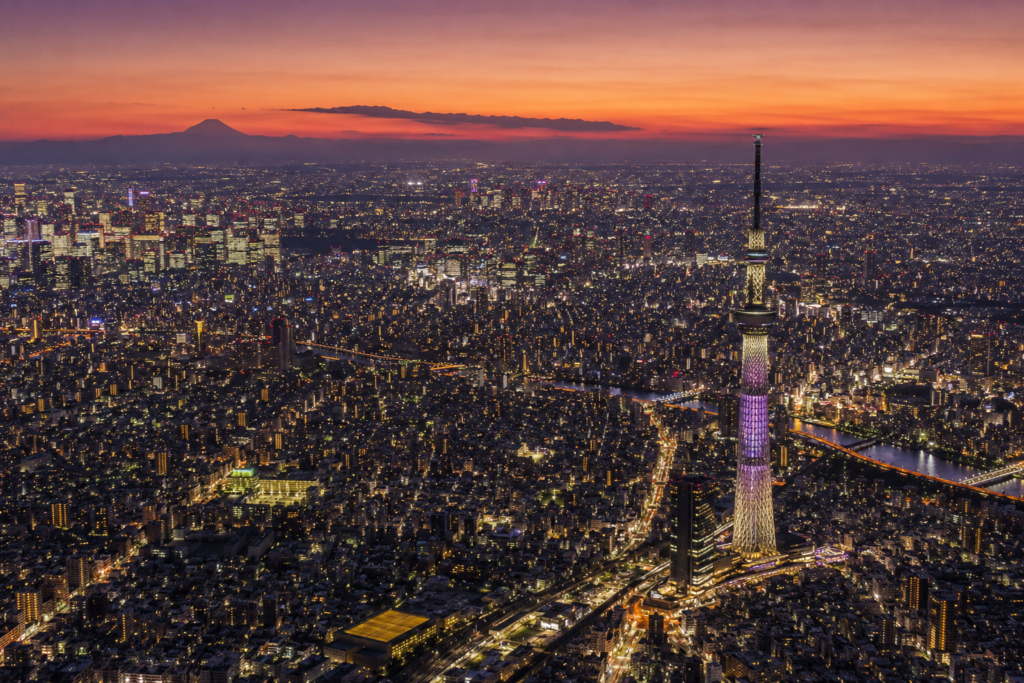
Tokyo travel guide feature image — aerial dusk view of Tokyo showing the illuminated Tokyo Skytree tower above the vast urban grid, the Sumida River threading through the city, the neon glow of Shinjuku on the horizon and Mount Fuji silhouetted in dusky purple representing the extraordinary scale of the world's most visited city

I landed in Tokyo expecting expensive chaos and found the opposite: a city of extraordinary order, exceptional food at every price point, and a public transport system so reliable it changed what I expect from a city. I’ve managed full days here on ¥11,000-15,000 ($77-105) — significantly cheaper than what I’ve spent in London, Paris, or New York for a comparable quality of experience. The food alone justified the flight for me: a beef bowl at Yoshinoya ran me ¥500 ($3.50), a bowl of ramen at a neighborhood shop I found near my hotel cost ¥800-1,500 ($5.60-10.50), and my convenience store breakfasts at 7-Eleven or FamilyMart were, genuinely, some of the best cheap food I’ve had anywhere. Everything in this guide comes from what I learned planning and taking that trip in 2026, including what’s changed this year.

Planning ElementKey Information
CurrencyJapanese Yen (¥/JPY) — approximately ¥155 to 1 USD (June 2026)
LanguageJapanese — English signage at major stations and tourist areas
VisaUS, UK, EU, Australia — 90-day visa exemption, no fee
AirportsNarita (NRT) and Haneda (HND) — both serve Tokyo
IC CardSuica or Pasmo — essential for all transport and convenience store purchases
Best time to visitJanuary-February (cheapest, -20-30%); cherry blossom late March-April (book 3-6 months ahead); avoid Golden Week late April-early May
Daily budgetBudget ¥11,000-15,000 ($77-105)/day; Mid-range ¥22,000 ($140)/day; Luxury ¥40,000+ ($250+)/day
2026 exit tax¥3,000 per person — automatically included in outbound flight ticket

What’s Changed in 2026: Important Updates

Tokyo travel guide 2026 neighborhoods food transport — Senso-ji Temple red lanterns and incense smoke alongside a modern Tokyo street with ramen shop, convenience store, and JR elevated train representing the ancient and ultramodern contrast that defines Tokyo neighborhoods
Tokyo contains multitudes in the same city block — Senso-ji Temple in Asakusa is free to visit at any hour while the ramen shop across the street charges ¥800-1,500 for one of the best bowls of food you’ll eat anywhere. Budget travelers manage on $77-105 daily in a city with more Michelin stars than anywhere else on earth.

Exit tax tripled: Japan’s departure tax increased from ¥1,000 to ¥3,000 (~$20) per person in 2026. It’s automatically included in your outbound flight ticket — no action required, but factor it into your total trip cost.

Dual pricing at attractions: Major sites are implementing different pricing for international versus domestic visitors. Check current entry prices on official attraction websites before budgeting.

Tax refund system change (November 2026): Starting November 2026, tourists will pay the full price including 10% consumption tax upfront on shopping, then claim the refund at the airport on departure. This requires more cash on hand during shopping — plan accordingly if your trip extends into late 2026.

Yen exchange rate: The weak yen (2024-2026) makes Tokyo more affordable for international visitors than it’s been in years. Current rate approximately ¥155 to 1 USD makes Tokyo’s prices feel significantly more accessible than its global city reputation suggests.

The Neighborhoods: Where to Stay and Why

Tokyo’s neighborhoods are distinct enough that choosing the right base meaningfully shapes your experience. For better value, look toward Asakusa, Ueno, or Ikebukuro, where you can find high-quality business hotels at more competitive rates than the premium districts of Ginza, Shinjuku, and Marunouchi.

Shinjuku: The most dynamic neighborhood in Tokyo — Kabukicho entertainment district, Golden Gai (dozens of tiny bars in atmospheric alleyways), Omoide Yokocho (Memory Lane yakitori stalls), the Tokyo Metropolitan Government Building observation deck (free), and the best transit hub in the city. Mid-range hotels run ¥12,000-25,000 ($77-160)/night. Noisy and stimulating — excellent for visitors who want maximum Tokyo energy.

Asakusa: Tokyo’s most traditional neighborhood — Senso-ji temple (Tokyo’s oldest, free to visit), Nakamise-dori shopping street, rickshaws, and a genuinely historic atmosphere. More affordable than Shinjuku and Shibuya for accommodation: business hotels from ¥8,000-15,000 ($52-97)/night. The Chao Phraya-equivalent vibe — traditional craftwork, street food, and river access. Best for first-time visitors who want authentic old Tokyo atmosphere.

Shibuya: The Shibuya Crossing — the world’s busiest pedestrian intersection — is here, along with Harajuku (Takeshita Street street fashion) and Omotesando (luxury shopping boulevard). More expensive for accommodation than Asakusa. The area around Shimokitazawa (2 stops from Shibuya) offers a bohemian, vintage-shop atmosphere with meaningfully lower hotel rates.

Ueno: Tokyo’s museum district — the Tokyo National Museum, National Museum of Nature and Science, Tokyo Metropolitan Art Museum, and Ueno Zoo are all here, along with Ueno Park (free) and Ameya-Yokocho market (excellent cheap food and shopping). Strong budget accommodation options from ¥6,000-12,000 ($39-77)/night. Excellent for families and culture-focused visitors.

Ikebukuro: Tokyo’s second major entertainment and shopping hub — often overlooked by tourists in favor of Shinjuku and Shibuya, which makes it more affordable and more local in atmosphere. JR and subway connections are excellent. Business hotels from ¥8,000-15,000 ($52-97)/night.

Yanaka: Tokyo’s most atmospheric traditional neighborhood — preserved temple district, wooden houses, a cemetery that functions as a park, and old-world atmosphere that’s largely disappeared from other parts of the city. Best explored on foot as a day trip rather than as an accommodation base.

Getting There: Airport Transfers

Tokyo is served by two international airports with different transfer options and costs.

From Narita Airport (NRT): Narita is 60-90 minutes from central Tokyo. The Access Express bus to Tokyo/Shinjuku costs ¥1,300 and takes 90 minutes — the cheapest convenient option. The Keisei Skyliner costs ¥2,520 and takes 36 minutes to Ueno — significantly faster if your accommodation is near the Keisei/Ueno line. Avoid the N’EX (Narita Express) at ¥3,250 unless you have a JR Pass — it’s more expensive than the Skyliner for similar journey time.

From Haneda Airport (HND): Haneda is much closer to central Tokyo — 15-25 minutes. The Keikyu Line to Shinagawa/central Tokyo costs ¥300-500 and takes 15-25 minutes — excellent value. The Tokyo Monorail to Hamamatsucho costs ¥500 and takes 13 minutes, connecting to the JR Yamanote Line. Haneda is the preferred airport for Tokyo trips when both options are available — shorter transfers, lower transfer cost, and generally less congestion.

ATM note: Avoid currency exchange at the airport — rates are always worse. Use ATMs in 7-Eleven or Japan Post offices for the best rates, or bring a no-fee international debit card (Wise, Revolut).

Getting Around: The Suica Card and Transit System

Tokyo’s public transport system is legendary — fast, clean, and punctual in a way that redefines what urban transit can be. The key to navigating it affordably is the IC card.

Suica or Pasmo IC card: Get a Suica or Pasmo IC card at any major station or airport — these rechargeable cards work on virtually all public transportation in Tokyo and can also be used for purchases at convenience stores and vending machines. Subway fares range ¥170-320 ($1.20-2.25) per ride. Day passes cost ¥600-900 ($4.20-6.30) for unlimited subway travel — worth buying on heavy sightseeing days with 5+ trips.

The Yamanote Line: The JR Yamanote Line is a circular route connecting Tokyo’s major hubs — Shinjuku, Shibuya, Harajuku, Ebisu, Meguro, Shinagawa, Tokyo Station, Ueno, and back. Understanding this loop is the foundation of Tokyo navigation. Single fare ¥170-200 ($1.20-1.40) for most stops.

Walking between neighborhoods: Tokyo is one of the world’s best walking cities. Many attractions that appear far apart on the map are actually within comfortable walking distance. Shinjuku to Harajuku is 20 minutes on foot. Asakusa to Akihabara is 30 minutes along the river. Walking between nearby stations saves ¥170-250 per trip and often reveals interesting neighborhoods, shops, and restaurants you’d never see from a train window.

Taxis: Taxis are metered and reliable but expensive — base fare ¥410 ($3.70) for the first 1km, then ¥80-90 for each additional 300-400 meters. Avoid taxis except for late-night journeys when the subway has closed (around midnight) or when splitting the cost among 3-4 people.

Cash is still essential: Many ramen shops, izakayas, and traditional restaurants operate as cash-only establishments. Vending machines increasingly accept IC cards but some still require cash. Budget ¥10,000-20,000 ($70-140) in cash for daily expenses — withdraw at 7-Eleven or Japan Post ATMs which accept most foreign cards.

Food: Tokyo at Every Price Point

Tokyo has more Michelin-starred restaurants than any other city in the world — and the more useful fact for most travelers is that the gap between its street-level food and high-end food is the smallest of any major city. The convenience store onigiri ($1-2) is genuinely good. The ramen at a neighborhood shop ($8-12) is extraordinary.

Budget eating ($2-10 per meal):

  • Convenience stores (konbini): 7-Eleven, FamilyMart, and Lawson sell onigiri (rice balls) for ¥120-180, sandwiches, hot foods, and prepared meals at ¥300-600 total. Genuinely good food — not a compromise. Supermarket discounts after 8pm reduce bento box prices by 20-50%.
  • Beef bowls: Yoshinoya and Sukiya serve gyudon (beef over rice) for ¥400-700 ($2.80-4.90) — filling, fast, and everywhere.
  • Ramen: Neighborhood ramen shops charge ¥800-1,500 ($5.60-10.50) for a full bowl. Regional styles vary significantly — Sapporo miso, Hakata tonkotsu, Tokyo shoyu. Never eat ramen at a chain when a local specialist is visible.
  • Standing sushi bars: Kaiten (conveyor belt) sushi and standing sushi bars charge ¥100-200 per plate. Tsukiji Outer Market for fresh seafood breakfast at excellent prices.

Mid-range ($15-35 per meal): Set lunch menus (teishoku) at casual restaurants deliver soup, main dish, rice, and pickles for ¥1,000-2,000 ($7-14) — significantly cheaper than dinner service at the same restaurants. Eat your main meal at lunch — the same restaurants charge 40-60% more for dinner service.

The Depachika: Department store basement food halls are one of Tokyo’s most underrated food experiences — multiple floors of prepared food, bento boxes, pastries, sushi, and regional Japanese specialties. A complete lunch from the Depachika at Isetan Shinjuku or Mitsukoshi Ginza costs ¥800-1,500 ($5.60-10.50).

Free and Low-Cost Attractions

Many of Tokyo’s best experiences cost nothing — walking through vibrant neighborhoods, visiting public parks, and people-watching at local cafes. Tokyo’s most popular attractions charge ¥1,000-3,000 ($7-21) admission in 2026.

Free:

  • Senso-ji Temple (Asakusa): Tokyo’s oldest temple — the grounds and Nakamise-dori shopping street are free to walk at any hour, the temple interior has limited hours
  • Meiji Jingu Shrine (Harajuku): Forested shrine grounds, grand torii gate — free entry
  • Shibuya Crossing: The world’s busiest pedestrian intersection — free to experience, best viewed from the Starbucks overlooking it or from the free Scramble Square observation area
  • Yoyogi Park: Sunday afternoon street performers, musicians, and subculture groups — free
  • Tokyo Metropolitan Government Building (Shinjuku): 45th-floor observation decks — free, panoramic city and Mount Fuji views on clear days
  • Imperial Palace East Garden: Historic ruins and manicured gardens — free
  • Yanaka neighborhood: Walk through Tokyo’s most atmospheric traditional neighborhood — free
  • Golden Gai (Shinjuku): Walk through and photograph the charming alleyways — free to walk, drinks from ¥500 if you go inside

Low-cost paid:

  • Senso-ji Temple interior: ¥free-300 depending on area
  • Ueno museums: ¥600-1,000 ($4-7) for permanent collections
  • Intermediathèque (near Tokyo Station): Free — stunning museum displaying University of Tokyo collections in Art Deco building
  • Suginami Animation Museum: Free — anime history with interactive exhibits including voice acting booths
  • Beer Museum Yebisu: Free self-guided tour, paid tastings ¥400

Worth paying for:

  • teamLab digital art installations: ¥3,200-4,500 ($21-30) — genuinely world-unique immersive experience
  • Ghibli Museum (Mitaka): ¥1,000 ($6.60) — book months ahead, sells out constantly
  • Tokyo Skytree observation deck: ¥2,100-3,400 ($14-22) — Japan’s tallest structure, extraordinary views

When to Visit: Seasons and Costs

The cheapest months to visit Tokyo are January and February, with prices -20-30% lower than peak season. Cherry blossom season (late March-April) and Golden Week (late April-early May) are the highest-demand periods — book 3-6 months ahead for accommodation during cherry blossom season.

January-February (cheapest): Cold (3-10°C), clear days with frequent Mount Fuji visibility, 20-30% lower accommodation rates, almost no queues at major attractions. Best value window of the year.

Late March-April (cherry blossom): Peak demand, highest prices, extraordinary beauty. Ueno Park, Shinjuku Gyoen, and Chidorigafuchi moat are the best cherry blossom locations. Book 3-6 months ahead — this is the most competitive accommodation window of the year.

Late April-early May (Golden Week): Domestic travel peak — hotels book out weeks ahead, domestic transport is overcrowded. Avoid if possible unless you specifically want the festival atmosphere.

June-September: Hot (25-35°C) and humid. Lower prices than spring peak but uncomfortable weather, particularly July-August. Typhoon season September-October.

November (autumn foliage): Second-most beautiful season after cherry blossom — maples in Shinjuku Gyoen, Yoyogi Park, and temple gardens. Prices between peak spring and off-season rates.

Day Trips From Tokyo

Nikko (2 hours north): UNESCO World Heritage elaborate shrine and temple complex — the Tosho-gu Shrine is among the most ornate religious buildings in Japan. JR Pass or individual tickets from Ueno/Asakusa. Worth a full day.

Kamakura (1 hour south): Coastal town with the famous Great Buddha (Kotoku-in, ¥300 entry) and dozens of temples in forested hills. Excellent hiking between temple sites. JR from Tokyo Station — ¥920 each way.

Hakone (1.5 hours southwest): Mountain resort with Mount Fuji views, hot springs (onsen), and the Hakone Open Air Museum. Overnight is better than a day trip for the full experience. Romancecar train from Shinjuku.

Kyoto (2.5 hours by Shinkansen): Japan’s former imperial capital — the concentration of temples, shrines, geisha districts, and traditional culture is extraordinary. Worth 2-3 nights minimum. Shinkansen ¥13,320 ($86) one way from Tokyo — calculate whether a JR Pass is worth it for your specific itinerary.

Cultural Etiquette

Japan’s cultural codes are specific and worth understanding before arrival — they make the experience significantly better.

  • No tipping: Tipping is considered rude in Japan. Never tip at restaurants, hotels, or taxis.
  • Quiet on public transport: Phone calls on trains are considered antisocial — keep conversations low, phones on silent.
  • Remove shoes: At traditional restaurants, ryokan, and some temples — look for the genkan (entrance area) and follow the lead of other guests.
  • Eating while walking: Not done in most of Japan — eat at the stall or find a spot to stand. Exception: matsuri (festival) food markets.
  • Cash for small purchases: Always carry cash — many small restaurants and shops are cash-only.
  • Onsen etiquette: Tattoos are prohibited at most public onsen. Wash thoroughly before entering the communal bath. No swimwear.

Essential Internal Resources

These guides on Parandjah Travels cover the related planning layers:

Master Your Destination: City Budget Guides

Planning to combine Tokyo with other Asian or global destinations? These city guides cover where to stay for less across 24 major hubs:

Asia-Pacific Budget Hubs

Bangkok · Singapore · Seoul · Sydney

European Budget Hubs

Madrid · Paris · Rome · Dublin · Lisbon · Budapest · Prague · Vienna · Istanbul · Amsterdam · Milan · Barcelona · Berlin

Americas Budget Hubs

New York · Chicago · Toronto · Mexico City · Buenos Aires · Cape Town

Frequently Asked Questions

Is Tokyo expensive to visit in 2026?

Tokyo is more affordable than its reputation suggests — especially with the current weak yen making prices 20-30% more accessible for international visitors than a few years ago. Budget travelers can manage on ¥11,000-15,000 ($77-105) daily including accommodation, food, transport, and activities. That’s significantly cheaper than London, Paris, or New York for comparable quality. The key is eating at convenience stores and local restaurants rather than tourist-facing spots.

Do I need a Suica card for Tokyo?

Yes — get a Suica or Pasmo IC card at the airport or any major station immediately on arrival. These rechargeable cards work on all Tokyo public transport and at convenience stores and vending machines. They eliminate the need to buy individual tickets for every journey and make navigating the transit system significantly easier.

What is the cheapest way to get from Narita Airport to Tokyo?

The Access Express bus to Tokyo/Shinjuku costs ¥1,300 and takes 90 minutes — the cheapest convenient option. The Keisei Skyliner (¥2,520, 36 minutes to Ueno) is faster if your accommodation is near Ueno or Asakusa. Avoid the N’EX express (¥3,250) unless you have a JR Pass — more expensive for similar or longer journey time.

When is the cheapest time to visit Tokyo?

January and February deliver the lowest prices — 20-30% below peak season — with clear weather, frequent Mount Fuji visibility, and almost no queues at major attractions. Shoulder seasons April-May and September-October reduce accommodation costs by 25-40% while maintaining excellent weather. Avoid Golden Week (late April-early May) for domestic travel overcrowding, and cherry blossom season (late March-April) unless booked 3-6 months ahead.

Want More Free Travel Resources?

Grab the free 2026 Travel Dupes Cheat Sheet for budget-friendly destination alternatives including several Tokyo dupes for travelers who want the Japan experience at lower cost. Subscribe at the top of parandjahtravels.com to download it instantly.

Conclusion

Tokyo rewards the traveler who arrives with a Suica card loaded, a list of local ramen shops rather than tourist restaurants, and the willingness to walk between neighborhoods rather than taking every train. Budget travelers can manage on $77-105 daily — significantly cheaper than comparable global capitals — while experiencing world-class food, extraordinary cultural depth, and a public transport system that makes every other city feel slightly improvised. January and February for the best value. Asakusa and Ueno for budget accommodation. The convenience store breakfast is genuinely good. The free observation deck at the Tokyo Metropolitan Government Building is genuinely better than the paid alternatives. Give Tokyo at least five days — three is enough to see the highlights, five is enough to understand why so many travelers make it the centerpiece of their entire travel year.

Leave a Comment

Your email address will not be published. Required fields are marked *