
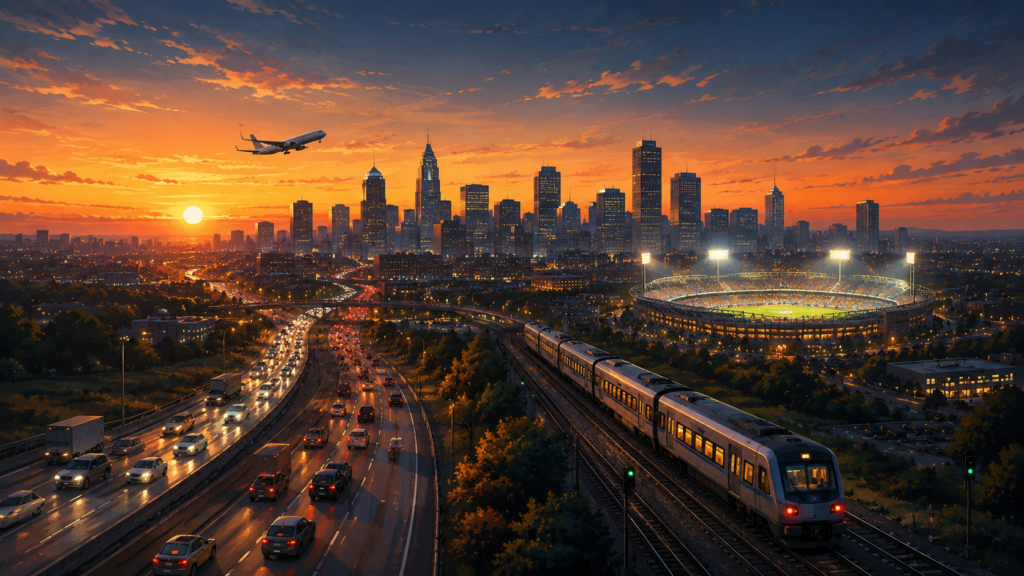
Knowing how to travel between World Cup host cities during July 4th comes down to one thing: recognizing that you’re fighting two separate travel surges at once, not one.The knockout rounds landed on top of the busiest travel week of the American summer, and almost nobody planned for both at once. If you’re trying to move between host cities for the Round of 32, Round of 16, or quarterfinals between June 28 and July 6, you’re not just fighting World Cup crowds — you’re fighting the single largest domestic travel surge of the year. TSA is projecting roughly 18.7 million passengers through security nationwide in that window, with the single busiest day — July 2 — expected to top 3 million travelers. That’s not a “book early” problem. That’s a “have a backup plan or get stranded” problem.
| Key Fact | Detail |
|---|---|
| Overlap window | June 28 – July 6, 2026 (knockout rounds + July 4th peak) |
| Peak single day | July 2, 2026 — projected 3M+ travelers |
| Total surge passengers | ~18.7 million (TSA projection, national) |
| Hardest-hit host cities | Miami, Dallas–Fort Worth, Houston, Kansas City (30–58% accommodation demand increase) |
| Cheapest alternative routing | Regional rail/bus between geographically clustered host cities |
| Highest airfare volatility | Routes into NY/NJ ahead of the July 19 Final |
What’s Actually Changed This Week
If you booked your World Cup trip months ago, the plan you made then no longer matches the reality on the ground. A few things shifted fast:
The knockout schedule compressed the map. Group stage matches were spread across all 16 host cities. Knockout rounds funnel into fewer venues as teams get eliminated — which means demand that used to be distributed is now concentrated, and flights between the remaining active cities have gotten both scarcer and more expensive in the last two weeks.
July 4th didn’t move, but attention did. Airlines and hotels price dynamically around demand signals, and right now those signals are dominated by match schedules, not the holiday. That’s actually an opportunity: domestic leisure routes not touching a host city are seeing comparatively softer pricing, because everyone’s attention — and every fare algorithm — is locked onto the World Cup corridor.
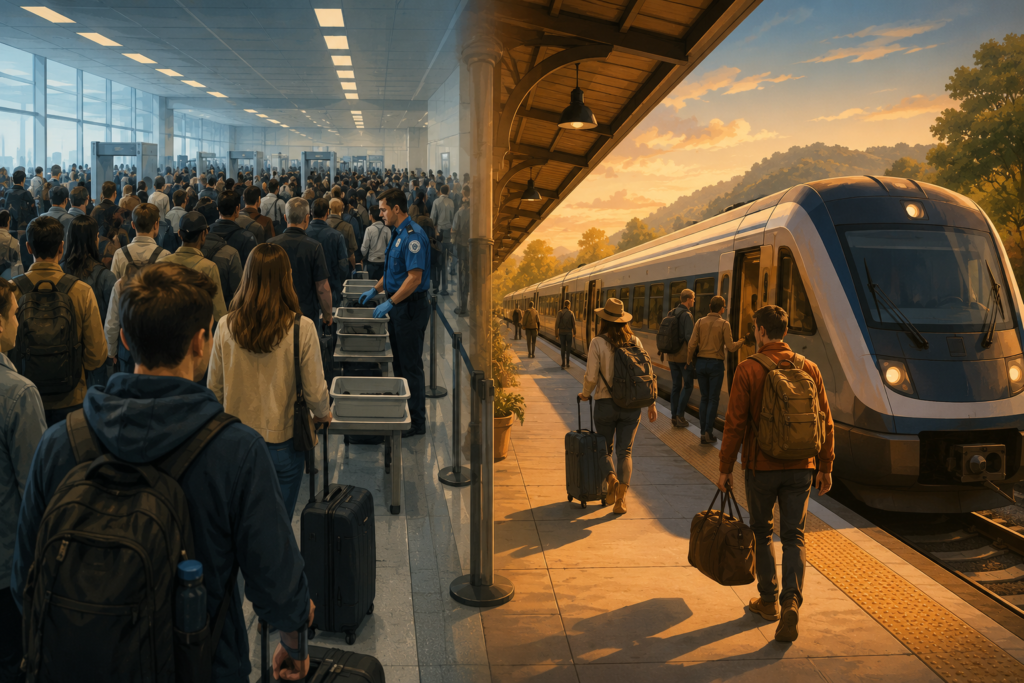
Airport congestion is compounding, not just adding up. A World Cup host city on a normal July 4th would already be stressed. Add knockout-round crowds and you get security lines and gate congestion that don’t scale linearly — TSA’s own projections treat this week as a distinct event, not a typical holiday peak.
The Actual Problem: You’re Optimizing for the Wrong Thing
Most World Cup travel content tells you how to get tickets or where to stay. Almost none of it addresses the actual bottleneck for anyone trying to catch multiple matches this week: moving between host cities faster than the airlines can reprice around you.
Here’s the logistics reality for the most common multi-city routes right now:
Dallas ↔ Houston: Both are hosting knockout matches this window, roughly 240 miles apart. Flying between them during a TSA-projected 3-million-passenger day is close to irrational — you’ll spend more time in security than in the air. A rental car or the Texas Eagle regional rail route is typically 3.5–4 hours and dramatically more predictable than a same-day flight with a full security gauntlet on both ends.
Miami ↔ Atlanta: No direct rail option, but this is exactly where “gateway” flexibility matters — flying a day earlier or later than the crowd, even by 12 hours, routinely drops fares by hundreds of dollars during event-driven surge pricing, since algorithmic pricing reacts to booking velocity, not the calendar date itself.
New York/New Jersey inbound (ahead of the July 19 Final): This is the single most volatile route in the country right now. If you’re heading toward the Final, book flexible/refundable fares if at all possible — pricing here isn’t just surging, it’s actively unstable as brackets finalize and remaining fanbases confirm travel.
How to Travel Between World Cup Host Cities During July 4th:
- Check regional rail and bus before assuming you need to fly. For city pairs under 300 miles that are both hosting matches (Dallas–Houston, Boston–NYC, San Francisco–LA), regional transit is frequently faster door-to-door than flying once you factor in TSA wait times during this specific window — and it sidesteps the security bottleneck entirely.
- Fly the “shoulder” of the crowd, not the center of it. If your match is on July 2, and you can arrive July 1 evening or the morning of, you’re avoiding the exact peak TSA is warning about. Even a 24-hour shift meaningfully changes your security and gate experience.
- Treat host-city hotel demand as regional, not just local. Cities within a 60–90 minute drive of a host city (rather than the host city itself) are seeing far less demand pressure, and a short drive to the match is often less painful than fighting for a room inside a 30–58% demand spike zone.
Essential Internal Resources
These guides on Parandjah Travels cover the related planning layers:
- For the accommodation angle in Mexico’s host cities: Mexico 2026 World Cup Accommodation Guide
- For general off-peak fare strategy that still applies even during a surge: Finding Flights Off-Peak Season
- For avoiding the same congestion problem at the next major event: LA 2028 Olympics Travel Guide
- For the broader “avoid the crowd, keep the value” philosophy: How to Save on Festival Travel
Master Your Destination: City Budget Guides
Chasing knockout matches across multiple host cities, or extending your trip beyond the tournament? These city guides cover where to stay for less across 24 major hubs:
Asia-Pacific Budget Hubs Tokyo · Bangkok · Singapore · Seoul · Sydney
European Budget Hubs Madrid · Paris · Rome · Dublin · Lisbon · Budapest · Prague · Vienna · Istanbul · Amsterdam · Milan · Barcelona · Berlin
Americas Budget Hubs New York · Chicago · Toronto · Mexico City · Buenos Aires · Cape Town
Frequently Asked Questions
Is it safe to fly between World Cup host cities during the July 4th week?
Flying is still functional, but expect meaningfully longer security waits given TSA’s own 3-million-passenger single-day projection for July 2. Build in significantly more buffer time than you would for a normal holiday travel day — treat airport arrival times as if it were the day before a holiday, not the holiday itself.
Which World Cup host cities are hit hardest by the July 4th overlap?
Miami, Dallas–Fort Worth, Houston, and Kansas City are currently seeing the steepest accommodation demand increases (30–58%), largely because they’re active knockout-round venues during the exact week of peak domestic holiday travel.
Is driving between host cities actually faster than flying this week?
For city pairs under roughly 300 miles apart that are both active in the knockout rounds (like Dallas–Houston), driving or regional rail is frequently competitive with or faster than flying once TSA security wait times are factored in during this specific surge window.
Want More Free Travel Resources?
Grab the free 2026 Travel Dupes Cheat Sheet for budget-friendly destination alternatives — including workarounds for the exact regional rail and rental-car routes covered in this guide. Subscribe at the top of parandjahtravels.com to download it instantly.
Conclusion
The World Cup didn’t cause this week’s travel chaos on its own, and July 4th didn’t either — it’s the collision of both that’s catching people off guard. The fix isn’t more planning months in advance; it’s making faster, more specific decisions right now: check rail before you default to flying, shift your travel day by even 12–24 hours away from the peak, and treat nearby cities as viable bases instead of fighting for a room inside the highest-demand zone. The fans who move through this window smoothly aren’t the ones who booked earliest — they’re the ones adjusting fastest as the knockout bracket and the holiday collide in real time.

Marsha Rowe is the Founder and Travel Strategist at Parandjah Travels. She uncovers high-intent travel intelligence, specializing in slow travel frameworks and sports event logistics.