

Seoul on a budget is easier to plan when you distinguish a convenient airport connection from a guaranteed cheap room. Hongdae has a useful direct AREX all-stop connection to Incheon Airport, while Myeongdong and Insadong can suit a central sightseeing itinerary. This guide compares those choices, separates free museum access from paid extras, and provides a worked budget in Korean won.
| Base | Useful for | Check before booking |
|---|---|---|
| Hongdae | Music, dining and AREX all-stop access | Station exit, room noise and airport service hours |
| Myeongdong | Shopping and central sightseeing | Exact subway station and airport transfer |
| Insadong / Jongno | Traditional streets and palace visits | Walking route and room facilities |
| Gangnam | South-of-river plans | Journey to northern historic sights |
Why Hongdae Breaks the Usual Tradeoff
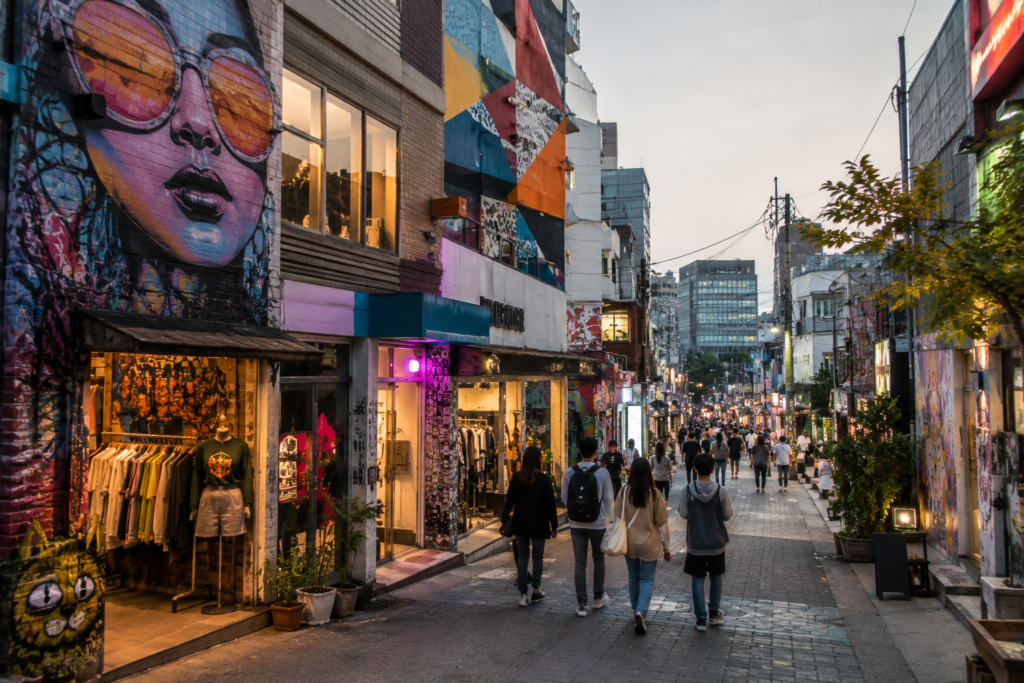
Hongik University station is on the AREX all-stop airport train route. The express is a different service: it runs nonstop between Incheon Airport and Seoul Station and does not stop at Hongdae. Check the official airport transport guide and current operator information for your terminal, fare and departure. This is a useful connection, but Hongdae is not automatically Seoul’s cheapest base. Compare the complete room price and the walk from the correct station exit, especially with luggage.
The One Real Tradeoff: Noise, Not Access
Hongdae’s bar and music streets can be noisy, so check recent reviews for the actual room rather than assuming the whole district has the same atmosphere. Myeongdong can suit shopping and central sightseeing; identify the station nearest your hotel rather than expecting every destination to be within 30 minutes. Insadong and nearby Jongno can suit palace visits and traditional streets, but quietness and dining choices depend on the address. Map your first two sightseeing days before choosing a base.
The Market Trick Most Visitors Miss
Compare market stalls, supermarkets and convenience stores by quantity and season. Fruit prices vary with variety, packaging and import status, so a fixed strawberry-price comparison is not a reliable saving rule. Markets are useful for exploring local food, but check posted prices and portion sizes before ordering. A mix of ordinary restaurants, market meals and supermarket purchases gives you flexibility without requiring every meal to be the cheapest possible option.
What a Realistic Seoul Trip Actually Costs in 2026
Build the trip total in Korean won: accommodation per room per night, meals per person, city transport, airport journeys, admissions and mobile data. Compare current quotes and cancellation terms rather than relying on an unexplained two-week dollar total or hotel inflation percentage. For a SIM or eSIM, check device compatibility, data limits, validity start time and whether voice calls are included. Keep shopping outside the essential-cost total and add a reserve for changes.
Free Experiences That Anchor a Budget Itinerary
The National Museum of Korea offers free permanent exhibition access, while some special exhibitions charge separately. Public parks and neighborhood walks can fill lower-cost days, but tower observation decks and palace visits need separate checks. Bukchon is residential: the designated red zone restricts tourist access from 17:00 to 10:00. Follow current signs and keep noise low. Spring blossoms and autumn foliage are seasonal experiences, not a guarantee of lower hotel or flight prices.
Worked Seoul Day Budget
For one adult, illustrative allowances of ₩70,000 accommodation + ₩8,000 breakfast + ₩12,000 lunch + ₩18,000 dinner + ₩8,000 city transport + ₩10,000 admissions total ₩126,000 per day. These are planning examples, not live rates or a transit pass price. For two adults sharing that room, the combined day is ₩182,000; over 14 identical days, ₩2,548,000. Add flights, airport transport, mobile data, shopping and a contingency separately.
Essential Internal Resources
Before you finalize your Seoul trip, these guides cover the planning layers around it:
- For timing flights around seasonal pricing: Finding Flights Off Peak Season
- For protecting your trip financially: Travel Insurance Comparison for Budget Trips
- For eating well without overspending: How to Save Money on Food While Traveling
- For the full trip-planning framework: How to Plan a Trip on a Budget
More Asia-Pacific Budget Guides
Combining Seoul with a longer trip through the region? These guides cover costs and planning for other Asia-Pacific cities:
Tokyo · Bangkok · Singapore · Sydney
Frequently Asked Questions
Is Hongdae really the cheapest area to stay in Seoul?
There is no guaranteed cheapest district. Compare equivalent rooms for your dates. Hongdae’s airport connection is on the AREX all-stop service, not the express.
What’s the main downside of staying in Hongdae?
Noise can matter near nightlife streets. Check reviews for the actual room, the station walk and the trips you plan to make.
How much does a two-week Seoul trip cost for two people?
Price shared accommodation by room and individual meals, transport and admissions separately. The worked example below shows the arithmetic; replace allowances with current quotes.
When is the cheapest time to visit Seoul?
Compare date-specific flights and rooms. Spring and autumn can be attractive for sightseeing, but blossoms, holidays and events can increase demand.
Want More Free Travel Resources?
Explore more accommodation, transport and food-planning guides at Par & Jah Travels.
Conclusion
Choose a Seoul base around your airport arrival and the neighborhoods you plan to explore. Use the correct AREX service, compare room noise and facilities, and combine free permanent museum galleries with paid sights you specifically want. A budget in won makes the tradeoffs easier to see than a single unexplained dollar estimate.

Marsha Rowe is the Founder and Travel Strategist at Parandjah Travels. She uncovers high-intent travel intelligence, specializing in slow travel frameworks and sports event logistics.