
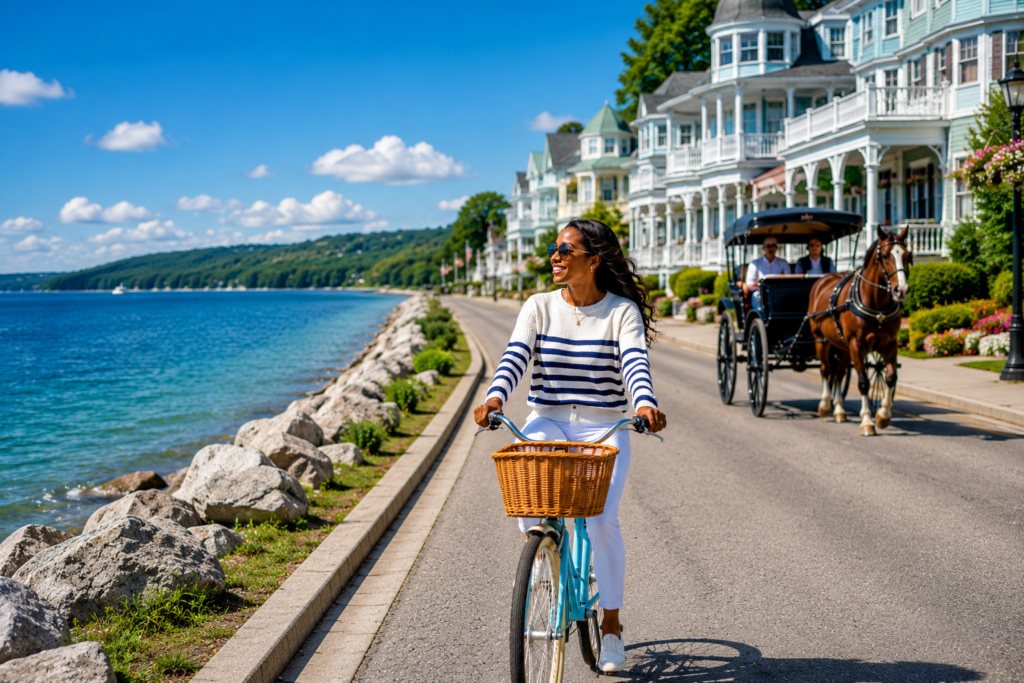
Mackinac Island, Michigan, offers walking, cycling, historic buildings and a slower pace between Michigan’s Upper and Lower Peninsulas. It can suit a day trip or an overnight stay, but it is not a guaranteed cheap substitute for Europe. Your budget depends on how you reach the mainland ferry, lodging, parking, activities and meals. This guide separates the island-day cost from the complete trip cost.
Why Mackinac Island Works as a Slow Travel Destination
The principle behind European slow travel dupes is simple: find a place that delivers the same core experience as a famous destination — historic architecture, pedestrian-only streets, genuine local food culture — without the inflated price tag or the crowds. Mackinac Island passes that test for North American travelers.
Visitors generally leave personal cars on the mainland and explore by foot, pedal bicycle or horse-drawn transport. The island has historic hotels, inns and shops, but ownership and branding do not guarantee low prices. Plan for a busy downtown in peak season and for the distance and elevation of the places you want to visit.
Great Lakes weather can make the island appealing for a summer break, but do not treat a regional temperature range as a daily forecast. Pack layers and rain protection, and check ferry conditions before traveling.
The Budget Strategy: Day Trip vs. Overnight Stay
The single most expensive element of visiting Mackinac Island is an overnight hotel room during peak summer weekends. The day-trip strategy bypasses that entirely.
The day-trip approach:
- Book an affordable hotel or campground in St. Ignace or Mackinaw City on the mainland
- Check the official ferry fare and conditions; online tickets do not necessarily reserve a sailing
- Take the earliest morning ferry to the island
- Pack your own lunch in a daypack to avoid restaurant prices
- Spend the full day on state park trails and the M-185 outer loop
- Choose a return sailing with a boarding margin and confirm the day’s last departure
For 2026, Shepler’s published prices list a US$39 basic adult round trip plus a US$2 booking fee per ferry ticket, US$21 for a standard non-electric bicycle and US$15 day parking per vehicle. Treat these as dated operator prices, not a quote for a future season. Add food, any bicycle rental, admissions, mainland accommodation and travel to the docks separately.
If you want to stay overnight: Compare exact dates and opening schedules. May or October may offer different rates and fewer open businesses; weather is not guaranteed. The Lilac Festival is a June event, with June 4–13 announced for 2027, so do not book a May stay assuming peak lilac festivities.
Getting There: Ferry Routes and Mainland Parking
Two mainland departure points serve Mackinac Island:
- Mackinaw City — southern departure point, most accessible from lower Michigan and Chicago
- St. Ignace — northern departure point, closest to the Upper Peninsula
Compare official ferry timetables, ticket terms, luggage and bicycle charges for your departure point. Online purchase can be convenient, but is not always cheaper or a reserved departure. Confirm the final return sailing and arrive with a margin before boarding.
Mainland parking: Shepler’s lists US$15 day parking per vehicle for 2026. Overnight lots have different rates and arrangements. Check your chosen operator and lot; parking is not necessarily included in the ferry fare.
Getting Around the Island
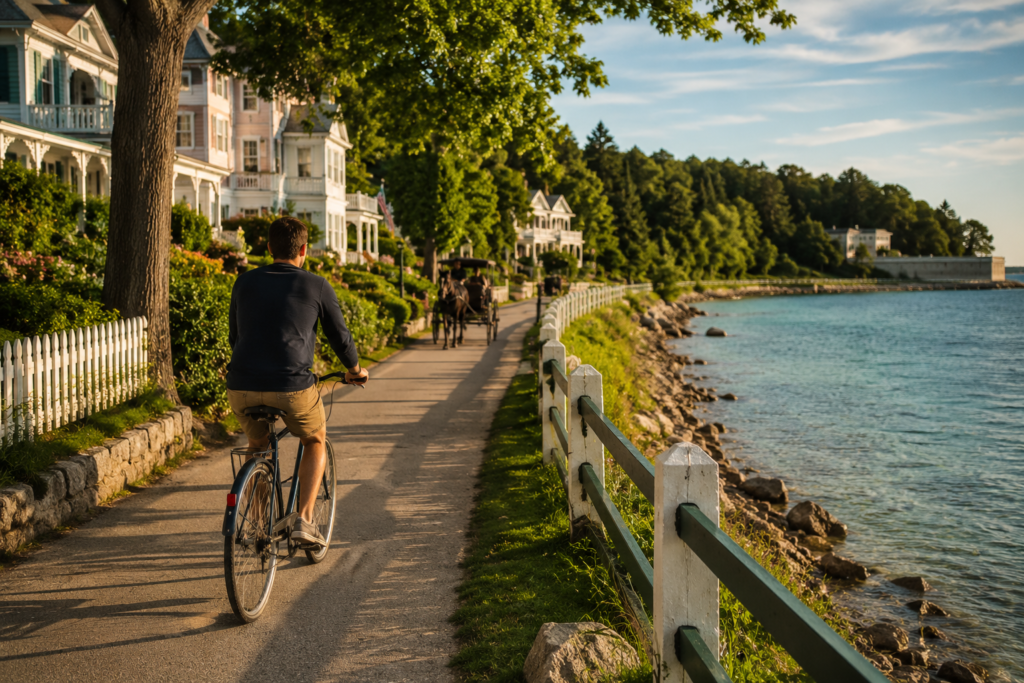
Bicycles are the primary way to explore. The M-185 — the only state highway in the US that bans motor vehicles — circles the island’s 8-mile outer perimeter. The flat outer loop takes 1.5-2 hours at a casual pace and provides continuous Great Lakes views.
Bicycle rental options:
- Compare current hourly and daily rental quotes, including tax, locks and late return charges
- Compare the current ferry bicycle fee with rental cost; Shepler’s lists US$21 for a standard bicycle in 2026
- Ask whether your hotel includes bicycles or charges separately
Horse-drawn carriages operate as taxis for visitors who can’t cycle. Call central dispatch and a carriage will transport you between your hotel, downtown shops, or state park landmarks at a standard per-person fare.
Important: Mobility scooters and permitted e-cycles are not interchangeable. The tourism bureau’s current e-bike guidance requires a qualifying mobility disability and City licensing. Check the exact cycle class, permit and ferry process before bringing one; do not rely on a retail scooter website for local rules. See the official accessibility guide for mobility aids and accessible transport.
What to Do: Beyond the Fudge Shops
Downtown shops are one part of the visit. If you want more time outdoors, plan a route with the state park map and allow time for hills, rest stops and the ferry return.
The Interior Trails Most Visitors Never Find
More than 80% of the island is state park. Interior routes include wooded areas and limestone bluffs, but are not guaranteed to be empty. Check which paths allow bicycles and where you need to walk; steep climbs and unpaved sections can change the time and effort required.
Fort Holmes: The Best View on the Island
Fort Holmes is a viewpoint at the island’s highest point. Plan for the climb and check the official park map for access. It may not suit every mobility level, and the quality of the view depends on weather.
Arch Rock and Sugar Loaf
Arch Rock and Sugar Loaf are notable limestone formations. Check the park map for the approach, steps and bicycle restrictions instead of assuming every viewpoint is reached by a short easy detour from the shore road.
Victorian Architecture on the Bluffs
The bluffs above the harbor are lined with massive, beautifully preserved Victorian summer cottages built in the late 19th century. A horse-drawn carriage ride or bicycle climb through these residential lanes is the closest North American equivalent to walking the preserved streets of a central European historic town.
Food: What to Eat and How to Keep Costs Down
The fudge: Downtown shops offer a way to watch fudge-making and compare products. Ask what demonstrations or samples are available rather than assuming every visit includes free food.
Great Lakes whitefish: Compare current menus if you want to try it. It is an option, not a mandatory meal; prices and quality vary by restaurant and serving size.
Cost-cutting: A packed meal may save money. Compare the food you buy with the meal you would otherwise order, and bring suitable storage and drinking water. There is no fixed US$20–30 saving per person.
The Cultural History Worth Understanding
Mackinac Island has a long Indigenous history preceding European settlement. Use the state historic parks’ interpretation and museum exhibits to learn about the Anishinaabek communities connected to the island rather than reducing that history to a scenic comparison with Europe.
The island’s restrictions on motor vehicles have historical roots, with authorized exceptions for essential operations and mobility needs. Check current visitor rules rather than assuming only emergency vehicles are ever permitted.
Essential Packing List for Mackinac Island
Since there’s no car to leave things in:
- Quality walking shoes — expect 10,000-20,000 steps on the bluff trails
- Layered clothing — northern lake breezes drop temperatures quickly from afternoon into evening
- A lightweight daypack — essential for carrying water and layers on your bicycle
- Sun protection — Lake Huron reflection is intense during midday rides
- Offline map downloaded — cell service gets spotty on interior trails
How This Connects to the Slow Travel Framework
The same principles that make Kampot, Plovdiv, and Ohrid work as slow travel destinations apply here: move slowly, stay in locally owned accommodation, eat where locals eat, and give yourself enough time to stop navigating like a tourist.
A slower visit can include time beyond downtown, but confirm lodging before deciding to stay overnight. Never let the last ferry leave without a booked room and a viable plan for the next day.
For the full slow travel framework applied to European destinations, the 6 Europe Travel Dupes Under $50/Day guide covers the same philosophy applied internationally. For the Southeast Asia version, the Slow Travel Guide for Southeast Asia covers the extended-stay mechanics in detail.
Essential Internal Resources
These guides on Parandjah Travels cover the related planning layers:
- For the slow travel philosophy applied globally: Sustainable Travel Practices
- For European destinations with the same car-free, pedestrian feel: 6 Europe Travel Dupes Under $50/Day
- For the extended slow travel framework: Slow Travel Guide for Southeast Asia
- For timing any trip around shoulder season: Best Time to Visit Popular Destinations
- For the complete trip planning checklist: How to Plan a Trip on a Budget
Worked Day Budget: What the Island Total Leaves Out
Illustrative 2026 day for one adult walking rather than renting a bicycle: US$39 ferry + US$2 booking fee + US$15 vehicle parking + US$20 food allowance = US$76. This excludes driving, mainland lodging and paid attractions. For two adults sharing the same car, parking is US$15 once, not twice. Bringing a standard bike adds the operator’s bicycle transport fee; renting on the island adds a separate rental charge.
Frequently Asked Questions
Can you bring a car to Mackinac Island Michigan?
Visitors generally leave personal cars on the mainland. Check ferry parking arrangements and current island mobility rules before traveling.
How long does it take to bike around Mackinac Island?
The shoreline loop is about eight miles. A casual ride may take roughly one-and-a-half to two hours before longer stops, but ability, weather and congestion affect the time. Interior routes add climbs and may require walking.
Is Mackinac Island open year-round?
The island has year-round residents, while visitor services and transport are seasonal and weather-dependent. Check each business and ferry’s actual operating dates before a winter or shoulder-season visit.
What’s the cheapest way to visit Mackinac Island?
Compare a walking day trip from a mainland base with an island overnight stay. Ferry, parking, meals, admissions and mainland accommodation must all be included; there is no guaranteed under-US$80 complete trip.
Want More Free Travel Resources?
Grab the free 2026 Travel Dupes Cheat Sheet for more budget-friendly destination ideas — including European slow travel picks that share Mackinac Island’s car-free, pedestrian-first philosophy. Subscribe at the top of parandjahtravels.com to download it instantly.
Conclusion
Mackinac Island can reward a slower visit, whether you spend a day walking or book an overnight stay. Compare current ferry and accommodation costs, check the route and accessibility of each attraction, and plan the return before setting out. The best budget is the complete one, including the mainland portion of the trip.

Marsha Rowe is the Founder and Travel Strategist at Parandjah Travels. She uncovers high-intent travel intelligence, specializing in slow travel frameworks and sports event logistics.