
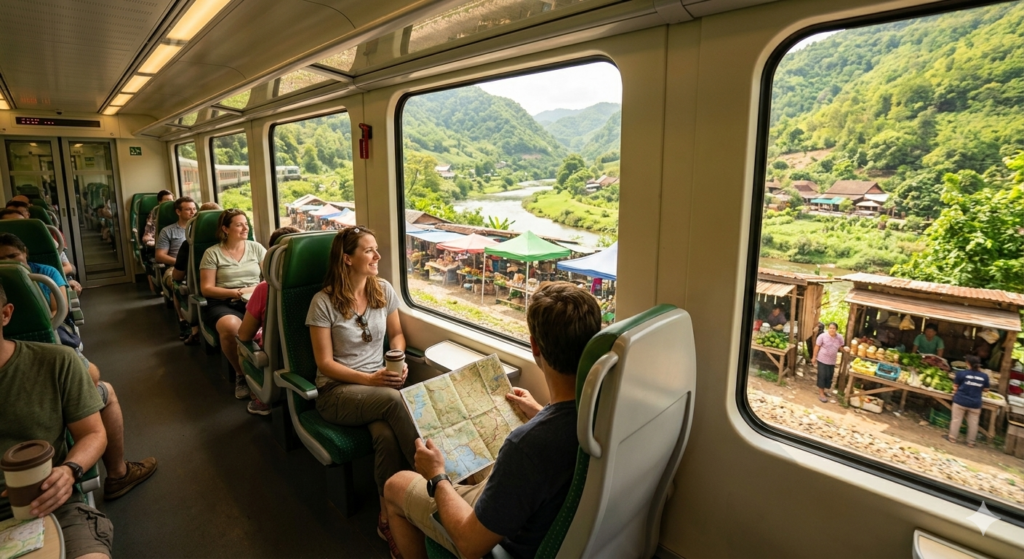
Most sustainable travel content is written for people who can afford to feel guilty. It recommends expensive carbon offsets, certified luxury eco-lodges, and overland expeditions that cost twice what a normal trip does, then wraps it in a tone that implies you’re a bad person for flying. That approach alienates the travelers who actually make up the majority of global tourism. This comprehensive guide to sustainable travel practices is built differently. It starts from a simple, proven observation: low-impact travel and budget travel are exactly the same thing, just dressed up in different language. Stay longer. Spend less per day. Move slower. Support local businesses instead of multinational hotel chains. Every one of those instincts directly saves you money and reduces your footprint.
| Eco-Travel Pillar | Low-Impact Action Strategy | Strategic Value & Internal Guide Links |
|---|---|---|
| 🍂 Seasonal Windows | Shifting trip calendars to protect overcrowded municipal infrastructure. | Cuts lodging rates up to 50%. Target the best windows using our Seasonal Guides. |
| ✈️ Transit Optimization | Prioritizing regional rail networks over short-haul domestic flights. | Bypasses baggage fees. Source smart alternative transit via our Flight Hacks Guide. |
| 🏝️ Over-Tourism Mitigation | Exchanging hyper-commercial corporate zones for regional neighbors. | Keeps money local. Discover fresh options inside our Alternatives to Bali guide. |
Why Most Sustainable Travel Advice Misses the Point
The standard sustainable tourism narrative frames the problem as a premium consumption choice: buy the right eco-certified product, offset the right amount of emissions, and stay at the right niche lodge. That corporate framing serves premium brands trying to greenwash their images, not independent travelers operating under real-world budget constraints.
The Economic Overlap of Green Travel
Here is what that mainstream narrative completely misses: the most effective, high-yield sustainable travel practices—such as slow travel, regional train transit, local guesthouses, and shoulder-season timing—are also the absolute cheapest choices available to consumers. The overlap isn’t a coincidence. Both raw budget travel and low-impact travel push hard against the same structural problem: high-velocity, high-spend, high-emission mass tourism built around speed, convenience, and corporate extraction.
When you intentionally reframe sustainability as an intentional travel style rather than an expensive product category, implementing daily sustainable travel practices gets immediately more useful, actionable, and accessible to anyone, regardless of their financial background.
The Sustainable Travel Practices Framework: Four Levers You Control
You do not need a luxury sustainability certification or a premium eco-tour agency to travel responsibly around the world. Instead, you just need to anchor your itinerary around core sustainable travel practices by pulling these four foundational operational levers in the right direction:
[1. WHERE YOU GO] ---> Choose Lower-Volume Regional Alternatives
[2. HOW YOU GET THERE] ---> Optimize Transit via Rail & Direct Flight Routes
[3. HOW LONG YOU STAY] ---> Commit to Extended Stays (10+ Days Minimum)
[4. WHERE MONEY LANDS] ---> Spend Directly with Family-Owned Local Operators
1. Where You Go (Sustainable Destination Choices)
Choosing a less-visited destination remains one of the most effective sustainable travel practices you can adopt, and it usually costs a fraction of the price. Overtouristed hotspots require massive, carbon-heavy infrastructure, artificially drive up local living costs, and funnel their revenue directly toward international corporate operators. Lesser-known destinations do not suffer from these extraction models.
- Concrete Action: Replace one headline capital or overrun island destination with a regional neighbor. For example, instead of fighting the crowds in Santorini, consider exploring the Peloponnese region. Instead of booking an enclosed resort in Bali, explore lower-impact cultural alternatives where your currency reaches local families rather than offshore resort conglomerates.
2. How You Get There (Low-Impact Travel in Transit)
Flights heavily dominate the carbon math of any journey. Aviation consistently accounts for the largest single share of a leisure traveler’s total carbon footprint per trip, often totaling more than accommodation, ground transport, and dining combined. That stark environmental reality makes your flight decisions the highest-leverage sustainable travel practices choice on your entire itinerary.
- Concrete Action: Always prioritize and book direct routes. Every single connection adds an extra takeoff and landing cycle, which are by far the most fuel-intensive and polluting phases of flight. If your ultimate destination is reachable by high-speed or regional train networks within a reasonable timeframe, choose the train as part of your regular sustainable travel practices routine.
3. How Long You Stay (Slow Travel as the Core Green Practice)
The mathematical reality of transit emissions is straightforward: if you fly once and stay at your destination for three consecutive weeks, your per-day carbon cost from that flight is significantly lower than flying twice for short, one-week holiday trips. Committing to fewer, longer trips is one of the ultimate sustainable travel practices for long-distance adventurers. Longer stays also directly translate to lower average daily accommodation costs and allow for a deeper, more intentional integration into local spending systems.
- Concrete Action: Commit to a strict minimum of ten days per long-haul destination. If a trip’s duration is so short that you are spending more time flying than you are staying on the ground, scratch it and reconsider the itinerary.
4. Where Your Money Lands (Responsible Spending on the Ground)
International hotel chains systematically extract revenue out of local economies, a phenomenon economists call “tourism leakage.” Supporting local shopkeepers is a foundational element among ethical sustainable travel practices. On the flip side, neighborhood guesthouses, family-run restaurants, and independent neighborhood guides keep currency circulating directly within the community you are visiting.
- Concrete Action: Book your accommodation directly with the local property owners, avoiding global online travel agencies (OTAs) whenever possible. Eat exclusively where the locals eat and hire independent local guides for day excursions.
Eco-Friendly Travel Tips That Actually Save You Money
Sustainability and raw budget travel overlap most prominently in the tactical details of your trip. Here is an overview comparing how these two core disciplines align to give you maximum value:
| Travel Element | Eco-Friendly Benefit | Financial Budget Benefit |
|---|---|---|
| Shoulder Season Booking | Spreads visitor volume, reducing peak infrastructure strain on cities. | Saves 20% to 40% on base accommodation and hotel tariffs. |
| Carry-On-Only Luggage | Lowers overall aircraft weight, burning less fuel per passenger. | Eliminates checked bag fees entirely on budget carriers. |
| Regional Rail Travel | Emits up to 80% less carbon per kilometer than domestic short-haul flights. | Bypasses premium airport transfers and expensive last-minute flight hikes. |
| Locally-Owned Stays | Prevents economic leakage to international corporate conglomerates. | Offers significantly cheaper nightly rates than global hotel chains. |
Shoulder Seasons: The Green and Cheap Travel Sweet Spot
Shoulder season travel—arriving just before or immediately after a destination’s peak tourist period—is one of the clearest examples of when specific sustainable travel practices beat peak-season travel on every single metric that matters.
Destinations like Portugal’s Alentejo region or Slovenia’s Julian Alps routinely deliver 20% to 40% lower hotel rates in shoulder months compared to their compressed July–August peaks. The environmental benefit is equally profound: spreading visitor volume evenly across more months of the calendar year vastly reduces the infrastructure strain, waste management failures, and water shortages that overtourism causes during compressed peak windows. Relying on seasonal timing allows you to practice effective sustainable travel practices effortlessly. Fewer crowds also mean a drastically better, less stressful travel experience for you.
[Spring Shoulder] [Peak Summer] [Autumn Shoulder]
Good Weather / Low Cost Crowded / Max Premium Good Weather / Low Cost
(OPTIMAL) (AVOID) (OPTIMAL)
September in Southern Europe, April in Southeast Asia, and November in Central America are incredibly reliable shoulder windows that consistently hit the perfect sweet spot of excellent weather, lower prices, and reduced overtourism pressure.
Carry-On-Only Travel Cuts Emissions and Baggage Fees
Packing light is one of those rare, satisfying travel choices where environmental logic and financial logic point in exactly the same direction. Airlines burn significantly less fuel per passenger when the overall baggage load of the aircraft is lightened; checked bags add massive, measurable weight when aggregated across a full flight. Aligning your luggage habits with smart sustainable travel practices helps clear out airport friction.
From a financial standpoint, checked-bag fees on popular budget carriers like Ryanair, Spirit, and Wizz Air typically run anywhere from $60 to $150 round-trip. Mastering carry-on-only travel eliminates those predatory fees entirely while making you a faster, more agile traveler on the ground. It is not an uncomfortable sacrifice; it is a liberating discipline that pays off instantly in cold cash and logistical convenience.
How to Choose Sustainable Destinations Without a Guidebook
The “anti-bucket list” lens is the most practical framework you can utilize for responsible destination choices. The logic is simple: destinations with lower historical visitor volume tend to have lower infrastructure strain, higher rates of direct community financial benefit, and more authentic cultural experiences by default, not by design. Adopting these research habits expands your repertoire of sustainable travel practices.
We consistently find that places like Georgia (the country), North Macedonia, and the Azores score incredibly high on both core sustainability indicators and raw budget value. Lower visitor volume means less artificial competition for accommodation, lower base prices for food, and more of every single dollar reaching local operators rather than international management companies.
For a quick-vetting checklist, ask these three foundational questions about any destination you are actively considering:
- Is the tourism industry locally owned? If the primary hotels, transport fleets, and tour operators are owned by international brands, your money is largely leaving the community.
- Is the destination capacity-strained? Clear signs include overtourism complaints in local press, overcrowded UNESCO sites, and local housing pricing driven up by tourism demand.
- Can you get there without flying? If a reliable train, bus, or ferry connection exists, it is almost always both cheaper and significantly lower-emission.
Use these specific questions to navigate away from tourist traps and toward affordable hidden gems in Europe under $50/day and their equivalents in other global regions.
Green Travel Practices in Transit: Flights, Trains, and Local Logistics
Flights are sometimes unavoidable for international travel, and this guide is not going to tell you to stop taking them. However, the choices you make around your flights have real financial and environmental consequences. Evaluating your transit modes is a core pillar of modern sustainable travel practices.
Direct Routes Over Connections
Stopovers frequently feel like they save money on paper, but they add extra takeoff and landing cycles, which are disproportionately fuel-intensive and emit the highest concentrations of carbon. A direct flight is often far more efficient and less damaging than two shorter hops, even if the initial ticket price looks slightly higher.
Train-First Logic in Europe and Southeast Asia

Europe’s comprehensive rail network covers most major city pairs at incredibly competitive prices, especially when booked in advance. In Southeast Asia, taking overnight sleeper trains between cities like Bangkok and Chiang Mai, or Hanoi and Da Nang, costs a mere fraction of a budget flight once you factor in airport transfers and baggage fees, while producing up to 80% lower emissions per passenger kilometer.
Ground Transfers Matter More Than People Think
The airport-to-city leg is where travelers consistently overspend out of pure exhaustion. A private airport taxi can easily cost five to ten times what a metro line or express bus costs for the exact same journey. The cheapest airport-to-city transfer options—such as the metro, train, or scheduled municipal bus—are also the absolute lowest-emission travel choices available on the ground.
How to Travel Sustainably as a Slow Traveler or Digital Nomad
Slow travel is the single most impactful choice available within modern sustainable travel practices for any traveler who possesses schedule flexibility. The structural reasoning for this lifestyle shift holds up at every single level of economic and environmental analysis.
[TRADITIONAL SPRINT] [SUSTAINABLE SLOW TRAVEL]
Frequent Flights + Global Chains Single Flight + Local Neighborhoods
= High Carbon / High Leakage = Low Carbon / Deep Local Economy
The Core Benefits of Extended Stays
- Emissions Per Trip Day Drop Sharply: If you fly to Lisbon and stay for six weeks, the carbon cost of that flight is distributed across 42 days of travel. If you fly for five days, you carry the same emissions across a tiny window. The math is completely unambiguous.
- Local Spending Deepens: Short-stay travelers rely on convenience stores and tourist-trap restaurants. Slow travelers find the neighborhood bakery, the weekly produce market, and the local gym. This spending pattern keeps money circulating in the community.
- Daily Costs Fall: Monthly apartment rentals in cities like Tbilisi, Medellín, or Chiang Mai are consistently cheaper on a per-night basis than hotel rates. Cooking some meals at home rather than eating out every night cuts costs further.
Case Study: Southeast Asia and Digital Nomad Logistics
Southeast Asia serves as a live case study for this overlap. Travelers who base themselves in one city for three to four weeks spend significantly more at local businesses, use less aviation fuel per trip day, and report lower daily costs than those hopping between countries on a two-week sprint. Testing regional hubs allows you to experience how real-world sustainable travel practices function on the ground.
For digital nomads specifically, slow travel isn’t a lifestyle compromise; it is the most logistically sensible way to work remotely while traveling. Stable accommodation, reliable internet, and a predictable daily routine are all easier to establish when you are not packing your bags every three days. Locating affordable coworking spaces for slow travelers bridges the gap between accommodation choices and productive remote work, which is what makes the slow travel model actually sustainable long-term.
The responsible travel framework for travelers without unlimited budgets isn’t a list of premium eco-products. It is a choice: go somewhere less visited, get there efficiently, stay longer than you think you should, and spend your money where it reaches real people. Broadly speaking, sustainable travel practices have always been pointing in the same direction as budget travel. Most guides just haven’t said so plainly.
Conclusion: Integrating Sustainable Travel Practices Seamlessly
Adopting effective sustainable travel practices does not require you to compromise your travel budget or change your identity as an adventurous explorer. By prioritizing slow travel windows, shifting away from corporate infrastructure, packing light, and using rail networks, you naturally align your financial savings with the long-term protection of the planet. Consistently repeating these sustainable travel practices will ensure your journeys remain meaningful, low-impact, and highly affordable for years to come.
Planning more budget-friendly trips using these exact strategies? Check out our other aligned guides:
If you are currently optimizing your upcoming itineraries, don’t miss our other practical resources. Save money on your transit bookings by mastering our guide on Travel Hacks For Saving On Flights That Actually Work In 2026, and make sure you pick the perfect window for your trip by analyzing our breakdown on the Best Time To Visit Popular Destinations: Shoulder Seasons Win. If you need a base to work from while traveling slowly, we also have an ultimate list of the best Coworking Spaces For Digital Nomads Cheap setups available globally to keep your remote business highly profitable.