

Hotel booking for a major sporting event needs a location and cancellation plan as well as a room search. Rates and availability can change, but a universal 200–400% increase or a claim that inventory is already disappearing is not useful without dated quotes. This guide explains how to compare a future host-city stay using your event sessions, total accommodation cost and the journey home.
Why Host City Hotel Booking Is Different From Regular Travel
Major sporting events change a city’s hotel market in ways that regular demand doesn’t. Hotels know demand is coming months in advance and adjust inventory accordingly. Travelers who search using the same approach they’d use for a beach weekend miss the window where price and availability are still favorable.
Three things make event hotel booking structurally different:
Availability varies. Well-connected rooms may be popular, but there is no universal sellout order. Check several properties for the exact dates and room count; distinguish unavailable rooms from dates not yet released.
Cancellation terms are rate-specific. A hotel can offer different flexible and prepaid rates. Save the policy attached to your confirmed reservation and any cancellation cutoff; do not assume new terms advertised later replace your existing contract.
Transport affects the total. Check the last scheduled return service, walking access, event road closures and an alternative plan. Price a late taxi or private transfer without assuming a fixed US$60 fare.
World Cup 2026: A Past Event, Not a Current Booking Window
The 2026 World Cup has concluded. Its 16 host cities across three countries offer a useful example of complex event logistics, but the June and July 2026 dates are not upcoming booking opportunities. FIFA’s tournament notice confirms the event has ended. Treat this site’s 2026 World Cup articles as historical planning references and verify current rules for any new trip.
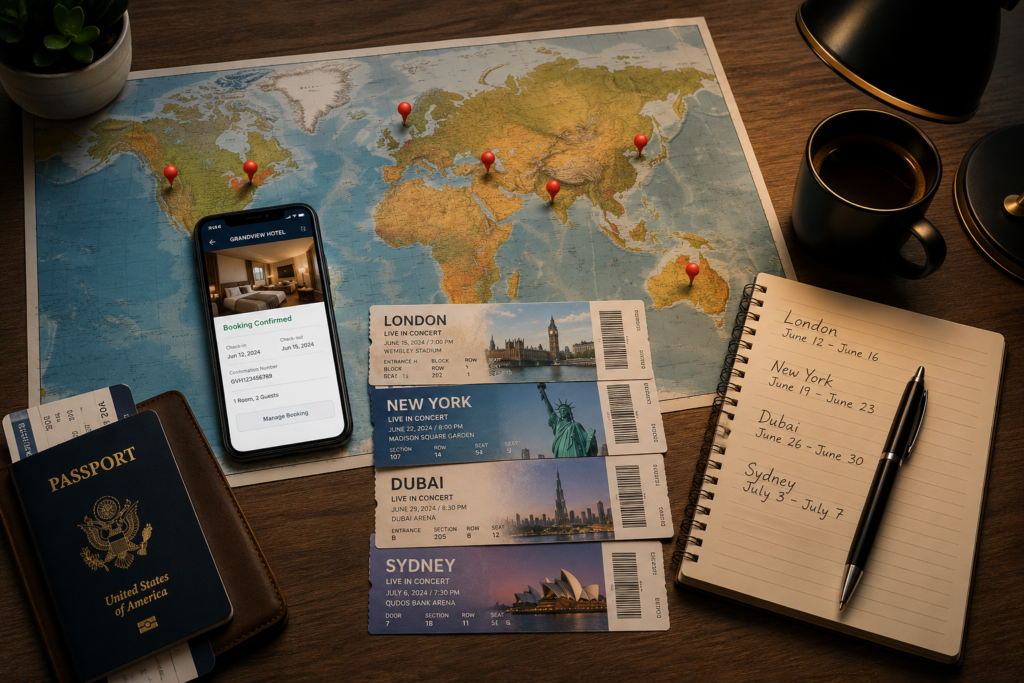
LA28: Match the Accommodation to Your Confirmed Events
The LA28 Olympic Games run July 14–30, 2028. LA28 announced in August 2026 that Airbnb bookings are available. Hotel booking horizons and inventory differ by property; there is no universal hotel release date or proven best booking month.
Start with your actual sessions and the official competition zone. LA28 recommends staying near the zone where you will attend the most events. Check each hotel’s calendar, taxes, minimum stay and cancellation deadline. For multiple zones, compare the complete daily travel plan. Being near a Metro line does not guarantee direct Games transport to every venue.
Location Strategy: Transit Over Proximity
The most common host city hotel booking mistake is optimizing for walking distance to the venue rather than transit access to the venue corridor.
Nearby rooms can reduce travel, while a room farther away may cost less. Compare actual quotes and routes rather than assuming stadium hotels are always the most expensive or difficult. For a transit-based stay, check:
- A lower or higher full stay cost, depending on the dates and property
- Food options that fit your needs and budget
- A return service operating after the event, with a backup if it is disrupted
For multiple venues: Compare travel times from each candidate hotel to every confirmed session. A central location may help, but it can also add transfers. Choose the base with the workable return plan and acceptable complete cost.
Timing: Book When the Dates, Total and Terms Work
For a future event, begin researching once the organizer publishes dates and venues. A property may not yet be selling your dates. An unavailable calendar can mean rooms are unreleased, not sold out.
If tickets or the schedule are uncertain, weigh a refundable reservation against waiting. Confirm the cancellation deadline in the property’s time zone and the actual penalty. A later non-refundable offer is worthwhile only if the saving justifies the risk; do not assume an existing reservation automatically changes policy.
Avoid holding speculative rooms unless you can meet every payment and cancellation deadline. A team’s possible progression or an event ticket application is not a confirmed reason to take on several non-refundable stays.
Group Coordination for Event Hotel Booking
Groups face a specific challenge in host city markets: the best-located properties have limited multi-room inventory, and splitting a group across different neighborhoods creates significant logistics problems on event days.
Practical group booking approach:
- Research the room count early — ask whether the property can accommodate everyone on the same dates.
- Ask for a group quote — compare deposits, minimum room commitments, cancellation penalties and payment deadlines with individual reservations.
- Compare one property with split stays — keeping everyone together may simplify the trip, but compare the price and transport cost before deciding.
- Prioritize properties with group-friendly layouts — suites, interconnecting rooms, and common areas matter more for a group than they do for solo travelers
For the full hotel booking strategy including how to negotiate direct rates, see the How to Book Hotels Without Paying Booking Fees guide.
What to Verify Before Confirming Any Booking
Beyond the nightly rate, check these before clicking confirm on any event-period hotel:
- Cancellation policy — record the exact cutoff, property time zone, refund method and penalty from your confirmed rate.
- Resort or event surcharges — some properties add mandatory event-period fees that don’t appear until the checkout screen
- Parking — check the hotel’s actual price, availability and any event road restrictions.
- Breakfast hours — if you have early match times, confirm the hotel serves breakfast before your departure window
- Luggage storage — useful on arrival day when check-in isn’t available yet, or on departure day for late flights
Essential Internal Resources
These guides on Parandjah Travels cover the related planning layers:
- For Mexico 2026 World Cup host city accommodation: Mexico 2026 World Cup Accommodation Guide
- For the Follow My Team knockout stage hotel strategy: Follow My Team World Cup 2026
- For the LA 2028 Olympics accommodation window: LA 2028 Olympics Budget Travel Guide
- For booking hotels without paying OTA fees: How to Book Hotels Without Paying Booking Fees
- For coordinating hotel with flights and transfers: Flight and Hotel Coordination Guide
Worked Comparison: Room Rate Versus Event-Day Cost
Illustrative four-night quote: Hotel A totals US$880 plus US$120 for two late return transfers, or US$1,000. Hotel B totals US$960 plus US$24 in usable transit fares, or US$984. Hotel B saves US$16 only if that return service actually runs after your sessions. Compare taxes and cancellation terms on the same basis.
Frequently Asked Questions
What is the best time to book a hotel for a major sporting event?
There is no universal best month. Start once dates and venues are published, check when properties release rooms and book when the total and cancellation terms fit your confirmed or provisional plans. The 2026 World Cup has ended.
How do I manage hotel booking for a large group at a World Cup or Olympics?
Request quotes for the exact room count and occupancy. Compare group deposits and cancellation liabilities with individual reservations. One hotel simplifies coordination but is not always worth a large premium.
Can I save money by booking slightly outside the main host city zones?
Possibly. Compare room totals with transport costs and check the last return service. A cheaper suburb can cost more after late transfers; a nearby hotel may reduce travel enough to justify its price.
What cancellation terms should I look for on event hotel bookings?
Read the exact deadline, time zone, penalty, prepayment requirements and refund method for your rate. Free cancellation is only valid within the stated conditions, not a universal 48–72-hour allowance.
Want More Free Travel Resources?
Grab the free 2026 Travel Dupes Cheat Sheet for budget-friendly destination ideas to extend your World Cup or Olympics trip beyond the host cities. Subscribe at the top of parandjahtravels.com to download it instantly.
Conclusion
Choose your hotel around confirmed event dates, an affordable total and a workable return route. Use flexible terms while plans remain uncertain, and keep the confirmation and cancellation deadline. The 2026 World Cup is over; for LA28 and other future events, verify the organizer’s current schedule and the property’s actual availability.

Marsha Rowe is the Founder and Travel Strategist at Parandjah Travels. She uncovers high-intent travel intelligence, specializing in slow travel frameworks and sports event logistics.