

For budget travelers, useful 2026 vacation ideas include staying longer in fewer places, considering a cooler destination, shopping locally and comparing rail with flying. This is a planning guide, not a ranking based on a representative traveler survey. Each idea is worth testing against your dates, total cost, access needs and entry conditions.
| Trend | What It Means for Your Trip | Where to Start |
|---|---|---|
| Coolcations | Choosing northern or high-altitude destinations to escape summer heat | Scandinavia, Scottish Highlands, Azores |
| Slow travel | Using fewer bases and allowing more time for local routines, with no fixed minimum stay | Chiang Mai, Plovdiv, Tbilisi |
| Grocery store tourism | Exploring local food shops and comparing meal costs | Check opening hours; purchases cost extra |
| Low-carbon rail | Comparing available trains with flights door to door | Europe, Southeast Asia |
| Digital nomad hubs 2.0 | Researching alternative bases and comparing current housing, workspace and entry conditions | Tbilisi, Timișoara, Medellín |
Coolcations: Escaping the Heat Instead of Chasing It
A coolcation means choosing a destination partly for a milder climate. Check the specific town’s seasonal weather and current forecast: northern destinations can still have heatwaves, rain or disrupted transport. A cooler destination is not automatically cheaper.
The practical destinations driving this shift:
- Scandinavia: Research the exact city or hiking region; summer weather and daylight differ widely. Compare food, transport and accommodation costs, including any seasonal closures.
- Scottish Highlands: Consider a base with the transport links you need. Budget for rain, variable temperatures and the real cost of a cottage, campsite or rental car.
- Azores, Portugal: Compare individual islands, flights, ferries and car requirements. Mild weather does not guarantee cheap accommodation or reliable inter-island connections.
- Mackinac Island, Michigan: Compare ferry fares and island lodging with a mainland base. It can suit a slower trip, but peak-season rooms and transport may be expensive.
Compare complete trips rather than assuming a northern shoulder-season holiday undercuts a southern beach resort. Flights, car rental, food, weather-related closures and ferry schedules can outweigh a lower room rate.
Slow Travel: Compare Fewer Transfers with a Longer Stay
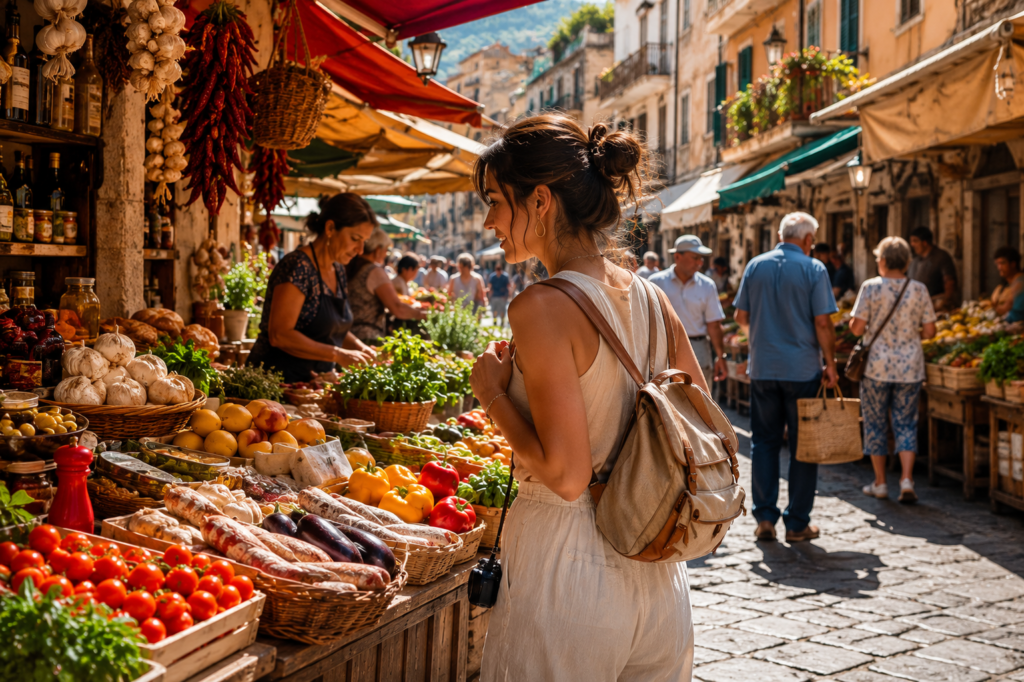
Slow travel can mean spending more time in one base instead of changing destinations every few days. There is no required two-to-four-week duration. Fewer transfers can save money and leave more time for local activities.
Changing bases can add station or airport transfers, baggage charges and meals in transit. List the costs that apply to each move in your itinerary, then compare them with staying in one base and taking day trips.
A longer stay may unlock weekly accommodation discounts and make self-catering practical. Compare the full rental total, cleaning fees, utilities, deposits and cancellation terms with hotel quotes. A rental is not always a fraction of the hotel price.
The slow travel framework is covered in full in the Slow Travel Guide for Southeast Asia and the Balkan Budget Rotation Guide — both apply the same principle to their respective regions in practical detail.
Grocery Store Tourism: Explore Local Food Shops
Exploring a local supermarket can reveal regional foods and provide affordable picnic or breakfast options. Prices vary by shop and neighborhood. Check food storage and cooking facilities before buying more than you can use.
Practically speaking, grocery store tourism is also one of the most effective budget tools available:
- Compare a grocery basket for the meals you plan with local restaurant prices, including cooking facilities, storage and any food you might waste.
- Unique regional products — olive oil, specialty cheeses, local wines, unusual spice blends — make genuinely interesting and affordable souvenirs that you’d never find in a gift shop
- Check local opening hours, access and shop rules. Browsing may be free; food, souvenirs and transport add to your costs.
A longer stay can make regular grocery shopping practical when you have suitable storage and cooking facilities. Compare the meals you will actually prepare with local eating-out options before building a saving into your budget.
Rail Travel: Compare the Complete Journey Cost
Compare trains and flights door to door. Rail may reduce airport transfers and sometimes replace a hotel night, but a berth can cost more than a flight plus accommodation. Check the exact service and comfort class rather than treating every intercity train as an overnight sleeper.
The practical routes where this logic holds strongest:
- Europe: London–Paris is a daytime Eurostar journey, not a sleeper route. For genuine overnight travel, check the Nightjet timetable and comfort categories. Seats, couchettes and sleeping-car beds are different products; do not assume a €30–50 sleeper fare.
- Southeast Asia: Compare the actual date and berth class for Vietnam rail journeys or Bangkok–Chiang Mai. Check operator timetables, duration and station transfers; an overnight journey does not guarantee restful sleep.
Beyond the cost argument, train travel delivers something airport hopping doesn’t: you actually see the country you’re passing through. The journey becomes part of the trip rather than dead time to be minimized.
Women Solo Travel: The Safety and Community Shift
For solo travelers, practical support matters more than an unverified growth statistic: clear check-in arrangements, recent accommodation reviews and a reliable arrival plan. Women-only rooms or groups may suit some travelers but do not guarantee safety.
Check what each accommodation or group actually provides:
- Accommodation: Check whether female-only dorms, lockers, staffed reception and social events are available at the property you plan to book.
- Community: Online groups can offer ideas, but independently verify guides, meeting places and transport. A social-media recommendation is not a safety check.
- Destination selection: Review current official travel advice and neighborhood-specific arrival information. An established traveler community does not mean a destination is risk-free.
The Visa-Free Travel Countries for Long-Term Stays guide covers entry requirements for most of the top solo travel destinations in detail.
Digital Nomad Hubs 2.0: Beyond Lisbon and Bali
Remote workers considering a new base should compare current furnished accommodation, internet reliability, work permission and tax obligations. A cheaper city for one person may be expensive for another, depending on housing standards and season.
Use these cities as research starting points, not guaranteed low-cost replacements for Lisbon or Bali:
- Tbilisi, Georgia: Compare dated rental and coworking quotes, and check official entry and work rules for your passport.
- Timișoara, Romania: Check housing, workspace and transport totals. Romania is in Schengen; do not treat it as an automatic way to avoid Schengen stay limits.
- Medellín, Colombia: Evaluate neighborhood, transport and current security advice alongside workspace costs.
- Skopje, North Macedonia: Check entry limits and work permission separately. Being outside Schengen does not reset the rolling Schengen allowance.
The full coworking cost breakdown by city and tier is in the Cheap Coworking Spaces for Digital Nomads guide.
Indigenous-Led and Culturally Immersive Travel
If you want community-led experiences, look for clear ownership, named guides, consent for cultural activities and an explanation of where your payment goes. Indigenous-led and locally owned are different descriptions; do not assume one from the other.
Compare local operators on quality, accessibility, price and cancellation terms. Direct booking may keep more revenue with an operator, but it is not automatically cheaper or a guarantee of a better experience.
Multigenerational Travel: Planning for Everyone
Trips with grandparents, parents and children need a plan that works across different energy levels and mobility needs. Choose the accommodation and daily pace with everyone’s actual requirements in mind.
The destinations that handle this best tend to be:
- Car-free or low-traffic environments that don’t require constant navigation around vehicle traffic
- Destinations with good medical infrastructure within reasonable distance
- Places with a mix of low-effort (café culture, markets, slow walks) and higher-activity options available independently
Before selecting Ohrid, Plovdiv, Kotor or any walking-focused destination, check hills, steps, cobbles, accessible transport and the distance to suitable medical care. A relaxed pace does not make a place accessible.
Essential Internal Resources
These guides on Parandjah Travels cover the practical application of each trend:
- For the full slow travel framework: Slow Travel Guide for Southeast Asia
- For the Balkans slow travel rotation: Balkan Budget Rotation Guide
- For digital nomad hub costs and coworking: Cheap Coworking Spaces for Digital Nomads
- For sustainable travel practices that align with these trends: Sustainable Travel Practices
- For the best shoulder season timing across destinations: Best Time to Visit Popular Destinations
Test a Trend Against Your Actual Budget
Illustrative comparison: three bases requiring two US$60 transfers and two US$20 station taxis add US$160 in movement costs. One base may avoid those costs, but an apartment charging US$180 in extra cleaning and utility fees would erase that saving. Price complete alternatives rather than assuming a travel trend must save money.
Frequently Asked Questions
What is a coolcation and why is it a 2026 travel trend?
A coolcation is a trip chosen partly for milder weather. Check the exact location and season; cooler destinations can still be expensive or experience hot weather.
What is grocery store tourism?
It means exploring local food shops or markets while traveling. Browsing may be free, but food and souvenirs cost money; check customs rules before bringing food home.
Which digital nomad hubs are replacing Lisbon and Bali in 2026?
Tbilisi, Timișoara, Medellín and Skopje are options to research, not proven replacements or guaranteed cheap bases. Compare current housing, internet, work permission and entry conditions.
Is low-carbon rail travel actually cheaper than flying in Europe?
Sometimes. Compare the exact train and comfort class with the flight, baggage, transfers and any hotel night you actually avoid. Daytime trains do not replace an overnight stay.
Want More Free Travel Resources?
Get the free 2026 Travel Dupes Cheat Sheet for destination ideas to compare with your own budget. Use either subscription form on the Parandjah Travels homepage to request the download link by email. If the message does not arrive, check your spam folder.
Conclusion
Choose the ideas that fit your dates, budget and practical needs. Compare complete costs before assuming a longer stay, local shop or overnight train saves money, and check entry and transport conditions for the actual trip. A useful trend is one that improves your own plan.

Marsha Rowe is the Founder and Travel Strategist at Parandjah Travels. She uncovers high-intent travel intelligence, specializing in slow travel frameworks and sports event logistics.