
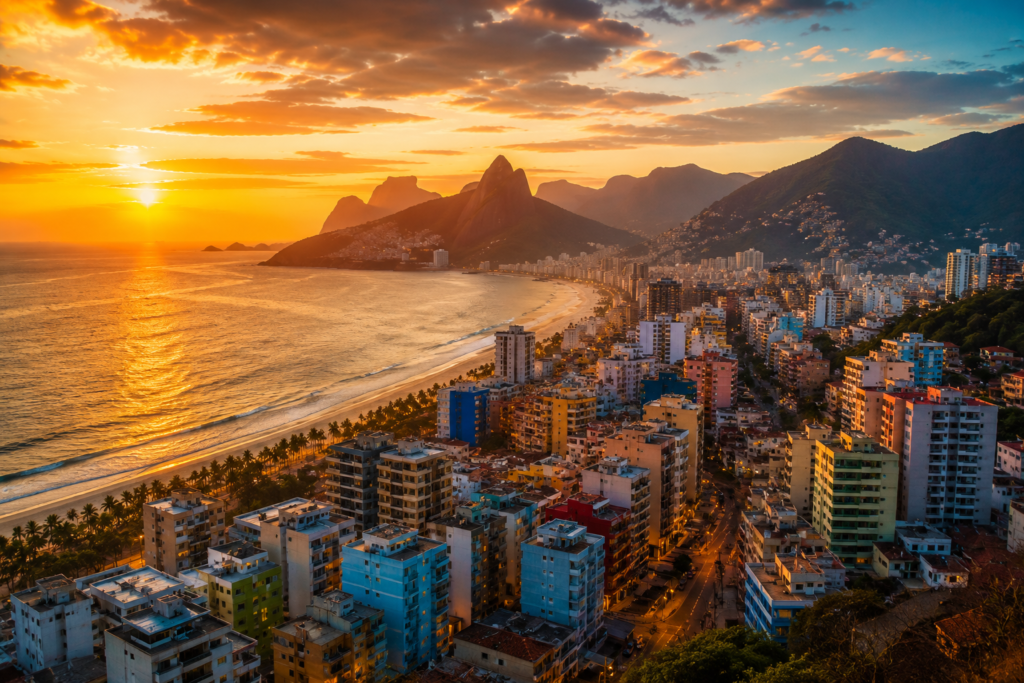
This 2027 Women’s World Cup travel guide helps you plan a Brazil trip around confirmed match locations, ticket information and your passport requirements. The tournament runs from 24 June to 25 July 2027. Information checked on 11 October 2026: FIFA has released the match schedule, while its ticket pages currently invite fans to register their interest. Build your budget from quotes for your route rather than a promised tournament-wide daily price.
Confirmed dates and host cities
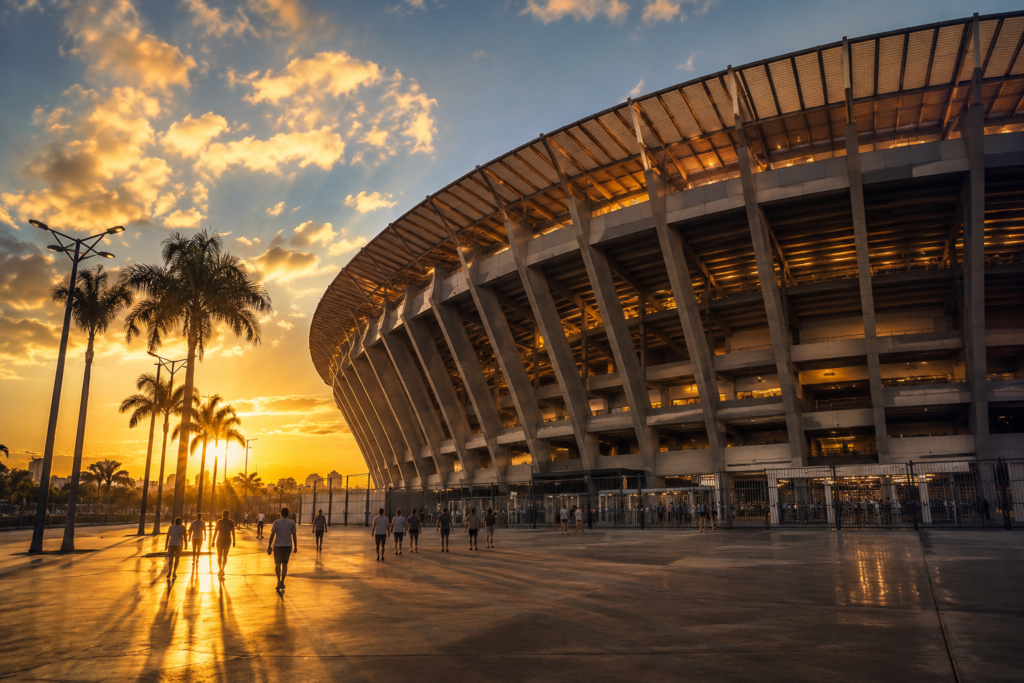
FIFA lists eight hosts: Belo Horizonte (Mineirão), Brasília (Estádio Nacional), Fortaleza (Arena Castelão), Porto Alegre (Beira-Rio), Recife (Arena de Pernambuco), Rio de Janeiro (Maracanã), Salvador (Arena Fonte Nova) and São Paulo (Arena Itaquera). The event has 32 teams. Use the official host-city page to confirm venues. A host-city name is not enough to estimate your journey: check the stadium’s actual address.
Use the published match schedule
FIFA released a 64-match schedule on 20 August 2026. Maracanã hosts the opening match and final. Brazil’s scheduled group matches are in Rio on 24 June, São Paulo on 29 June and Brasília on 4 July. These details make a concrete route possible; other team assignments depend on the draw. Read FIFA’s schedule announcement and check its current schedule before booking.
Tickets and hospitality are separate decisions
The FIFA ticket information checked for this update provides an interest-registration option. Check FIFA’s ticket page for sale phases, prices and conditions. Interest registration is not a ticket reservation or a promise of availability. If considering hospitality, obtain the written package details: match, seat category, guest count, included services and cancellation terms. Do not assume a travel package contains a match ticket unless it explicitly does. For the order of flights, hotels and match decisions, use our Brazil 2027 booking timeline before and after the draw.
Check entry rules for the passport you will use
Brazil’s consular guidance says travelers using US, Canadian or Australian passports require a visa for tourism, with an e-visa route in place since 10 April 2025. Check the official consular instructions for current eligibility and documents. Other nationalities, including Jamaican passport holders, should check their own rules with Brazil’s consular authorities. Do not use a US-specific fee, visa validity or processing estimate as a rule for every nationality.
Choose a manageable city route
Compare flights and long-distance buses for the actual pair of cities and match dates. Flights can save time on long legs, but airport transfers, baggage fees and arrival times belong in the comparison. Buses may work for some routes if their travel time suits your schedule. Avoid booking a connection that depends on a match finishing at an exact time; allow for venue exit, travel delays and check-in deadlines. Staying in one city for several matches can reduce transitions.
Build a complete tournament budget
List international travel, entry documents, tickets, nights, meals, local transport, domestic travel and a reserve. For a hypothetical seven-night trip, a room at US$80 per night is US$560, and meals plus local transport budgeted at US$35 per day add US$245. That US$805 subtotal excludes flights, match tickets, visa costs, activities and extra charges. It is a calculation example, not a current Brazil quote. Record currency, taxes and whether every figure is per room or per person. Plan how to pay those costs with our Brazil 2027 cash, card and Pix guide, including foreign-card checks and hotel holds.
Accommodation and cancellation deadlines
Check the route from accommodation to the stadium and your arrival point. Compare the full room price and minimum stay with recent reviews, reception hours and your check-in time. A cancellable reservation can help while plans develop, but its deadline matters. Save the exact cancellation terms and revisit the booking once your tickets and team schedule are confirmed. Advance booking does not guarantee a lower price.
Weather and arrival preparation
Check the forecast for every city on your route near departure. Brazil’s host cities cover different regions, so do not treat June and July as one uniform weather experience. Pack layers and rain protection suited to your forecast and activities. Save accommodation addresses, booking references and transport instructions offline, and check current destination advice and local alerts before traveling.
Related travel planning
One host city or two? Compare usable days and the complete cost of moving with our worked planning worksheet.
For a shorter visit centred on the tournament’s first fixture, use our Brazil 2027 opening-match guide: a five-night Rio itinerary, with confirmed match details and clearly labelled budget assumptions. Travelling alone? Our Brazil 2027 solo-travel guide covers safety checks, a one-person budget and the journey home after a match.
Our budget trip-planning guide, flight and hotel coordination guide and insurance comparison guide cover the surrounding decisions.
Frequently Asked Questions
When is the 2027 Women’s World Cup?
The tournament is scheduled for 24 June to 25 July 2027 in Brazil. Confirm your particular match date and stadium in FIFA’s current schedule.
Do US citizens need a visa to attend the 2027 Women’s World Cup in Brazil?
Brazil’s official consular guidance requires a tourism visa for travelers using US passports and provides an e-visa route. Check the current instructions and requirements before travel.
Are tickets on sale for the 2027 Women’s World Cup?
The FIFA information checked on 11 October 2026 offers ticket-interest registration. Check FIFA’s ticket page for current sales announcements; registering interest does not secure a ticket.
Which 2027 Women’s World Cup host city has the best weather?
There is no single best-weather city for every traveler. Check seasonal conditions and the forecast for each city on your itinerary rather than relying on a guaranteed-weather claim.
Do I need to fly between Brazil’s host cities?
Not for every route. Compare the actual flight and bus options, door-to-door time, baggage charges and match schedule before choosing each leg.
Conclusion
Use FIFA’s published schedule to choose a manageable route, then confirm tickets, entry documents and the complete budget. Keep flexible options where your team or ticket plans remain unsettled.

Marsha Rowe is the Founder and Travel Strategist at Parandjah Travels. She uncovers high-intent travel intelligence, specializing in slow travel frameworks and sports event logistics.