
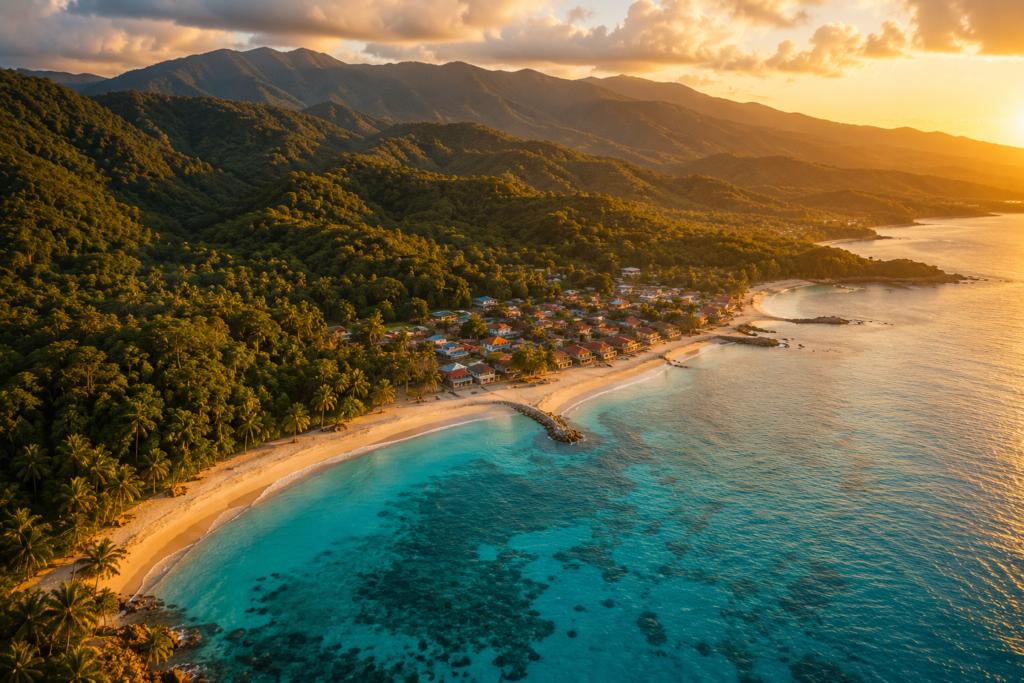
I’m Jamaican, which means this Jamaica budget travel guide comes with an advantage most travel blogs can’t offer — I know where visitors overpay, what the resort prices actually hide, and which beach shack serves the jerk chicken that makes the one at the hotel look like an insult. Jamaica is genuinely more affordable than most Caribbean destinations, but the resort-bubble version of the island is not. The gap between what tourists typically spend and what’s possible with a bit of local knowledge is significant. This guide covers both — real 2026 numbers, where to actually eat and stay, and how to move around without paying tourist prices at every turn.
| Traveler Tier | Daily Budget | What It Gets You |
|---|---|---|
| Budget backpacker | $45-90/day | Hostel dorm or guesthouse, street food, route taxis |
| Mid-range independent | $110-210/day | Private room or boutique hotel, restaurant meals, occasional taxi |
| All-inclusive resort | $200-450/day | Everything bundled — but you’ll stay in the resort bubble |
| Luxury independent | $450+/day | Beachfront villa, fine dining, private driver |
Entry Requirements: No Visa Needed for Most Travelers
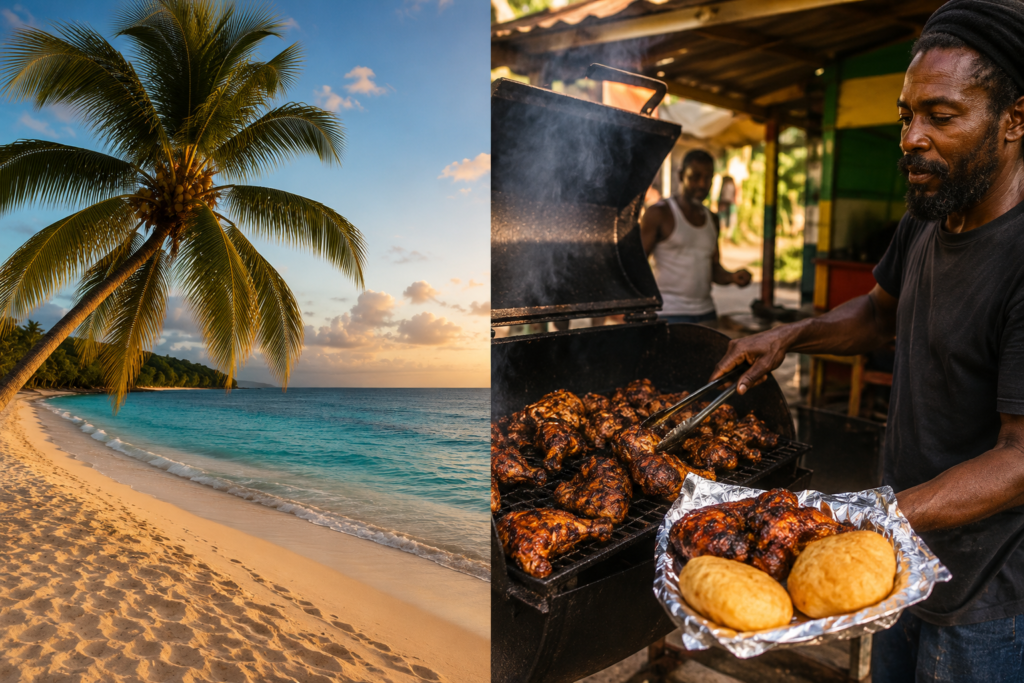
Most visitors — including those from the US, Canada, UK, Australia, and EU countries — receive a 30-day visitor stamp on arrival without a pre-arranged visa. No fee, no application. You just need a valid passport and proof of onward travel.
Passport validity: Must be valid for the duration of your stay. Jamaica doesn’t enforce the six-month rule that many other countries apply, but having at least three months of validity beyond your departure date is sensible.
Two airports: Sangster International (MBJ) in Montego Bay serves most tourist-facing destinations — Negril, Ocho Rios, Runaway Bay. Norman Manley International (KIN) in Kingston serves the south and east of the island. Most first-time visitors fly into MBJ.
No mandatory travel insurance: Unlike Zanzibar’s recent ZIC requirement, Jamaica has no mandatory insurance fee. Your existing travel insurance policy is sufficient — but having one is essential. SafetyWing and Heymondo both cover Jamaica and include medical evacuation, which is the coverage that matters most on the island.
Daily Costs: What You Actually Spend
Budget backpacker ($45-90/day): Hostel dorms in Montego Bay, Negril, or Kingston run $14-25/night. Street food — jerk chicken plate from a roadside stall ($3-5), patty from a local bakery ($1.30), fresh coconut water ($1-2). Route taxis and public buses keep transport costs under $5 per journey. Beaches in Negril and at Winnifred Beach in Port Antonio are free. A realistic budget day here is $45-65.
Mid-range independent ($110-210/day): Private room at a boutique guesthouse or Airbnb: $42-78/night. Casual restaurant meals: $10-14 per main course. Occasional private taxi: $10-50 depending on distance. An activity like Dunn’s River Falls ($19) or bamboo rafting ($50-80). This tier delivers the best experience-to-cost ratio on the island — you eat well, stay comfortably, and move freely.
All-inclusive resort ($200-450/day): This is how most international visitors experience Jamaica, and there’s nothing wrong with it — but you should know what you’re trading. An all-inclusive bundles accommodation, meals, drinks, and basic activities into one package, which removes financial friction and is genuinely relaxing. What it doesn’t give you is Jamaica. The resort version of the island is beautiful but largely separate from the culture, food, and people that make it distinctive. If an all-inclusive is your goal, budget $200-450/day and know you’ll spend most of that time within the resort footprint.
The hybrid approach: Stay in a mid-range guesthouse or boutique hotel, eat both in restaurants and at street stalls, and do 2-3 organized activities alongside free beach days. This consistently delivers the most memorable Jamaica experience at significantly lower cost than an all-inclusive.
Where to Stay: Regions and What They Deliver
Montego Bay: The main tourism hub and the most convenient base for first-time visitors. Doctor’s Cave Beach is excellent; the Hip Strip has bars, restaurants, and nightlife. Accommodation ranges from budget hostels to luxury all-inclusives. If you want to be in the center of tourist-facing Jamaica, this is the base.
Negril: Famous for Seven Mile Beach — one of the Caribbean’s finest stretches of sand — and Rick’s Café cliff diving at sunset. More relaxed than Montego Bay, slightly cheaper, and better for beach-focused trips. Budget guesthouses and boutique properties along the beach run $40-80/night for a private room.
Ocho Rios: Dunn’s River Falls is here, along with Mystic Mountain and various eco-adventure options. More family-oriented than Negril. Mid-range hotels run $60-130/night. Worth a stop but not necessarily a full-week base for most travelers.
Port Antonio: The Jamaica that most visitors never see — quieter, greener, genuinely stunning, and significantly cheaper than the north coast tourist corridor. Winnifred Beach is free and beautiful. The Blue Lagoon is here. Frenchman’s Cove is one of the most beautiful beaches on the island. Guesthouses run $30-60/night. This is where I’d send anyone who wants to see Jamaica properly rather than the resort version.
Kingston: The capital and the island’s cultural heart — reggae, Rastafarian culture, Bob Marley Museum, the Blue Mountains. Not a beach destination but the most affordable major base on the island. Budget hotels run $25-60/night. Worth 2-3 days if you want to understand what Jamaica actually is beyond the tourist zones.
Treasure Beach: South coast, off the main tourist path, genuinely local atmosphere. Boutique guesthouses, fishing village vibe, almost no package tourists. Prices run $40-80/night. Worth the extra transit if you want something authentic.
Food: Where Locals Eat and What It Costs
This is where the most significant savings are available — and where the most significant quality gap exists between tourist-facing restaurants and local spots.
The budget-best options:
- Jerk chicken from a roadside stall — $3-5 for a full plate, best in Boston Bay (Portland Parish), the birthplace of jerk cooking
- Jamaican patty — $1.30-2 from a local bakery. The beef patty is the national fast food and it’s genuinely excellent
- Ackee and saltfish (the national dish) — $5-8 at a local restaurant, more at tourist-facing spots
- Fresh fish at Fisherman’s Beach in Ocho Rios — some of the best and most affordable seafood on the island
- Pepper shrimp at Middle Quarters — if you’re driving through St. Elizabeth, stop here. $3-5 for a bag of spiced shrimp
What to avoid: Hotel buffets and tourist-area restaurants pricing “authentic Jamaican food” at $20-30+ per main course. The food quality is rarely better than what you’ll find at a local spot for $6-8.
Blue Mountain Coffee: Jamaica produces one of the world’s great coffees — if you’re a coffee drinker, try it properly while you’re here. A cup at a local café runs $2-4.
Red Stripe beer: $2-3 at a local bar. More at resort poolside bars.
Getting Around: The Local Transport System
Route taxis (red license plates): Shared cars following set routes, priced for locals. $1-3 per ride for most journeys. The most affordable way to move between towns and the most authentic way to see the island. Confirm the fare before getting in.
Knutsford Express: Reliable air-conditioned coach service between major towns. Montego Bay to Ocho Rios runs approximately $16 (2,500 JMD). The most comfortable budget option for longer journeys.
Private taxis (JUTA licensed): More expensive but vetted and reliable. Airport to resort transfers typically $14-50 depending on distance. Always use JUTA-licensed taxis or resort-recommended operators rather than unofficial drivers.
Car rental: $40-70/day plus approximately $20 for insurance. Ideal for flexible itineraries, particularly on the south coast and in the Blue Mountains where public transport is limited. Note: Jamaica drives on the left.
From the airport: Fixed taxi rates from Sangster Airport to resort areas are posted — $14 (2,200 JMD) is the standard rate to nearby Montego Bay properties. Confirm before departure.
Top Experiences and What They Cost
| Experience | Cost | Worth It? |
|---|---|---|
| Dunn’s River Falls | ~$19 | Yes — genuinely impressive waterfall climb |
| Bob Marley Museum, Kingston | ~$20 | Yes — essential cultural experience |
| Bamboo rafting (Martha Brae or Rio Grande) | $50-80 | Yes — peaceful and scenic |
| Luminous Lagoon, Falmouth | $20-30 (night tour) | Yes — bioluminescent water is extraordinary |
| Blue Mountains day hike | $30-60 guided | Yes — best views on the island |
| Winnifred Beach, Port Antonio | Free | Yes — one of the best beaches, no entry fee |
| Doctor’s Cave Beach, Montego Bay | ~$6 | Yes — the famous healing-water beach |
| Green Grotto Caves | ~$20 | Optional — interesting history, not essential |
When to Go: The Season Guide
Peak season (December-April): Perfect dry season weather — warm, sunny, low humidity. Prices for accommodation jump 30-50%. Montego Bay and Negril are at their busiest. Christmas and New Year add further surcharges.
Shoulder season (May, November): The best balance of good conditions and lower prices. May brings the start of the wet season but with brief afternoon showers rather than all-day rain. November is post-hurricane season with excellent conditions and meaningfully lower rates.
Wet/hurricane season (June-October): Prices drop significantly — sometimes 40-50% at mid-range properties. Hurricane season peaks August-October, though direct hits are relatively rare. If you’re budget-conscious and can tolerate occasional rain, this window offers the most affordable Jamaica experience. The island is lush and green, beaches are emptier, and the cultural calendar is active.
For first-time visitors on a budget: Late April or early May delivers good conditions at shoulder prices. November is the other sweet spot — post-hurricane season, pre-Christmas rush.
Practical Money Notes
Currency: Jamaican Dollar (JMD). Current rate approximately 155 JMD to 1 USD. US dollars are widely accepted in tourist areas, but you’ll consistently get better value paying in JMD at local restaurants and markets.
ATMs: Available in major towns. Withdraw JMD rather than USD from ATMs to get the interbank rate. Using a fee-free card like Charles Schwab (US) or Wise avoids the $5-8 per-transaction ATM fees that add up across a two-week trip.
Cash: Still essential. Many local restaurants, route taxis, and market vendors are cash only. Always carry small denomination JMD bills.
Tipping: Not mandatory at all-inclusive resorts where tips are included, but appreciated. At local restaurants: 10% is standard. Guides and drivers: $2-5 USD equivalent per session.
Essential Internal Resources
These guides on Parandjah Travels cover the related planning layers:
- For travel insurance comparison: Travel Insurance Comparison for Budget Trips
- For the complete trip planning framework: How to Plan a Trip on a Budget
- For airport transfer from Sangster to your resort: Cheapest Way to Get From Airport to City
- For sustainable travel practices: Sustainable Travel Practices
- For timing your trip around the best season: Best Time to Visit Popular Destinations
Master Your Destination: City Budget Guides
Planning to combine Jamaica with other Caribbean or international destinations? These city guides cover exactly where to stay for less in 24 major hubs:
Americas Budget Hubs
New York · Chicago · Toronto · Mexico City · Buenos Aires · Cape Town
European Budget Hubs
Madrid · Paris · Rome · Dublin · Lisbon · Budapest · Prague · Vienna · Istanbul · Amsterdam · Milan · Barcelona · Berlin
Asia-Pacific Budget Hubs
Bangkok · Tokyo · Sydney · Singapore · Seoul
Frequently Asked Questions
Do I need a visa to visit Jamaica?
Most visitors from the US, Canada, UK, Australia, and EU countries receive a 30-day visitor stamp on arrival with no pre-arranged visa required. You need a valid passport and proof of onward travel. Check the Jamaica Immigration website for your specific nationality before traveling.
What is the cheapest region to stay in Jamaica?
Kingston is the most affordable major base — budget hotels from $25-60/night, excellent local food, and the richest cultural experience on the island. Port Antonio and Treasure Beach on the south coast are the most affordable beach-area bases, with guesthouses from $30-60/night and almost no tourist markup on food and transport.
Is Jamaica safe for tourists?
Jamaica has a reputation that exceeds the reality for most tourist-area visitors. The north coast resort corridor — Montego Bay, Negril, Ocho Rios — is well-developed for tourism and safe for standard visitor activity. As in any destination, late-night movement in unfamiliar urban areas requires the same common-sense precautions you’d apply anywhere. Stick to licensed JUTA taxis rather than unofficial drivers, particularly at night.
Is an all-inclusive resort worth it in Jamaica?
For some travelers, yes — the financial simplicity and zero daily-decision fatigue of an all-inclusive is genuinely valuable. For travelers who want to actually experience Jamaica, no — you’ll spend most of your time within the resort footprint and miss the food, culture, and landscape that make the island distinctive. The hybrid approach — boutique guesthouse plus independent meals and activities — consistently delivers a better experience at lower cost.
Want More Free Travel Resources?
Grab the free 2026 Travel Dupes Cheat Sheet for budget-friendly destination ideas across the Caribbean and beyond. Subscribe at the top of parandjahtravels.com to download it instantly.
Conclusion
Jamaica budget travel in 2026 comes down to one decision: resort bubble or the real island? The resort version is beautiful, convenient, and legitimately relaxing — but it costs $200-450/day and keeps you largely separate from what makes Jamaica worth visiting. The independent version — guesthouse or boutique hotel, jerk chicken from a roadside stall, route taxis between towns, free beaches at Winnifred and Negril — costs $45-110/day and delivers the island that Jamaicans are actually proud of. Both are valid choices. Now you know which one fits your budget and your goals.

Marsha Rowe is the Founder and Travel Strategist at Parandjah Travels. She uncovers high-intent travel intelligence, specializing in slow travel frameworks and sports event logistics.