
183-Day Residency Rule: How Digital Nomads Stay Tax-Compliant While Traveling Long-Term

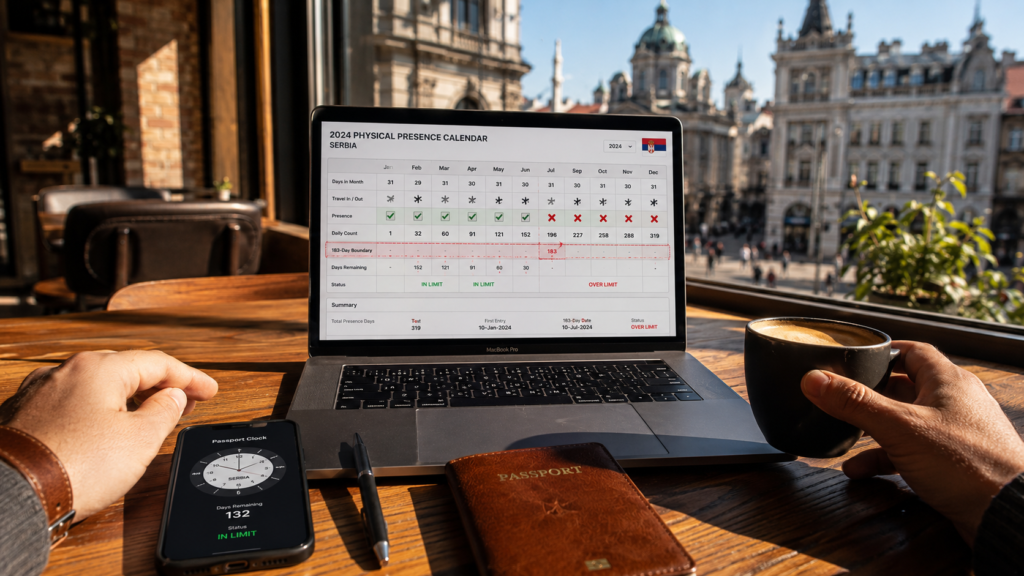
183-Day Residency Rule calendar spreadsheet tracking on a nomad laptop workstation

The 183 day residency rule is the single most important number in long-term travel tax planning — stay under 183 days in any single country within a 12-month period and your global income tax home remains exactly where you set it up.

This guide explains how the rule actually works, where the common traps are, and which visa-free destinations give you the longest stays with the lowest tax exposure risk.


What the 183-Day Residency Rule Actually Means

The 183-day rule is not a travel guideline — it is a statutory tax test used by the majority of sovereign tax authorities worldwide. If you are physically present inside a country’s borders for more than 183 days within a qualifying period, that country can legally classify you as a domestic tax resident. That classification means your global income — not just what you earn locally — could become subject to local income taxes, mandatory reporting requirements, and in some cases asset disclosure audits.

Tax agencies calculate this using border control data, not your immigration stamp type. Being on a tourist exemption does not protect you from the count. Your feet on the ground are what triggers the clock.

The Physical Presence Calculation Formula

The statutory presence test behind the 183-Day Residency Rule is deceptively simple: if you are physically present inside the borders of a specific nation for more than 183 days within a 12-month rolling period or calendar year, you automatically become a domestic tax resident. This means your global income could suddenly become subject to local income taxes, reporting requirements, and asset disclosure audits.

Sovereign agencies calculate this metric using precise digital border control logs, counting every single day or partial day your feet touch their soil. Finding valid paths through visa free travel countries long term maps allows you to stay fully legal without risking these severe financial penalties or accidentally violating the 183-Day Residency Rule.

The Rolling 12-Month Window Trap

This is where most digital nomads make expensive mistakes. If you assume the clock resets on January 1st, you may be calculating your exposure incorrectly.

Under a rolling window system, if you spend time in a country from October through the following May, those months count together even though they span two calendar years. A stay of 100 days in autumn followed by 90 days the following spring equals 190 days under a rolling count — enough to trigger tax residency despite feeling like you split your time across two separate years.

Western European countries in particular tend to use rolling windows. Always check the specific calculation method for each country you plan to use as a long-term base.


Top Destinations for a Tax-Compliant Long-Term Travel Loop

The most effective way to stay under the 183-day threshold everywhere is to build your annual calendar around countries that offer long initial visa-free stays. The destinations below give you maximum flexibility while keeping your presence well under the tax trigger line.

A laptop displaying a tracking calendar and a financial spreadsheet on a desk next to a calculator and an open notebook.
Tracking your physical presence and daily expenses to ensure compliance with international residency rules.

Latin America: The Best Long-Stay Anchor Points

Latin America offers some of the most generous visa-free entry windows available to most Western passport holders, making it the ideal anchor region for a tax-compliant annual rotation.

Mexico grants up to 180 days on arrival to a wide list of nationalities. That single entry window takes you almost to the threshold and back — giving you a six-month base camp in cities like Mexico City or Oaxaca without breaching the 183-day limit. The cost of living is low, the infrastructure for remote work is strong, and the entry process is straightforward. Mexico is consistently one of the most practical long-term bases for location-independent professionals.

Colombia provides an initial 90-day stay that can be extended online for an additional 90 days, giving you a total of 180 days per calendar year. By planning your exit on or before day 180, you use the full window available while staying one clean day clear of the tax residency trigger. Medellín and Bogotá both have mature digital nomad infrastructure and reliable high-speed internet.

Southeast Europe: The Non-Schengen Bypass Block

For remote workers who want proximity to continental Europe without burning through their 90-day Schengen allowance or creating complex European tax profiles, the Western Balkans are the most practical structural solution available.

Albania grants an automatic 90-day stay on arrival for most Western passport holders, at zero cost. Tirana has developed into a genuine remote work hub with solid fiber internet, affordable coworking spaces, and a low daily cost of living. The Albanian Riviera provides a lower-cost coastal alternative for those who prefer to work outside a capital city environment.

Serbia also offers a 90-day window for most Western nationalities. Belgrade delivers high-speed internet, a dense coworking scene, and a walkable central neighborhoods at a fraction of the cost of comparable Western European cities. Rotating out before your 90 days expire keeps your presence well under any domestic tax threshold while giving you a strong urban base during your time there.

Both countries operate entirely outside the Schengen Zone, meaning days spent there do not count against your 90-day EU allowance — a critical structural advantage for building a longer European presence.


Tax Rotation vs. Digital Nomad Visas: The Real Comparison

The growth of official digital nomad visa programs has led many location-independent professionals to assume formal residency is always the smarter move. When you run the numbers against the 183-day rule, the case for chaining tourist exemptions is frequently stronger than it appears.

Evaluation MetricChaining Tourist ExemptionsOfficial Digital Nomad Visa
Upfront Cost$0 (free entry stamps)$200 – $2,000+ (non-refundable fees)
Tax Exposure RiskVery low (stays under 183 days)High (visas often fast-track tax residency)
Income VerificationNone requiredStrict monthly income proof required
Location FlexibilityFull — move by bus or flight anytimeRigid — tied to one country to maintain status

The key distinction: many digital nomad visas are designed specifically to fast-track tax residency in exchange for the right to work legally in that country. If your goal is to preserve your existing tax home and avoid building new tax obligations abroad, a formal residency visa can work directly against that objective.

For stays under six months per country, chaining standard tourist exemptions across visa-free destinations is typically the lower-cost, lower-risk approach.

How to Execute a Compliant Border Reset

A border reset means exiting your host country before your tourist allowance expires, crossing briefly into a neighboring state, and returning to start a fresh entry period. When done transparently and in good faith, it is a widely practiced and legally recognized method for managing continuous regional presence.

The key rules for doing it correctly:

  • Always carry an onward ticket out of the country you are entering
  • Carry proof of sufficient funds — border agents can and do ask
  • Keep copies of your foreign client contracts and income documentation
  • Never misrepresent your purpose of visit to immigration officers

Proven Routes for Long-Term Tax Rotations

The Balkan Overland Circuit — Belgrade to Skopje: A direct coach between Serbia and North Macedonia runs daily for approximately $25. North Macedonia grants its own independent 90-day entry window, meaning this is not just a quick turnaround — you can base yourself in Skopje or at Lake Ohrid for weeks before returning to Serbia for a fresh 90-day period. It is one of the most cost-effective border reset routes in Europe.

The Southeast Asia Hub Rotation — Bangkok to Kuala Lumpur: Thailand and Malaysia both offer generous visa-free stays and are connected by budget flights and overnight coaches. Travelers based in Bangkok routinely use a long weekend in Kuala Lumpur to reset their Thai entry clock. Both countries have strong digital nomad infrastructure, and the reset doubles as a genuine travel experience rather than a purely administrative exercise.

calculating the 183-day residency rule travel budget metrics layout
Pairing clear fiscal data with intentional passport rotation keeps your global income legally secure.

Essential Internal Resources

To build a full itinerary that keeps your costs low and your legal status clean across each destination, these guides on Parandjah Travels cover the adjacent planning layers:


The Legal Reality of Working Remotely Across Borders

Understanding what you can and cannot do legally while on a tourist exemption is essential before building any long-term rotation.

What Is and Is Not Permitted

Almost every country prohibits foreign tourists from taking local employment, sourcing income from domestic clients, or competing directly for work within the local economy. However, if your clients and all income streams are based entirely outside your host country, working remotely from a cafe or apartment is generally treated as a personal activity equivalent to tourism. Your income is foreign, your presence is personal — that distinction is what makes long-term remote travel legally viable on tourist entries.

Immigration law evolves. Always verify the current rules for each destination before arrival, particularly in countries that are actively developing digital nomad legislation.

Documenting Your Remote Work Footprint

Maintain a clean digital folder containing your corporate registration documents, foreign client contracts, and recent bank statements showing income from outside your host country. These documents serve two purposes: they confirm your legal status to border officers if questioned, and they provide the paper trail your home country tax authority may request to confirm your tax home remained intact throughout your travels.

A printed compliance checklist document with checkmarks next to a passport, boarding passes, and a smartphone showing a tracking calendar.
Keeping your physical presence documentation organized to meet international residency compliance guidelines

A 12-Month Circuit Built Around the 183-Day Rule

Here is a practical annual loop structured to keep your presence under the threshold in every country while maintaining continuous legal status:

  • Months 1–4 — The Balkan Block (Serbia and Albania): 120 days split across two non-Schengen countries. Neither stay approaches the 183-day threshold, your Schengen allowance remains untouched, and daily living costs stay under $45.
  • Months 5–9 — Mexico City or Oaxaca: Arrive in Mexico and receive an automatic 150-day entry stamp. This single window anchors five months of your year at low cost with strong infrastructure, leaving you 33 days clear of the tax trigger.
  • Months 10–12 — Colombia: Enter on a 90-day tourist stamp and apply for the online extension if needed. Plan your exit by day 175 at the latest to close the year with a clean compliance record across every jurisdiction you visited.

This structure keeps you under 183 days in every single country, across three continents, for an entire year.


Pre-Flight Checklist for Tax-Compliant Travel

Before beginning any long-term rotation, confirm each of the following:

compliance checklist 183-day residency rule documentation for international travel
Reviewing your travel logs before boarding ensures seamless compliance across every sovereign checkpoint

Passport validity: Minimum 6 months remaining from your planned first entry date Onward ticket: A verifiable exit booking ready to show at each border crossing.

Day-count spreadsheet: A simple log tracking your exact entry and exit dates for every country — updated after every border crossing.

Document folder: Corporate registration, client contracts, and bank statements saved digitally and accessible offline.

Rule verification: Check the specific 183-day calculation method (calendar year vs. rolling window) for each country on your itinerary before you arrive.

Frequently Asked Questions

What exactly is the 183 day residency rule?

The 183 day residency rule is a statutory tax test used by the majority of sovereign tax authorities worldwide. If you are physically present inside a country’s borders for more than 183 days within a qualifying period — either a calendar year or a rolling 12-month window depending on the country — that country can legally classify you as a domestic tax resident and subject your global income to local taxes. The count is based on physical presence, not visa type. Being on a tourist exemption does not protect you from the day count.

Does the 183 day residency rule use a calendar year or a rolling window?

It depends on the country — and this is where most long-term travelers make expensive mistakes. Some countries reset the count on January 1. Others use a rolling 12-month window, meaning days from October through the following May count together even though they span two calendar years. Western European countries typically use rolling windows. Always verify the specific calculation method for each country on your itinerary before arrival — the difference between calendar year and rolling window can determine whether a stay is compliant or triggers tax residency.

Can I work remotely while traveling on a tourist exemption?

Generally yes, provided your income comes entirely from clients and contracts based outside the host country. Almost every country prohibits foreign tourists from taking local employment or sourcing income from domestic clients — but remote work for foreign clients is widely treated as a personal activity equivalent to tourism. Your income is foreign, your presence is personal. That distinction is what makes long-term remote travel legally viable on tourist entries. Immigration law evolves, so always verify current rules for each destination before arrival.

Which countries give the longest visa-free stays for managing the 183 day residency rule?

Mexico grants up to 180 days on arrival for most Western passport holders — the single longest visa-free window available in Latin America. Colombia provides 90 days extendable to 180. In Europe, Albania and Serbia each grant 90 days outside the Schengen Zone, meaning those days don’t count against your EU allowance either. North Macedonia adds another independent 90-day window. Chaining these destinations across a 12-month period keeps you under the 183-day threshold everywhere while maintaining continuous legal presence across three regions.

Master Your Destination: City Budget Guides

These city guides cover daily costs, accommodation zones, and local transport across 24 major destinations — useful for planning the urban bases in your tax-compliant rotation:

European and Balkan Budget Hubs

Madrid · Paris · Rome · Dublin · Lisbon · Budapest · Prague · Vienna · Istanbul · Amsterdam · Milan · Barcelona · Berlin

Asia-Pacific and Americas Budget Hubs

Bangkok · Tokyo · Sydney · Toronto · Singapore · Mexico City · Seoul · Buenos Aires · Cape Town · Chicago · New York

Conclusion: Build Your Travel Life Around the Rules, Not Against Them

The 183-day rule is not a barrier — it is a framework. Once you understand how it works and which destinations give you the longest stays with the lowest risk, building a legally clean, genuinely affordable long-term travel life becomes a planning exercise rather than a legal gamble.

Visa-free entries across Latin America and the Western Balkans give you the raw material. A simple spreadsheet keeps your counts accurate. And a clear understanding of what tourist exemptions do and do not permit keeps your status clean at every border.

The world is more accessible to long-term travelers than most people realize. The 183-day rule is how you use that access without consequences.

Leave a Comment

Your email address will not be published. Required fields are marked *