
Self-transfer flights can save money, but missing the second flight can leave you paying for a replacement ticket, a hotel and another airport journey. Before booking, establish whether your flights form a protected connection or separate journeys, what happens to your bags, and whether you can legally enter the transfer country.
The useful question is not simply whether the layover looks long enough. It is whether the saving survives the extra costs and whether you can recover if the first flight arrives late. Here is a practical way to make that decision.
What does self-transfer mean?
A self-transfer means you take responsibility for joining separate flights. You may need to collect baggage, pass border control, travel to another terminal or airport, and check in again. A booking website can package the flights into one shopping basket without turning them into an airline-protected connection.
Different airlines do not automatically mean self-transfer: airlines can sell connecting journeys together. Equally, flying the same airline twice does not prove protection. Ask the seller: “If the first flight is delayed and I miss the second, who must rebook me, under which written terms?”
Booking references are clues, not a complete test. Read the ticket documents and any self-transfer warning. If the answer is unclear, pause the purchase. Our flight-booking sites comparison explains why the seller and booking conditions matter alongside the fare.
Who pays if you miss the second flight?
For an unprotected self-transfer, plan on paying your own onward costs unless the airline, seller or insurer confirms otherwise. The second airline may treat your arrival as a missed departure even when another airline caused the delay. A sympathetic agent is helpful, but goodwill is not a booking guarantee.
You may still have rights relating to the delayed or cancelled first flight under applicable passenger-rights rules. That does not automatically make the unrelated onward ticket refundable or replaceable. Separate the two questions when seeking help: what the first carrier owes, and how to rescue the second journey.
Some products add contractual protection. For example, Connections by easyJet describes optional Dohop self-transfer protection and says customers without it bear rebooking costs and associated expenses. This is a product-specific example, not a promise covering every easyJet booking. Read the actual protection terms before relying on them.
Will your checked bag transfer automatically?
Do not assume so. British Airways guidance on separate tickets says baggage is not transferred between journeys with separate tickets and different booking references. Heathrow’s connection guidance also tells self-connecting passengers to collect bags and check them in again.
Exceptions exist. Singapore Airlines’ check-in FAQ describes requesting through-checking where it is available. Confirm eligibility for your exact airlines and route. Through-checked baggage still does not, by itself, establish who pays for a missed flight.
Check both baggage allowances, fees and bag-drop deadlines. If one flight includes a suitcase and the next does not, the apparent saving shrinks. Cabin baggage can simplify the transfer, but it does not eliminate document checks, security, terminal changes or the need to obtain an onward boarding pass.
Do you need a visa for a self-transfer?
Possibly, including when you only intend to remain at the airport. The answer depends on your passport, the transfer country, your documents, airport arrangements and whether you pass border control. An entry document for your final destination does not automatically cover every country along the route.
The UK illustrates the distinction clearly. Its official transit-visa guidance separates airside transit from journeys involving border control. Collecting baggage for another check-in is one example that can require crossing the border. Exemptions and requirements depend on individual circumstances; use the official checker rather than copying another traveller’s answer.
Before paying, check the transfer country’s government guidance and ask the operating airlines whether your proposed route requires entry. Include your nationality, residency documents, both airport codes, baggage arrangements and overnight plans. Carry-on-only travel is not proof that you can remain airside.
How much time should you allow?
There is no universal safe self-transfer time. A published minimum connection time for an airline connection should not be treated as a guarantee for a separately assembled journey. Your available time must cover the actual route through the airport and the next flight’s deadlines.
Work backwards from the second flight’s check-in or bag-drop cutoff, then allow for leaving the first aircraft, border queues, baggage delivery, customs, terminal transport, security and reaching the gate. Departure time is not the final moment you can arrive. Confirm current deadlines directly with the airline.
For example, suppose the timetable shows three hours between flights, but the onward bag drop closes one hour before departure. That leaves two hours to reach bag drop, before allowing for any inbound delay. This is an arithmetic example, not a recommended connection window.
For a long-haul departure, an infrequent service or a costly event, consider an overnight break with legal entry and accommodation arranged. It adds cost but gives more recovery room. Check terminal opening hours and hotel access; an airport hotel may be landside.
Calculate the real saving before booking
Use this comparison: self-transfer total = both fares + baggage + airport transport + extra accommodation + meals + any protection charge. Compare that with a suitable through-ticket including the services you need. Our cheap-flight total-trip-cost guide provides the broader budgeting framework.
Imagine a through-ticket costs US$720 and separate flights cost US$540. Add US$60 for baggage, US$35 for transport and US$100 for an overnight room: the separate option becomes US$735 before meals. These are invented worksheet figures, not available fares. The cheaper headline price has become the dearer journey.
Also set a recovery budget: what could you afford if a replacement seat and unexpected night were necessary? Check actual alternatives for your travel dates. A US$70 saving may be unattractive when it depends on catching the last departure and you have no funds for another ticket.
Does travel insurance cover self-transfer flights?
Do not assume that a policy’s “missed departure” or “travel delay” heading covers separate-ticket connections. Ask the insurer about your exact itinerary before buying. Request the relevant policy wording and written clarification of eligible causes, required connection time, exclusions, limits and excesses.
Ask whether it covers replacement transport, additional accommodation, unused bookings or only a fixed delay benefit. Find out whether you must contact an assistance service before spending and what evidence is required. Seller protection is a separate contract and may operate differently from insurance.
Our flight-cancellation insurance guide helps distinguish benefits. Keep the policy and protection documents available offline. A sales-page badge is much less useful during disruption than a clear claim procedure and working contact number.
What to do when the first flight is delayed
Contact the onward airline or seller promptly. Explain that the journey uses separate tickets and ask about changes before departure. Ask whether missing this flight affects later sectors on that booking. Do not assume the return journey remains usable after a no-show.
Use the protection provider’s process. If you bought connection protection, contact its assistance service before purchasing alternatives whenever the terms require it. Preserve messages and reference numbers. Do not accept an expensive replacement merely because you assume reimbursement will follow.
Keep evidence and compare recovery options. Save delay notices, boarding passes, receipts and screenshots of communications. Consider the next departure, another suitable airport or an overnight stop. Notify your hotel and transfer provider; our late-night hotel check-in guide explains how to protect the room booking.
Apply this to LA28 and Brazil 2027
An event ticket makes arrival timing more consequential. For LA28, compare the full airport-to-accommodation journey using our LA28 airport guide, and check entry planning in the LA28 visa guide. Do not build a narrow self-transfer around a session you cannot afford to miss.
For the 2027 FIFA Women’s World Cup, an international arrival followed by a separately booked domestic flight deserves the same scrutiny. Our Brazil 2027 match-day flight guide and one-city versus two-city guide help assess how another flight changes the trip.
Coordinate the entire chain before buying: flights, accommodation, airport transport and the first fixed commitment. Use our flight-and-hotel coordination guide to check the sequence. An extra destination is worthwhile only when the time and cost fit.
A five-minute check before you pay
Write down both airport codes and dates in local time, then confirm the terminals. A city name can hide an airport change, and an overnight departure may fall on the following calendar day. Check how you will reach the next terminal or airport with your luggage.
Next, identify the onward airline’s check-in method. If online check-in fails or document verification requires a desk visit, can you reach that desk without entering the country? Ask the airline rather than assuming a mobile boarding pass will be issued.
Finally, save the seller’s written explanation of protection, the baggage arrangements and the cancellation conditions for both tickets. If a schedule change makes your transfer unrealistic before travel, contact the seller promptly. Do not wait until departure day to discover that changing the first booking does not change the second.
Frequently asked questions
Is a self-transfer the same as a normal layover?
No. A layover describes the waiting period between flights. Self-transfer describes your responsibility for connecting separate journeys. Establish the ticket structure and protection before using a layover duration to judge the risk.
Can the same airline sell an unprotected connection?
Yes, separate purchases can remain separate journeys. Ask the airline what happens if the first flight is late; matching logos are not sufficient evidence of onward protection.
Can I self-transfer with checked luggage?
Often, but verify whether you must reclaim it, enter the country and check it again. Include both baggage charges and the second flight’s bag-drop deadline in your calculation.
Is two hours enough?
There is no dependable universal answer. Airport layout, border formalities, bags, airline deadlines and disruption all matter. Judge the actual transfer process and the consequences of missing the flight.
Does one payment mean one protected ticket?
No. A website may sell separate flights in one transaction. Read the itinerary’s self-transfer warnings and ask which party provides any missed-connection protection.
Can I avoid a transit visa by taking only hand luggage?
Not necessarily. Nationality and the country’s rules still matter, and your route may require border control. Verify entry and transit requirements using official government guidance for your circumstances.
Should I book the last flight of the day?
Only after assessing the overnight fallback, entry permission and cost. An earlier onward service with later alternatives may offer more recovery options, but availability still needs checking.
When would you choose a through-ticket instead?
When the saving is small, the connection is complex, replacement flights are expensive or arrival protects an important event. Choose the journey you can realistically complete and recover from, not merely the lowest displayed fare.
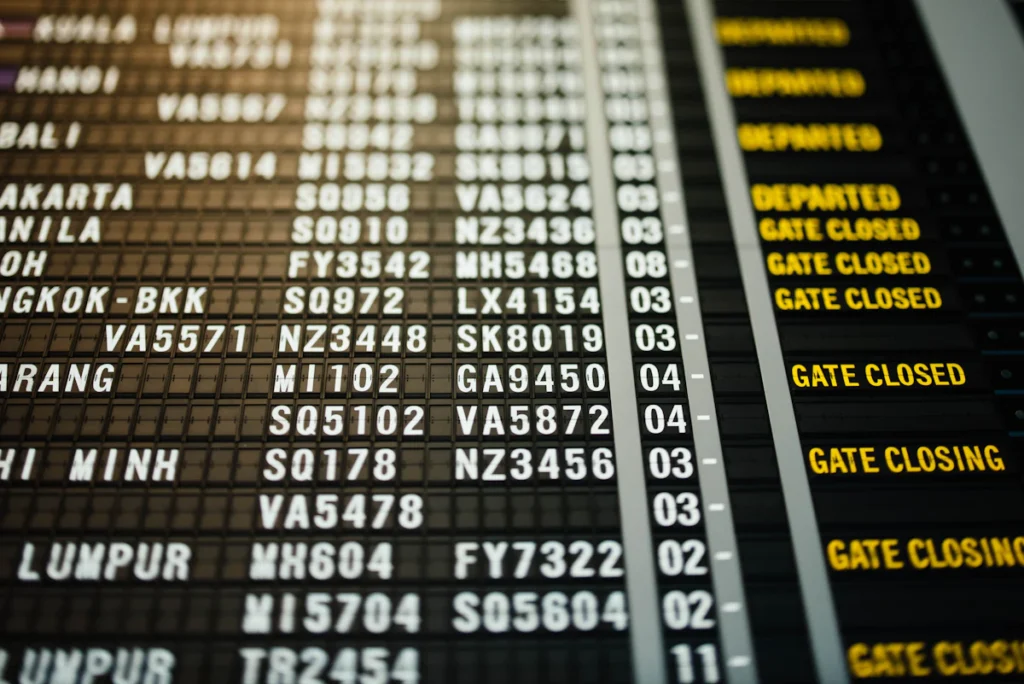
Feature photograph: CHUTTERSNAP / Unsplash. An airport departures board illustrates the importance of boarding deadlines.

Marsha Rowe is the Founder and Travel Strategist at Parandjah Travels. She uncovers high-intent travel intelligence, specializing in slow travel frameworks and sports event logistics.