
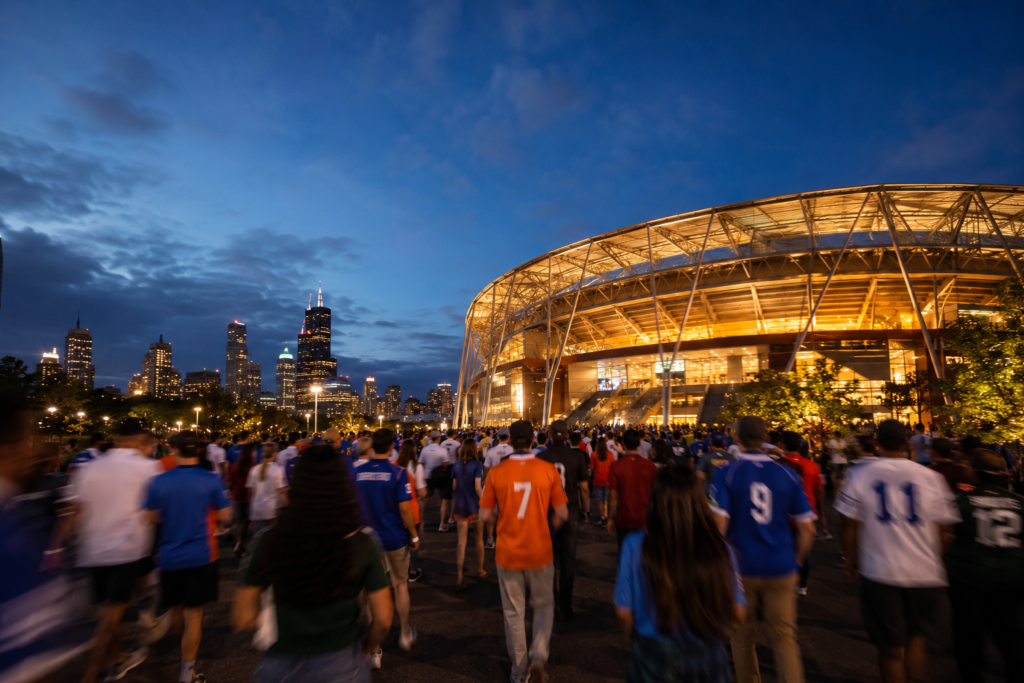
A guide to planning event travel itineraries starts with one truth: event travel is not the same as a regular vacation. You are coordinating flights, lodging, local transportation, timing, and energy around a fixed moment that you cannot miss — and every booking decision either protects that moment or puts it at risk. Miss the kickoff time, arrive after hotel check-in closes, or discover your venue is an hour from your room, and an exciting trip turns stressful fast. This framework covers the planning sequence that prevents those problems, from locking in anchor points to building the backup plan for the parts most likely to fail.
| Planning Step | What to Decide | When to Do It |
|---|---|---|
| Event anchor | Date, venue, doors-open time, end time | Before anything else |
| Lodging | Location relative to venue and transit | As early as possible — fills first |
| Flights | Arrival day buffer, departure morning risk | After lodging is secured |
| Local transport | Route from hotel to venue at event time | Before confirming hotel location |
| Budget | Full cost including surges and incidentals | Before any non-refundable bookings |
| Backup plan | Latest viable arrival, alternate venue route | Before departure |
Why Event Travel Planning Works Differently
A normal leisure trip bends around your preferences. Event travel works the opposite way — the event date, venue, start time, entry rules, and crowd patterns shape almost every decision that follows.
That changes how you book. A hotel that looks like a great deal may not be a great choice if it adds two train changes and a long walk after midnight. A cheaper flight can cost you more in lost time if it lands too close to the event start. The best itinerary isn’t the one with the lowest upfront price — it’s the one that protects the experience you came for.
This is especially true for major events that concentrate thousands of visitors into one city simultaneously. Prices rise fast, convenient neighborhoods sell out first, and transportation gets unpredictable on event days. Planning early matters, but planning in the right order matters more.
Step 1: Lock In the Anchor Points Before Anything Else
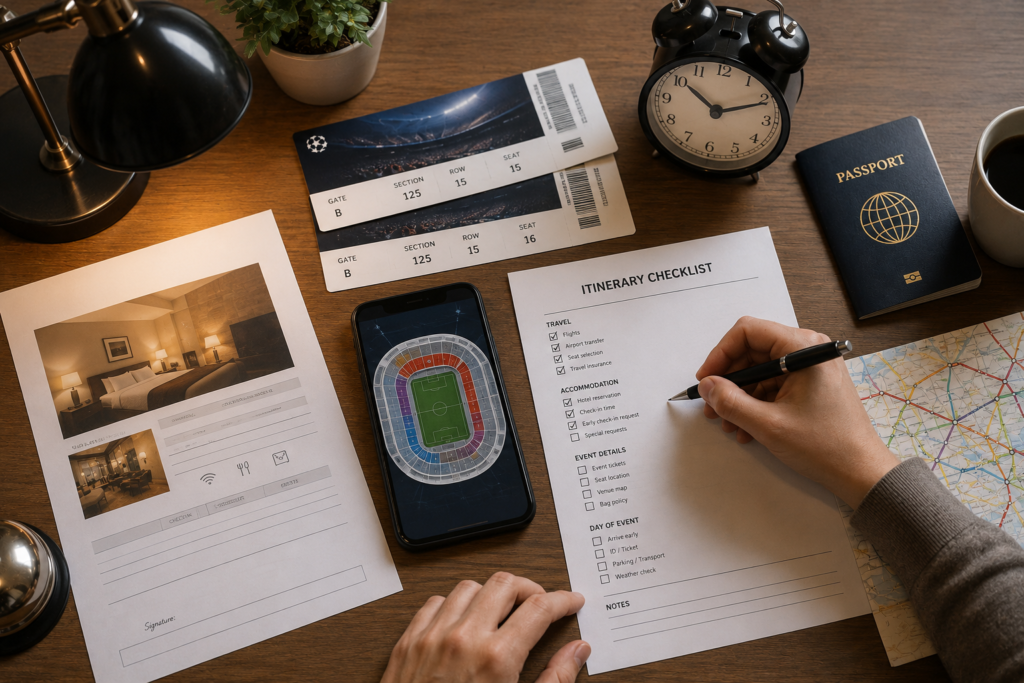
Before comparing hotels or browsing flights, establish the details that drive every other decision:
- Event date and day of week
- Venue address and exact location within the city
- Doors-open time and expected end time
- Entry requirements — ticket format, bag policy, ID requirements
- Any must-have extras: VIP check-in windows, group meetup points, pre-event dining reservations
Use the organizer’s recommended arrival time and current entrance, ticket, ID and bag rules. Add the actual journey, queues and accessible entry arrangements rather than using one stadium arrival buffer for every event.
These anchor points determine the entire structure of the itinerary before a single hotel or flight is booked.
Step 2: Choose Arrival and Departure Days With Breathing Room
The most common event travel mistake is flying in too close to the main event. It can work — but it leaves no margin for flight delays, immigration lines, traffic, or simple travel fatigue.
Arrival: If the event is the primary reason for the trip, arriving at least one full day early gives you better odds of enjoying it. That extra day lets you settle in, find the area, and arrive at the event rested rather than rushed.
If an event ends late, avoid scheduling departure on best-case crowd or traffic timings. Check the organizer’s exit plan, final transit services and the journey back to your room before choosing a next-morning flight.
For future international events, use current organizer dates and government entry guidance. Historical tournament articles can illustrate planning but do not establish future schedules or rules.
Step 3: Pick the Right Place to Stay
When searching hotels for event trips, price gets too much attention and location not enough. The smarter question is how the property fits the event flow.
Near the venue: Makes sense if your schedule centers on one major event at a single location. The savings on time, transportation, and stress can easily justify a higher nightly rate. The risk: venue-adjacent hotels are noisy, crowded, and sometimes inaccessible by vehicle once road closures take effect.
Central neighborhood with good transit: Usually the better choice for multi-day events or trips combining the event with city exploration. A hotel on a direct line to the venue, 2-4 stops away, often delivers lower rates and a calmer base without meaningful access trade-off.
What to check beyond price:
- Cancellation policy — event schedules can shift; flexibility has real value
- Resort or event surcharges — mandatory fees that don’t appear until checkout
- Check-in and checkout times relative to your arrival and departure flights
- Parking, if you’re renting a car
For the full hotel booking strategy including how to compare all-in costs and book directly, see the How to Book Hotels Without Paying Booking Fees guide. For World Cup and Olympics host city hotel strategy specifically, the Host City Hotel Booking Guide covers the event-specific dynamics.
Step 4: Match Transportation to the Event, Not Just the City
A city can have excellent transportation overall and still be difficult on event day. Streets close. Train platforms crowd. Parking fills early. Local movement needs its own planning step.
Before confirming your hotel: Map the route from that hotel to the venue at the same time of day you’ll actually be traveling. A route that looks simple at noon can be congested and slow at 5pm.
Car rental: Only helps in destinations where driving gives meaningful flexibility. In dense urban host cities, a car adds parking costs and congestion with little upside. Pre-booked transfers are often the cleaner choice for airport arrivals, hotel-to-venue runs, and late-night returns.
Rideshare: Confirm permitted pickup areas, app availability and the specific reservation price and cancellation terms. Scheduling does not universally lock the fare or guarantee a driver. Uber Reserve notes that driver acceptance is not guaranteed and prices can change in stated circumstances. Keep a workable alternative.
Public transit: Often the fastest and cheapest option on event days — but confirm the last service time if the event runs late. Trains that run until midnight won’t help if your event ends at 12:30am.
Step 5: Build an Itinerary With Shape, Not Clutter
The best event itinerary has a clear center of gravity. If the event is the headline, the rest of the trip should support it — not compete with it.
On event day: Keep the schedule light and local. Avoid stacking activities that create time pressure — a museum visit across town, a lunch reservation with no flexibility, and a shopping stop requiring multiple transfers can consume your margin fast.
On non-event days: This is where city exploration, food experiences, and neighborhood time fit naturally. Event travel doesn’t have to be all logistics — the strongest itineraries blend the event itself with a few genuinely memorable moments around it.
The principle: protect the moments you came for, then give yourself enough room to enjoy everything around them.
Step 6: Budget Beyond the Obvious Bookings
Flights and hotels are only the starting point. Event travel consistently generates higher-than-expected incidental costs:
- Transportation surges post-event
- Venue-area meal pricing (restaurants near major stadiums and arenas often price at a significant premium)
- Baggage fees on budget carriers
- Parking fees if driving
- Last-minute purchases (forgotten items, replacement gear, souvenirs)
A realistic event travel budget leaves room for the trip as it actually happens, not just as it appears on a booking screen. For groups especially — friends often agree on flight budgets but discover different expectations around hotel quality, transfers, and dining. Settling those priorities before booking is significantly easier than mid-trip.
Build the budget from current supplier quotes for your dates, including mandatory charges, transport and cancellation costs. Record what each quote covers before comparing.
Step 7: Build the Backup Plan Before You Leave
The most useful element of any event travel plan is the contingency. Event trips have hard deadlines — you may not need a backup for every detail, but you need one for the pieces that could derail the experience:
- Flight delay: What’s the latest arrival time that still works? What’s the next available flight if the original is cancelled?
- Transport disruption: If your primary route to the venue is blocked, what’s the alternative?
- Group separation: Where is the meetup point if phones die or the crowd splits everyone up?
Keep the essential details — event address, hotel confirmation, check-in time, transport plan — in one shareable place. Simple is fine. It just needs to be clear enough that everyone in your group can follow it without requiring a phone call to coordinate.
The Right Booking Order for Major Events
When demand is high, the sequence matters:
- Event tickets or registration — these justify the trip and establish the dates
- Lodging — especially near the venue, fills fastest after tickets go on sale
- Flights — book after lodging since the hotel location affects which airport transfer makes sense
- Local transport — transfers, car rental, or transit passes depending on the destination
- Activities and dining — after core logistics are confirmed
The exception: if flight options to your destination are limited, airfare may need to move earlier. If it’s a holiday weekend, car rentals can disappear before hotel inventory does. Adjust the sequence based on what’s most likely to constrain your specific trip.
Essential Internal Resources
These guides on Parandjah Travels cover the related planning layers:
- For event-specific budget and accommodation strategy: How to Save on Festival Travel
- For booking hotels in event host cities: Best Hotels for Event Travel
- For coordinating flights and hotels together: Flight and Hotel Coordination Guide
- For World Cup 2026 travel planning: FIFA World Cup 2026 Travel Guide
- For the complete trip planning framework: How to Plan a Trip on a Budget
Build the Return Plan Before Booking the Room
Record expected finish, crowd exit, the walk to the stop, last viable service and the final hotel walk. Include an alternative if the event runs late. A direct line on a map does not establish service after the event; reconfirm with the organizer and transport operator before travel.
Frequently Asked Questions
How far in advance should I book for a major sporting event or festival?
Start comparing when the event date is confirmed and identify the least flexible requirement. Check tickets, suitable rooms and transport together. No fixed month window guarantees availability or prices.
Is it worth paying more to stay close to the venue?
Compare actual room totals and the full journey to and from the venue. Walking access, noise, closures and event-end transport matter as much as distance.
What’s the most important backup plan to have for event travel?
Identify the latest practical arrival, alternative route and group meetup point. An alternative flight helps only if seats are available and fare and entry conditions allow it.
How do I handle transportation after a late-night event ends?
Check final transit services and permitted pickup zones. For a reserved vehicle, verify waiting, fare and cancellation rules. Advance rideshare requests do not universally guarantee driver acceptance or a fixed price.
Want More Free Travel Resources?
Grab the free 2026 Travel Dupes Cheat Sheet for budget-friendly destination ideas to build your next event trip around. Subscribe at the top of parandjahtravels.com to download it instantly.
Conclusion
A good guide to planning event travel itineraries comes down to protecting the moments you came for. Lock in anchor points first, choose lodging based on transit access rather than just proximity, match your transport plan to event-day realities rather than normal city conditions, and build the backup before you leave rather than improvising at the airport. The trips that feel effortless are almost always the ones where that groundwork was done before departure.

Marsha Rowe is the Founder and Travel Strategist at Parandjah Travels. She uncovers high-intent travel intelligence, specializing in slow travel frameworks and sports event logistics.