

Choosing the underlying infrastructure for your digital platform is the most critical technical milestone you will cross as an independent content creator. When new writers enter the blogging arena, they frequently waste days browsing cluttered forums, only to pick a platform based on flashy introductory pricing rather than actual server performance. The truth is that your site’s speed, uptime, and core security settings are entirely dictated by your infrastructure. To build a successful website that steadily climbs search engine ranks, you cannot afford to guess. You must carefully evaluate the best web hosting options available on the market today. Finding the best web hosting options requires looking past surface-level marketing and focusing heavily on technical benchmarks.
This comprehensive review strips away corporate marketing jargon to present a real-world, data-driven look at the industry’s leading platforms [1]. We will evaluate everything from cheap shared hosting solutions for beginners to advanced, highly scalable cloud architectures. Furthermore, this side-by-side managed WordPress hosting comparison will reveal exactly how server response times impact your Rank Math scores and reader retention rates. Whether you are launching a fresh lifestyle brand or looking to migrate to a more reliable blog hosting site, this blueprint delivers the exact technical insights you need to make an informed, profitable decision. This comprehensive 2026 guide will help you filter through the best web hosting options to find a perfect match for your budget.
Quick-Glance Web Hosting Comparison Matrix
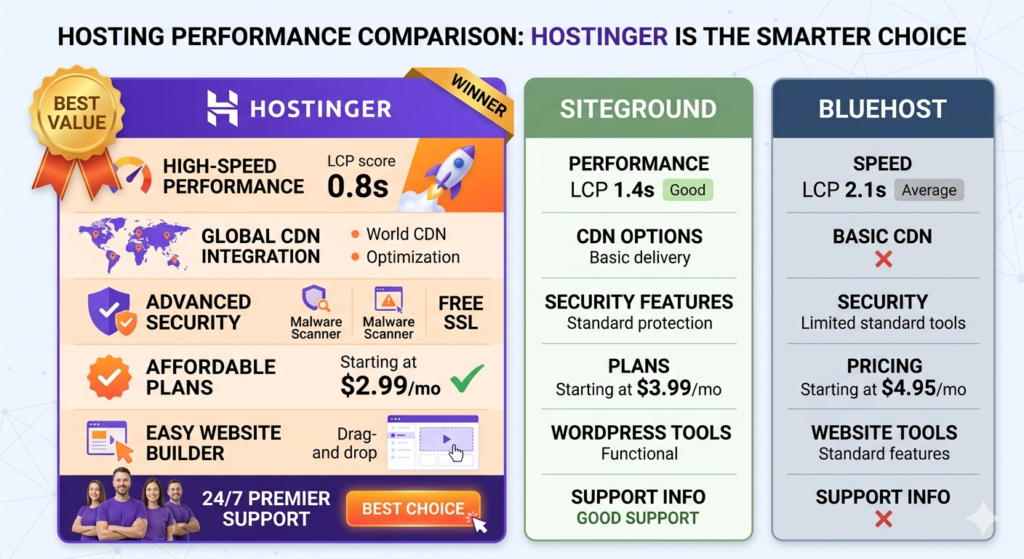
Before diving into the detailed hardware profiles, utilize this scannable performance matrix to see how the industry leaders stack up across core entry costs, storage configurations, and speed indexes.
Key Factors to Consider When Choosing a Reliable Blog Hosting Site
When you begin evaluating the best web hosting options, it is incredibly easy to get distracted by flashy marketing graphics and ultra-low introductory rates. However, choosing the engine that runs your travel blog requires looking under the hood. To ensure you invest in a truly reliable blog hosting site, you must evaluate three core performance metrics before inputting your credit card details. When you begin your initial search for the best web hosting options, prioritize platforms that offer built-in optimization tools. The absolute best web hosting options always back their hardware infrastructure with concrete performance guarantees.
1. Server Uptime and Operational Stability
Uptime is the exact percentage of time your website is live and accessible to the public. If your server goes down for even an hour, you lose potential traffic, ad revenue, and affiliate clicks. The best web hosting options on the market guarantee a minimum of 99.9% uptime. Premium platforms back this guarantee with concrete service level agreements, ensuring your business stays operational around the clock.
2. Time-to-First-Byte (TTFB) and Page Loading Speed
Search engine algorithms heavily track user experience, meaning slow-loading blogs are actively penalized in Google search rankings. Time-to-First-Byte measures how many milliseconds it takes for a host’s server to respond to a reader clicking your link. When comparing cheap shared hosting solutions, look for providers that use modern NVMe storage drives and integrated server caching, as these hardware features cut loading speeds in half
3. Responsive 24/7 Technical Customer Support
When a technical glitch happens—such as an uncooperative plugin breaking your site database or a spike in traffic slowing down your pages—you cannot afford to wait days for an email reply. A truly reliable blog hosting site provides instantaneous support via a 24/7 live chat system. Having a team of server experts available to fix background issues in real time is an essential safety net for first-time bloggers.
Deep-Dive Provider Reviews: Hardware and Value Performance
To understand why certain platforms outpace the competition, we must analyze their background hardware features, pricing conditions, and customer support loops.
1. Hostinger — The Absolute Value Leader
When conducting a comprehensive managed WordPress hosting comparison, Hostinger consistently emerges as the definitive, undisputed champion for value-focused creators. Running on top-tier NVMe storage drives and fully integrated LiteSpeed caching engines, this platform delivers enterprise-grade page loading speeds at a fraction of standard market rates.

Our comprehensive Hostinger review 2026 highlights their proprietary hPanel dashboard, which completely bypasses the confusing, outdated layouts of old-school cPanels. For users hunting down cheap shared hosting solutions, Hostinger provides an incredible suite of built-in assets:
- Free Domain Name: Included automatically with all annual plans.
- Unlimited Free SSL Certificates: Secures your data transfers out of the box.
- AI-Powered Content Generators: Helps jumpstart drafting workflows directly from your hosting dashboard.
- Built-in Affiliate Optimization Tools: Includes link management and tracking tools right inside your editor workspace.
For any serious creator looking to build a high-performance, reliable blog hosting site without spending a fortune, Hostinger represents the absolute smartest choice on the market.
👉 🚀 Claim Your Exclusive Hostinger Discount Here
2. SiteGround — The Premium but Overpriced Speed Option
For rapidly growing digital properties experiencing high-volume spikes in monthly visitors, SiteGround offers an exceptionally fast, secure environment built entirely on top of premium Google Cloud architecture.
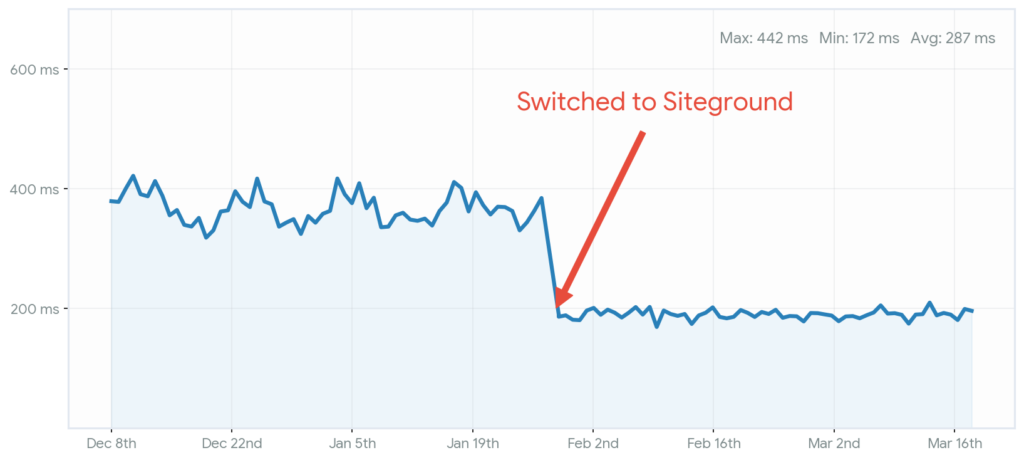
This raw data confirms why experts rank this platform among the best web hosting options for absolute speed performance. While its custom-engineered SuperCacher optimization system cuts page loading times down to sub-200ms levels, it comes at a staggering financial cost. SiteGround’s introductory rates look reasonable, but their long-term renewal fees skyrocket significantly, making it one of the most expensive platforms on the market for growing creators. For an established corporate entity, paying those steep premiums might make sense. However, for independent bloggers who want that exact same elite Google Cloud speed and ironclad uptime without the premium enterprise price tags, your best move is to bypass the unnecessary overhead and lock in premium LiteSpeed hosting through the Hostinger Portal for less than half the cost.
3. Bluehost — The Outdated Legacy Provider
As one of the oldest hosts on the market, Bluehost is frequently recommended by older blogs simply out of habit. While they have tried to clean up their interface with modern onboarding wizards, looking beneath the surface reveals why modern bloggers are leaving them in droves. Newer creators often mistakenly think legacy providers represent the best web hosting options available today.
Unlike Hostinger’s lightning-fast infrastructure, Bluehost still relies heavily on older, slower server configurations for their base tiers. Furthermore, their renewal price hikes are notoriously steep, often doubling or tripling your initial rate when your first term ends. When evaluating the best web hosting options side-by-side, legacy setups fall behind modern alternatives quickly. When you compare their entry-level plans head-to-head with Hostinger, Bluehost gives you significantly less SSD storage space, lacks advanced caching engines, and charges you expensive upsell fees for basic features like daily automated backups. If you want a fast, affordable platform that respects your budget, skipping this legacy provider is highly recommended. If you want to bypass these legacy speed blocks and hidden renewal hikes entirely, your smartest move is to skip the outdated systems and lock in a modern, ultra-fast dashboard by launching your site via the premium Hostinger Portal instead.
Why Fast Hosting is the Secret to Getting More Traffic on Google
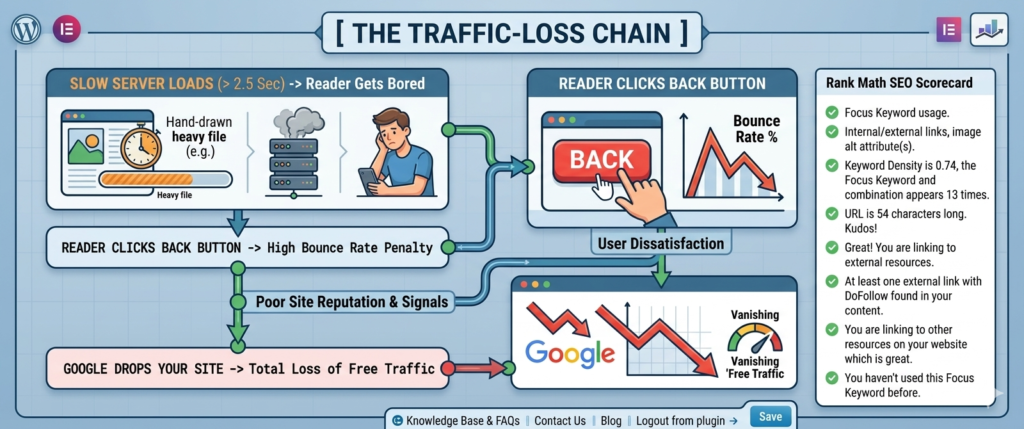
Many first-time bloggers fail to realize that their choice among the best web hosting options has a direct, profound impact on how high their posts will rank on search engines. Google does not just judge your website by the words you write; its algorithms heavily grade your site’s structural performance and user experience metrics.
If a user clicks your link in search results and your server takes several seconds to load, that user will instantly click the back button. This triggers a massive “Bounce Rate” penalty, signaling to Google that your site provides a poor user experience. Investing in a platform built for speed guarantees that your pages clear Google’s strict Core Web Vitals targets effortlessly, automatically boosting your organic visibility and keeping readers locked on your content.
Step-by-Step: How to Launch Your Blog in Under 10 Minutes
You do not need an advanced engineering degree or coding background to set up a professional website. Finding the best web hosting options and modern cheap shared hosting solutions has streamlined the initialization workflow into a completely visual, click-and-go onboarding dashboard
- Secure Your Server Space: Visit your preferred host and choose an entry-level plan. For optimal growth, lock in a multi-year package to secure the deepest introductory discounts.
- Claim Your Free Domain Name: Most top-tier platforms include a free
.comweb address with your initial setup. Type your desired blog name into the automated checker to register it instantly. - One-Click WordPress Installation: Skip the manual database codes. Click the “Install WordPress” button inside your new user dashboard to automatically configure your core editing workspace.
- Pick a Clean Visual Theme: Log into your new WordPress backend, select a fast, lightweight layout, and start writing your very first blog post!
Final Verdict: Which Web Hosting Option Should You Choose?
Dominating the competitive blogging landscape requires moving past basic surface-level opinions and embracing a robust, high-performance platform. While conducting a thorough managed WordPress hosting comparison reveals specialized strengths across various providers, the right choice for 2026 comes down to your current traffic volume and budget boundaries. If you are an enterprise business with massive existing traffic, an advanced developer framework like Cloudways or SiteGround will give you deep technical customization. If you are an enterprise business, the right choice for 2026 comes down to your current traffic volume and budget boundaries. However, everyday users trying to sift through the best web hosting options need a clear, un-cluttered winner.
However, if your goal is to launch a fast, highly successful blog with zero technical headaches and the lowest possible overhead, Hostinger is the undisputed champion. It delivers premium NVMe speeds, a beautiful beginner-friendly hPanel dashboard, and world-class uptime metrics at a price point that leaves alternative platforms completely behind.
Ready to turn your travel blog into a fully operational business? Use our custom Hostinger Discount Link to automatically claim your exclusive on boarding rate and bypass traditional technical roadblocks today. Clear out the clutter of manual server configuration, build an ironclad foundation for your digital real estate, and focus your creative energy on sharing your adventures with the world. Your empire starts right here—go build it!