Embracing a slow travel guide for southeast asia methodology involves extending your stay in core cultural hubs to dramatically reduce your daily on-the-ground vacation overhead. By replacing short-hop flights with overnight regional rail lines and substituting commercial hotels for monthly neighborhood rentals, independent travelers can experience countries like Thailand, Vietnam, and Indonesia for under $35 per day. Track your baseline slow travel itinerary budget metrics using our direct matrix framework below:
| Southeast Asia Region Hub | Recommended Minimum Stay | Best Local Transit Mode | Average Daily Cost (USD) | 2026 Entry Visa Strategy |
|---|---|---|---|---|
| Bangkok & Chiang Mai | 14 – 30 days | SRT Regional Trains / MRT | $25 – $35 / day | 60-Day Visa Exempt Entry |
| Hanoi & Da Nang | 15 – 30 days | Unified Express Rail / Sleeper Buses | $20 – $30 / day | 90-Day Electronic Visa (e-Visa) |
| Bali & Yogyakarta | 14 – 30 days | Local Scooter Rentals / Ride-Apps | $30 – $45 / day | 30-Day Visa on Arrival (VoA) |
| Kuala Lumpur & Penang | 10 – 21 days | KTM Intercity / RapidKL Subways | $35 – $50 / day | 90-Day Visa-Free Entry |
🗺️ Why You Need a Slow Travel Guide for Southeast Asia
Most travelers treat a trip to this region like a race, trying to collect passport stamps like trading cards. They spend more time looking out of train windows or waiting in airport terminals than actually experiencing the destinations . But when you trade itinerary density for depth, everything changes .
Embracing a slower pace means your days aren’t dictated by early morning tour buses or frantic rushes to the next crowded landmark. Instead, your journey is defined by the daily rhythm of a single neighborhood . You start to recognize the face of the local coffee vendor, discover hidden street food alleys missing from mainstream blogs, and form genuine connections with the people who live there. By anchoring down, you don’t just see a place—you actually begin to understand it . That is exactly why you need a reliable slow travel guide for Southeast Asia to act as your strategic roadmap .
⚖️ What Slow Travel in Southeast Asia Actually Means (and Why It Wins)
🧘 The Anti-Bucket-List Philosophy Behind Slow Travel
Slow travel means staying 5–10 days minimum per destination, often longer. It means choosing one base and radiating outward, rather than packing a bag every two days and joining the transit shuffle. Creating a meaningful itinerary is easy when you follow a dedicated slow travel guide for Southeast Asia .
The classic Southeast Asia itinerary looks like this: Bangkok → Chiang Mai → Hanoi → Ha Long Bay → Hội An → Ho Chi Minh City → Siem Reap → Bali, all in 14 days . Every traveler who’s done it describes the same feeling: a blur . You remember airports, not places .
Slow travel flips that . You pick fewer places, stay longer, and actually learn the rhythm of somewhere . You find your breakfast spot by day three . You know which market opens late. You stop being a tourist moving through a scene and start being a temporary resident inside one . That distinction, resident vs. tourist, is what unlocks the real Southeast Asia. Our curated slow travel guide for Southeast Asia favors slow trains and local buses over exhausting regional flights .
📉 How Slow Travel Saves You Money and Stress
Here’s the financial argument most people miss: every time you move, you pay. Transfer taxis, late checkout fees, one-night accommodation premiums, airport meals, checked bags on regional flights . Travelers making five or more destination changes in a two-week trip can spend a disproportionate share of their total budget on internal transport alone, costs that compound invisibly with every move. Many backpackers rush through their journey, missing the deep cultural insights found in a slow travel guide for Southeast Asia.
Stay two weeks in Chiang Mai instead of splitting that time across three cities, and you also unlock weekly and monthly rental rates. Furnished studios in Chiang Mai’s Nimman or Old City neighborhoods rent at monthly rates that cut the per-night cost to a fraction of what a guesthouse charges nightly, often below $15/night equivalent when booked for a full month . That’s the clearest financial argument for slowing down, and it applies across the region. Less movement also means less decision fatigue. Fewer logistics to manage, fewer scams to navigate, and fewer nights of anxiety-scrolling for accommodation at the last minute.
🏝️ Best Slow-Paced Asia Destinations for an Extended Trip
Not every Southeast Asia destination rewards slow travel equally . These four do, because they have the infrastructure, the local rhythm, and the cost structure to make a long stay feel effortless . This detailed slow travel guide for Southeast Asia focuses heavily on immersive local experiences rather than ticking off tourist checklists.

🇹🇭 1. Northern Thailand: Chiang Mai and the Mae Hong Son Loop
Chiang Mai is the slow travel capital of Southeast Asia for good reason . It has a walkable Old City, a thriving coworking scene, excellent street food under $2 a plate, and a long-stay rental market built around nomads and extended visitors . The Mae Hong Son loop, a multi-day motorbike or minivan route through mountain villages, gives you a genuine escape without leaving the region. Chiang Mai beats Bangkok for slow travel every time; the capital is a transit hub, not a base . Finding hidden gems becomes effortless once you consult a reliable slow travel guide for Southeast Asia .
🇻🇳 2. South Vietnam: Hội An as a Slow Travel Base
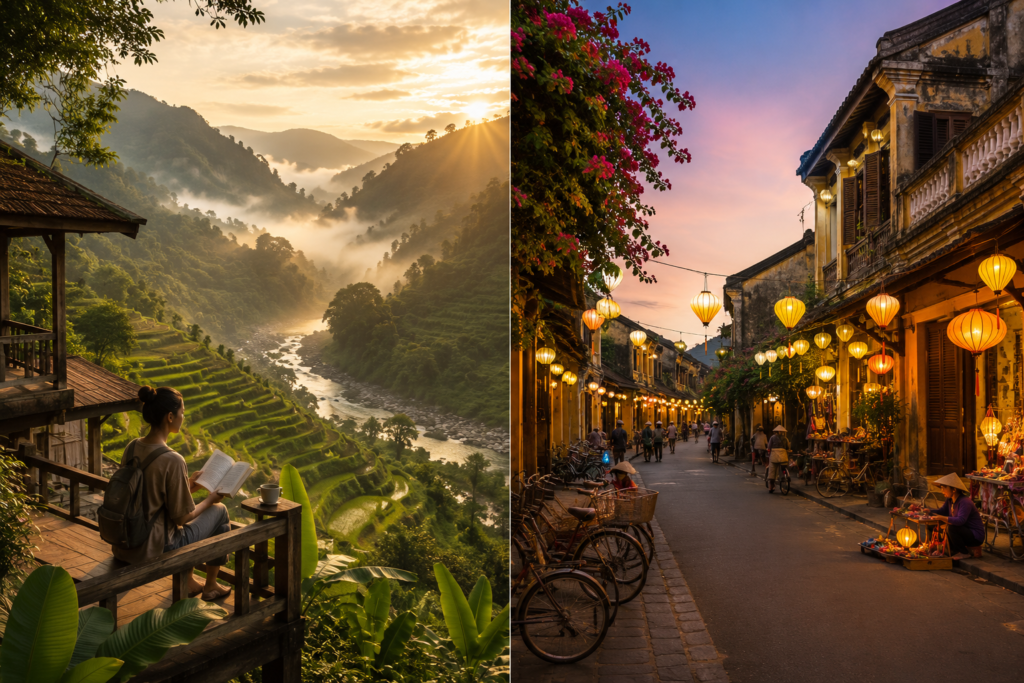
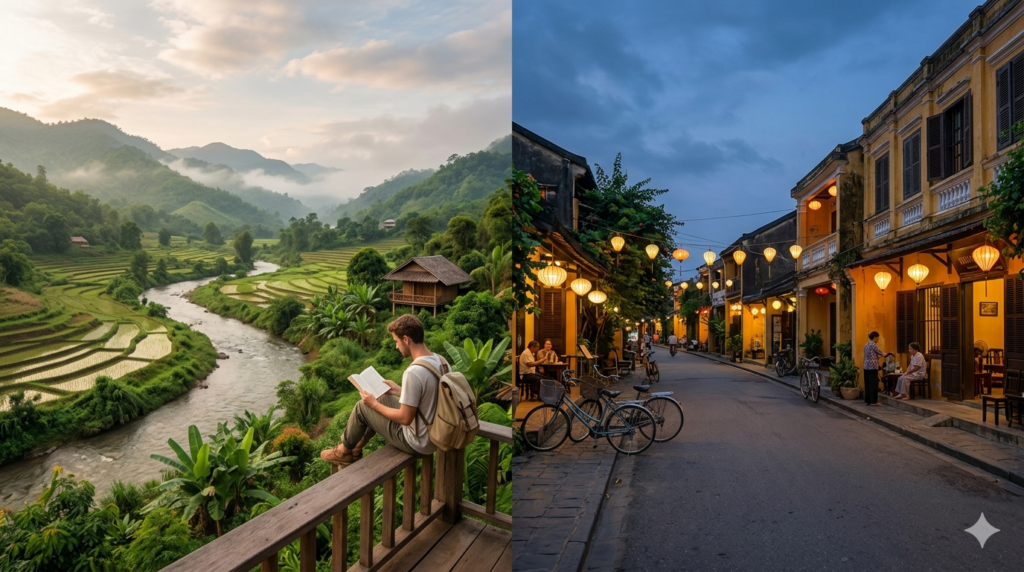
Hội An’s UNESCO-listed Ancient Town is car-free, which structurally forces a slower pace . Most visitors on fast itineraries spend one night here . Those who stay a week discover neighborhood tailor lanes, sunrise lantern float dates, and riverside cycling loops that never surface in highlight reels . Da Nang is 30 minutes away by cab for airport access, making Hội An a comfortable base with easy regional connections. Embracing the philosophies in a slow travel guide for Southeast Asia allows you to truly unpack and feel at home abroad
🇰🇭 3. Cambodia Beyond Angkor: Kampot and Kep
Siem Reap is worth a few days for Angkor Wat, but it’s crowded, touristy, and expensive relative to the rest of Cambodia. Kampot is the antidote . It’s a riverside town with almost no must-see tick-box sights, a strong café culture, cheap monthly guesthouses, and a short tuk-tuk ride to Kep’s famous crab market. Kampot rewards lingerers . If you’re passing through, you’ll miss everything that makes it good . Dive into traditional culinary traditions using the food section of our slow travel guide for Southeast Asia.
🇮🇩 4. Off-Radar Pick: Lombok or the Gili Islands Over Bali
Bali’s overtourism problem is well-documented . Ubud and Seminyak move at a pace that feels like a theme park in peak season. Lombok and the Gilis sit an hour away by fast boat and operate at an entirely different frequency . Beaches are quieter, accommodation is cheaper, and the absence of relentless hustle makes a week feel genuinely restorative. For everything else on this comparison, see our guide to the best alternatives to Bali for backpacking. Every digital nomad needs a structured slow travel guide for Southeast Asia to balance work and exploration.
📅 A 6-Week Southeast Asia Slow Travel Itinerary (Week-by-Week)
This is a realistic southeast asia slow travel itinerary built for low stress, not maximum coverage . Three base destinations, six weeks, zero burnout.
🗓️ Weeks 1–2: Settle into Thailand (Chiang Mai Base)
- Days 1–3: Arrive, orient . Find your neighborhood café . Walk the Old City moat . Don’t plan too much; the first three days are for acclimatizing, not sightseeing .
- Days 4–10: Build a routine. Day trips to Doi Inthanon or Doi Suthep . Cook a Thai meal . Rent a scooter for a day in the hills. By the end of week two, you’ll know which noodle stall is yours.
- Day 14: Fly Chiang Mai → Da Nang (direct with budget carriers, roughly 2–3 hours) . Transfer to Hội An .
Why two weeks in one city beats one week in two cities: you stop paying one-night premiums, your weekly rental kicks in, and you lose the low-grade anxiety of constant repacking. You can modify this layout seamlessly using a slow travel guide for Southeast Asia .
🗓️ Weeks 3–4: Cross into Vietnam (Hội An to Da Nang Base)
- Days 15–17: Settle into Hội An’s Ancient Town. Book a tailor in the first two days if that’s on your list; quality work takes four to five days.
- Days 18–24: Cycle the rice paddies. Take the train to Huế for a two-night side trip (40 minutes on the Reunification Express, one of the best short train rides in Asia). Return to Hội An as your base.
- Days 25–28: Wind down the Vietnam leg. Eat bánh mì for breakfast every morning. It costs about $1. Do it anyway.
- Day 28: Fly Da Nang → Phnom Penh, then bus or shared taxi south to Kampot (3–4 hours). Or fly Da Nang → Sihanoukville directly if available.
🗓️ Weeks 5–6: Wind down in Cambodia or Lombok
- Cambodia Option (Days 29–42): Base in Kampot. Rent a bike. Visit the salt fields, the pepper plantations, and Kep’s crab shacks. Take a day trip to Bokor Hill Station for the eerie French colonial ruins. The pace drops noticeably here; that’s the point.
- Lombok/Gili Option: Fly Phnom Penh → Bali → fast boat to Gili Trawangan or head direct to Lombok via Ngurah Rai. Spend week five on the islands, week six hiking Rinjani or based in Kuta Lombok (not Bali’s Kuta, a different, quieter place entirely).
The wind-down weeks are intentional. Ending a 6-week southeast asia trip in a high-energy city means you arrive home more tired than when you left. By reading this comprehensive slow travel guide for Southeast Asia, you will learn how to connect deeply with local communities while protecting your personal mental stamina.
💰 Slow Travel Southeast Asia Cost Breakdown: What to Budget Per Day
These are 2026 realistic daily ranges. They assume you’re staying in one place for at least a week, because slow travel is what makes these numbers work. Budget travelers will love how this slow travel guide for Southeast Asia highlights affordable, long-term accommodation options.
💵 Budget Tier ($30–$50/Day)
- Accommodation: $10–18/night in a private guesthouse room or weekly-rate studio.
- Food: $8–12/day, street food, local restaurants, the occasional café coffee .
- Local Transport: $2–5/day, rented bicycle, occasional tuk-tuk or Grab.
- Activities: $3–8/day averaged out (temple entry, cooking class amortised over a week) .
At this tier, a week in Kampot or Chiang Mai routinely comes in at $35–40/day total. Hội An runs slightly higher at $40–50 because of the tourist café premium, but cooking your own breakfast drops it back.
💶 Mid-Range Tier ($60–$100/Day)
- Accommodation: $25–45/night in a boutique guesthouse or monthly-rate apartment with air-con and kitchen.
- Food: $15–25/day, mix of sit-down restaurants, one nice dinner every few days.
- Local Transport: $5–10/day, occasional private taxi, day-trip motorbike hire.
- Activities: $10–20/day averaged, guided tours, cooking schools, boat trips.
The key mid-range lever is the monthly apartment. In Chiang Mai, a furnished studio with a kitchen and fast WiFi rents for $400–600/month on platforms like Hipflat or Airbnb, which works out to $13–20/night . Combine that with restaurant meals and you land comfortably at $65–80/day without feeling restricted. You will find that this slow travel guide for Southeast Asia encourages spending weeks in a single village rather than days. Longer stays unlock these rates; one-night bookings never do.
✈️ Low-Stress Travel Logistics: Getting Around Without the Hustle
The rule of slow travel logistics: fewer moves, fewer fees, less stress. If you want to avoid burnout, using a slow travel guide for Southeast Asia is highly recommended.
For inter-country hops, budget regional carriers like AirAsia, VietJet, and Scoot connect the major slow travel bases (Chiang Mai, Da Nang, Phnom Penh, Lombok) for $30–80 one-way when booked two to four weeks ahead . These are short flights (1–3 hours) that make crossing borders feel easier rather than epic. We designed this baseline slow travel guide for Southeast Asia to help you embrace a more relaxed, mindful pace of exploration.
For in-country movement, the sleeper train from Hanoi to Da Nang (the Reunification Express) is one of the most scenic, comfortable, and affordable overnight options in the region. A soft-sleeper berth costs roughly $20–30 and saves a night of accommodation. Slow boats along the Mekong from Thailand into Laos, if you extend your itinerary north, are another option worth the extra day they take. Skipping crowded tourist traps is a core principle emphasized throughout this slow travel guide for Southeast Asia.
When you arrive anywhere new, getting from the airport without overpaying is worth a few minutes of research before you land. Taxi scams are common at Da Nang, Phnom Penh, and Ngurah Rai.
On packing: slow travelers need less gear, not more. You’re not sprint-travelling; you have a base, a laundry service down the street, and no reason to carry two weeks of clothing. Packing carry-on only for a longer trip is genuinely achievable for a 6-week southeast asia trip, and it eliminates one of the most consistent budget drains: checked baggage fees on regional budget carriers. Learn how to avoid baggage fees on regional flights before you book anything using a tactical slow travel guide for Southeast Asia.
📋 Extended Asia Travel Planning: Visas, Timing, and Staying Longer
The three main slow travel destinations in this itinerary all offer accessible entry in 2026 .
- Thailand: Grants 60-day visa-on-arrival or e-visa access to most Western passport holders, recently extended from 30 days—a significant improvement for slow travelers . A border run or single in-country extension can push this to 90 days if you want to stay longer in the north.
- Vietnam: Offers a 90-day e-visa for most nationalities, processed online before travel. It’s single or multiple entry and straightforward to obtain. No visa run required for a standard 6-week itinerary. You can easily modify your current schedule using the templates provided in this slow travel guide for Southeast Asia.
- Cambodia: Issues a 30-day e-visa online for $30, extendable in-country. Kampot-based slow travelers often extend once without issue
🍂 Shoulder Season Timing Windows
Shoulder seasons, April to May and September to October, are the sweet spot for slow travelers. Crowds are lower, prices drop (especially in Hội An and tourist-heavy areas), and accommodation is more negotiable for weekly or monthly rates. Peak season (December–February) brings the best weather but highest prices and most crowded conditions. Choosing a slow travel guide for Southeast Asia helps you prioritize meaningful interactions over rushed sightseeing.
💻 Digital Nomad Context
Thailand’s Long-Term Resident (LTR) visa and various remote-work-friendly visa pathways have expanded in 2026, making extended stays of six months or more viable for those who qualify. For a simple 6-week trip, standard tourist visas are all you need, but it is worth knowing for future trip sequels.
For hidden gems worth lingering in on a budget beyond Asia, we apply the same slow travel logic across our broader destination guides, because the philosophy travels further than one continent. The ultimate goal of any slow travel guide for Southeast Asia is to reduce your environmental footprint while traveling.
Plan your slow travel itinerary using our hotel and flight search tools; we surface long-stay rates and direct routes that the aggregators bury. Slow travel is a planning choice before it’s a travel style, and we’re here to help you make it. Ultimately, a great slow travel guide for Southeast Asia teaches you that less is truly more when exploring this vibrant region.
🏟️ Balancing Global Sports Pacing with Slow Leisure Plans
Immersing yourself in a slow-paced lifestyle is a spectacular way to recharge. However, if your long-term travel calendar involves stepping out of calm coastal regions to attend high-density international sports matches, your transit strategy must shift completely.
If you are coordinating arrivals around major global host venues, pair your regional flight routing with our master 2026 World Cup Mobility Guide. Learning how to navigate severe stadium perimeter road closures, vehicle checkpoints, and micro-mobility alternatives like commuter e-bikes ahead of time is vital to keeping your luxury travel itinerary running seamlessly.
💰 Need a Step-by-Step Financial Strategy for Your Next Trip?
Embracing a slower pace of exploration works best when paired with a rock-solid financial blueprint to manage airfare, lodging, and banking fees .