The best destinations in the world in 2026 are Paris, Kyoto, Rome, Cape Town, Reykjavik, Machu Picchu, Bangkok, Vancouver, Dubrovnik, and Sydney — ranked by historical depth, natural beauty, safety infrastructure, and the quality of the experience they deliver against the crowds they attract. With international tourist arrivals now at 1.52 billion annually according to UN World Tourism Organization data, the gap between the right destination and the wrong timing has never mattered more.
This guide covers the full picture: the top 10, the 7 most visually spectacular places on earth, the best romantic picks, the 20 most visited countries by arrival numbers, and a practical strategy for going beyond the standard list when the standard list is getting too crowded.
Top 10 Places to Visit in the World
These locations deliver an exceptional mix of historical depth, distinct architecture, safety infrastructure, and natural beauty — the places where the experience justifies the trip regardless of when you go.
- Paris, France: The benchmark for art, history, and gastronomy, consistently the most visited city on earth.
- Kyoto, Japan: A preserved cultural core of ancient temples, bamboo forests, and traditional tea ceremonies.
- Rome, Italy: An open-air historical museum where modern life wraps around the ruins of an empire
- Cape Town, South Africa: Dramatic mountain ranges, Atlantic coastal roads, and diverse wine country in one city
- Reykjavik, Iceland: The staging ground for active volcanoes, glaciers, and the northern lights
- Machu Picchu, Peru: An Incan citadel nested in the Andes that defies engineering logic even now
- Bangkok, Thailand: A high-energy urban marvel of intricate shrines and extraordinary street food
- Vancouver, Canada: Modern skyline, old-growth forest, and Pacific Ocean, all within the same city boundary
- Dubrovnik, Croatia: A walled limestone city jutting directly into the Adriatic Sea
- Sydney, Australia: Harbor metropolis with iconic architecture, coastal trails, and world-class surf
The 7 Most Beautiful Places in the World
Beauty is subjective, but certain landscapes carry a visual power that’s hard to argue with. These seven earn their place on any objective list.

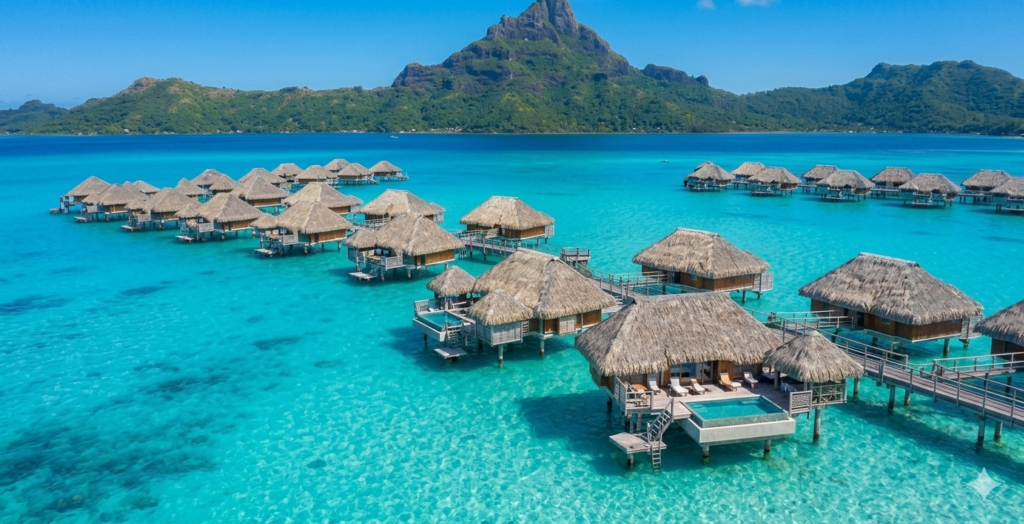
1. Bora Bora, French Polynesia
Often called the pearl of the Pacific, this destination centers around a dormant volcano surrounded by a vibrant turquoise lagoon. The barrier reef creates calm, clear waters that set the global standard for overwater bungalows and marine snorkeling.
2. Plitvice Lakes National Park, Croatia

A UNESCO World Heritage site of 16 interconnected terraced lakes, where naturally formed travertine dams create cascading waterfalls that shift from emerald green to deep sapphire throughout the day.
3. Santorini, Greece

Whitewashed cubist buildings with blue domes draped down the sheer cliffs of a volcanic caldera, facing some of the most photographed sunsets in the world over the Aegean Sea.
4. Zhangjiajie National Forest Park, China

Thousands of soaring sandstone pillars, frequently shrouded in dense mountain mist, creating the illusion of floating islands — the landscape that inspired the visuals of Avatar.
5. Amalfi Coast, Italy

Sheer mountains dropping vertically into the Mediterranean Sea, with pastel fishing villages clinging to the cliffs between terraced vineyards and fragrant lemon groves.
6. Banff National Park, Canada

Glacier-fed lakes at the heart of the Canadian Rockies showing an intense natural turquoise hue caused by rock flour suspended in the glacial melt water — Lake Louise and Moraine Lake are the definitive examples.
7. Serengeti National Park, Tanzania

Endless acacia-dotted grasslands hosting the Great Migration, the most visually spectacular display of wildlife anywhere on earth, across golden savanna stretching to an unbroken horizon.
Best Destinations in the World for Couples
Romantic travel needs a specific mix: privacy, scenery, genuine hospitality, and shared experiences that aren’t replicable at home.
| Destination | Best Romantic Experience | Vibe |
|---|---|---|
| Kyoto, Japan | Twilight temple walks, ryokan stays | Intimate, cultural |
| Amalfi Coast, Italy | Cliffside sunset dining | Classic, old-world luxury |
| Maui, Hawaii | Sunrise from Haleakala, Road to Hana | Adventure meets beach |
| The Maldives | Private sandbar dinners, overwater villas | Ultimate seclusion |
The Maldives

Each luxury resort typically occupies its own private island — pristine overwater villas, personal infinity pools, and direct access to a marine ecosystem. The complete absence of other visitors is the point.
Kyoto, Japan

Walking the historic streets of Gion at dusk, staying in a traditional ryokan, soaking in private onsen — Kyoto’s romantic appeal is about cultural depth rather than scenery, which makes it genuinely different from most honeymoon destinations.
Maui, Hawaii

The Road to Hana, sunrise at Haleakala volcano, and humpback whale watching off the coastline — Maui balances tropical relaxation with enough active exploration to feel like a real experience rather than just a beach stay.
Top 5 Tourist Places in the World by Historical Gravity
If you measure greatness strictly by historical gravity and global visitor numbers, these five cultural powerhouses stand as the most significant tourist epicenters on the planet. If you love bustling crowds and high-energy city squares, these are the best destinations in the world to visit. To build a great itinerary, try connecting a few of the best destinations in the world via regional train routes.
- The Great Wall of China: Over 13,000 miles across mountain ridges, one of humanity’s largest architectural achievements
- The Colosseum (Rome, Italy): A nearly 2,000-year-old amphitheater that remains the most evocative symbol of Roman engineering
- The Taj Mahal (Agra, India): A flawless white marble mausoleum from the 1600s, the most recognized monument to love in the world
- The Louvre Museum (Paris, France): The world’s largest art museum, housed inside a historic royal palace
- Statue of Liberty & Times Square (New York City, USA): The harbor beacon and the neon crossroads that together define the modern American metropolis
Top 20 Countries to Visit by International Arrivals
According to UN Tourism arrival data, these are the most visited nations on earth:
- France — 102.0 million arrivals
- Spain — 96.8 million
- United States — 77.1 million
- China — 65.7 million
- Italy — 64.5 million
- Türkiye — 60.6 million
- Mexico — 45.0 million
- United Kingdom — 41.8 million
- Thailand — 39.8 million
- Germany — 39.6 million
- Japan — 36.9 million
- Austria — 31.9 million
- Greece — 31.3 million
- Malaysia — 26.1 million
- Portugal — 24.6 million
- Russia — 24.4 million
- Hong Kong — 23.8 million
- Canada — 22.1 million
- Poland — 22.1 million
- Netherlands — 20.1 million
Top 50 Destinations: Beyond the Standard List
For travelers who’ve covered the obvious top 10, expanding to a global top 50 uncovers regional diversity that most popular guides miss.
The Americas & Caribbean
Patagonia (Chile & Argentina): Glaciers, turquoise lakes, and windswept grasslands at the edge of the earth
Oaxaca, Mexico: The culinary soul of Mexico, with deep indigenous traditions and mezcal production
Costa Rica: Eco-tourism pioneer with cloud forests, active volcanoes, and dual coastlines
The Galapagos Islands, Ecuador: An isolated volcanic living museum where wildlife evolved without fear of humans
Havana, Cuba: Colorful pastel architecture, vintage cars, and salsa culture in a genuine time capsule
Europe & The Mediterranean
The Scottish Highlands: Deep freshwater lochs, heather-covered mountains, and stone castle ruins.
Cappadocia, Türkiye: Volcanic tuff valleys, cave dwellings, and skies full of hot air balloons.
The Norwegian Fjords: Deep ocean inlets carved by glaciers, flanked by vertical rock walls and roaring waterfalls.
Andalusia, Spain: Moorish architecture, flamenco, and tapas in the sun-soaked south.
Reykjavik & The Golden Circle, Iceland: Erupting geysers, tectonic rifts, and glacial waterfalls in one loop.
Asia & The Pacific
Raja Ampat, Indonesia: The global epicenter of marine biodiversity, with pristine coral reefs and karst islands.
The Silk Road Cities, Uzbekistan: Islamic architecture, turquoise mosaics, and ancient desert trading squares.
South Island, New Zealand: Deep fjords, southern alps, and glacier hiking
Luang Prabang, Laos: A peaceful riverside town blending French colonial architecture with ancient Buddhist monasteries.
Bhutan: A Himalayan kingdom prioritizing cultural preservation over mass tourism
Africa & The Middle East
- Marrakesh, Morocco: Spice markets, tiled riads, and palace ruins in a sensory maze.
- Petra, Jordan: An ancient city carved directly into rose-colored sandstone canyon walls.
- The Okavango Delta, Botswana: A massive inland delta transforming desert into a labyrinthine wildlife corridor.
- Madagascar: An evolutionary island where unique landscapes and wildlife exist nowhere else on earth.
- Egypt’s Valley of the Kings: The final resting place of ancient pharaohs, with vividly colored tomb paintings carved into desert rock.
A Global Strategy for Going Beyond the List
Trying to build a personal top 200 destination list by random pins on a map leads to expensive, exhausting itineraries. Two better approaches:
Strategy 1: Map Regional Cultural Corridors
Instead of flying across continents for a single site, build around hyper-dense geographic strips where multiple world-class highlights connect by overland train or short regional flight:
- The Central European Rail Loop: Prague, Vienna, and Budapest in a single 10-day trip.
- The Indochina Trail: Angkor Wat in Cambodia, river towns of Laos, and Vietnam’s coastline overland.
- The Andean Backbone: Quito to Lima to Bolivia’s high plains following ancient Incan trail systems.
Strategy 2: Build Around a Single Passion
Shape your itinerary around one genuine interest rather than a checklist:
- Culinary travel — Penang, Tokyo, San Sebastián, Lyon, and Lima for street food and fine dining.
- Outdoor adventure — Tour du Mont Blanc, Peru’s Huayhuash circuit, Nepal’s Annapurna loop.
- Architectural history — Mayan temples of Guatemala to Art Deco streets of Miami to Ottoman mosques of Istanbul.
Key Takeaways Before You Book
To wrap up your planning, keep these core global travel trends and realities in mind before booking your next international ticket:
- Tourism is at record volume — with 1.52 billion international arrivals, the most popular sites are more crowded than ever. Booking transport and accommodation months in advance is no longer optional.
- Emerging destinations are outpacing established ones — Brazil (+37% growth), Egypt (+20%), and Bhutan (+30%) are all surging as travelers seek less saturated cultural landscapes.
- Match destination to travel style — never choose a location because it’s popular on social media. The structural setup needs to match your actual needs, whether that’s the convenience of a top-20 country or the off-grid depth of an emerging destination.
Essential Internal Resources
These guides on Parandjah Travels cover the related planning layers:
- For timing any of these trips correctly: Best Time to Visit Popular Destinations
- For finding alternatives to the most crowded sites: Day Trip Alternatives to Popular Tourist Sites
- For staying affordably in any of these cities: Where to Stay in Major Cities on a Budget
- For booking flights to get there: Travel Hacks for Saving on Flights
- For sustainable ways to travel these routes: Sustainable Travel Practices
Master Your Destination: City Budget Guides
Several of the destinations above have dedicated budget guides on Parandjah Travels:
European Budget Hubs
Madrid · Paris · Rome · Dublin · Lisbon · Budapest · Prague · Vienna · Istanbul · Amsterdam · Milan · Barcelona · Berlin
Asia-Pacific and Americas Budget Hubs
Bangkok · Tokyo · Sydney · Toronto · Singapore · Mexico City · Seoul · Buenos Aires · Cape Town · Chicago · New York
Frequently Asked Questions
What is the single best destination in the world right now?
Paris remains the most visited city on earth by international arrival numbers, but “best” depends entirely on what you’re looking for. For natural beauty, Banff and Bora Bora are hard to match. For cultural depth on a budget, Kyoto or Rome deliver more per dollar than most alternatives. For genuine off-the-beaten-path experiences, Bhutan, Luang Prabang, or the Silk Road cities of Uzbekistan stand apart.
Which destinations are growing fastest in 2026?
Brazil (+37% visitor growth), Egypt (+20%), and Bhutan (+30%) are among the fastest-growing destinations by international arrivals, according to UN Tourism Barometer data. These markets are surging as travelers seek less saturated cultural experiences outside the traditional top 10.
How far in advance should I book the most popular destinations?
For the highest-demand sites — Paris in July, Machu Picchu year-round, the Serengeti during the Great Migration — booking accommodation and key entry tickets 3-6 months ahead is the minimum. Timed-entry systems at major sites like Machu Picchu can sell out weeks or months in advance.
What’s the best strategy for visiting multiple destinations in one trip?
Build around regional cultural corridors rather than scattered individual sites. The Central European rail loop (Prague-Vienna-Budapest), the Indochina trail (Cambodia-Laos-Vietnam), and the Andean backbone (Ecuador-Peru-Bolivia) all let you see multiple world-class destinations without long-haul flights between each one.
Want More Free Travel Resources?
Grab the free 2026 Travel Dupes Cheat Sheet for budget-friendly alternatives to the most overcrowded destinations on this list. Subscribe at the top of parandjahtravels.com to download it instantly.
Conclusion
The best destinations in the world reward travelers who do two things: match the destination to their actual travel style, and time the visit to avoid the worst of the crowds. The top 10 list is a starting point, not a mandate — the top 50 and beyond is where the most interesting travel often happens. Go where the math works for your itinerary, not just where the algorithm points.
Marsha Rowe is the Founder and Travel Strategist at Parandjah Travels. She uncovers high-intent travel intelligence, specializing in slow travel frameworks and sports event logistics.