
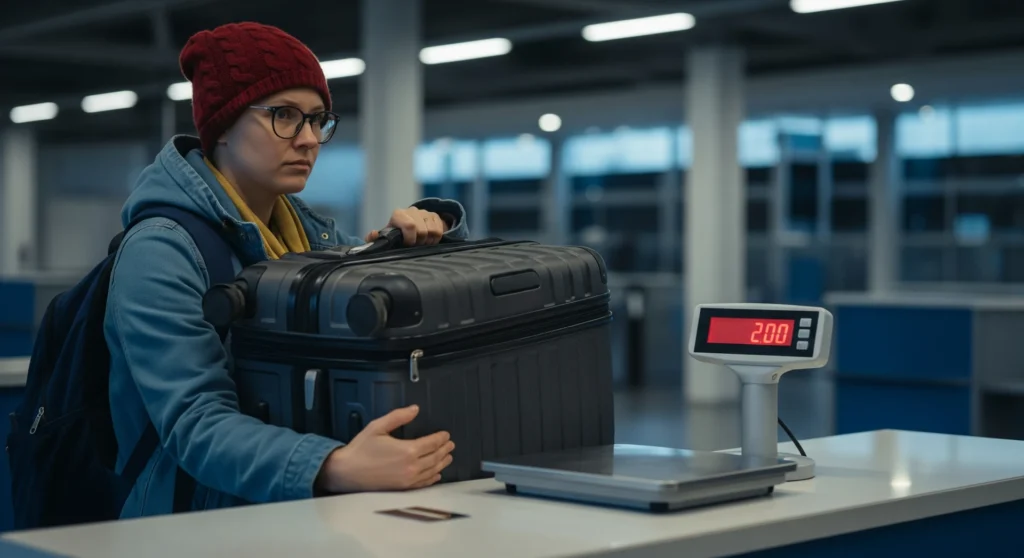
International flight baggage fees depend on the exact route, fare, bag size and weight, ticketing date and any eligible status benefit. A low headline fare may cost more once you add the bags you need. This guide shows how to compare an included-baggage fare with separate bag purchases, verify connecting-flight rules and avoid using generic airline categories as luggage limits.
This guide covers all of it.
Why International Baggage Fees Hit Harder Than You Think
Some fares separate baggage from the base ticket. Compare the total for every direction and passenger before paying. A fee seen on one route or date is not a universal US$50–80 international bag price; check the carrier’s current quote and any advance-payment discount.
The math only works in your favor if you know the rules before you book — not at the bag-drop counter.
Which Airlines Still Include a Free Checked Bag on International Routes

A full-service airline name does not tell you what baggage is included. The allowance on your selected fare and ticket is what matters.
Check the exact allowance: British Airways, Lufthansa, Air Canada and other carriers can sell fares with different bag inclusions. Some routes use a number-of-pieces system and others a total-weight system. A weight allowance does not necessarily mean two bags; confirm limits per piece and total weight.
Compare fare tiers: A Light, Basic or Hand Baggage Only fare may exclude checked bags, but names differ by airline. Compare the complete lower fare plus the bags you need with the bundle’s total and refund rules.
Low-cost carriers: Some bundles include checked baggage, so it is incorrect to say no economy tier ever does. For example, Ryanair Plus includes a 20kg checked bag. Read the selected bundle’s inclusions.
The Transatlantic vs. Transpacific Rule Gap Most Travelers Miss
For a connecting itinerary, check the baggage allowance printed on the ticket and confirmation. A single ticket can simplify handling, but it does not mean the most generous airline allowance automatically applies.
Lufthansa’s baggage rules explain that journeys to, from or via the USA or Canada generally use consistent checked-baggage rules, often determined by the first listed carrier with exceptions. Confirm the actual allowance for your ticket rather than inferring it from alliance membership.
Separate tickets may have separate baggage charges and collection requirements. Even on one ticket, customs can require collecting and re-checking a bag. Confirm both the charge and handling process with the carrier; these are different questions.
Check Existing Card Benefits Before Counting a Saving
If you already have an airline or travel card, check its current baggage terms. Eligibility may depend on the route, operating carrier, frequent-flyer number, payment method and companions on the same reservation. Do not assume every card benefit applies internationally.
For example, the Citi/AAdvantage Platinum Select baggage benefit is described for domestic American Airlines itineraries, not as a universal international baggage waiver. Travel credits also have their own eligible charges and enrollment rules. Do not count a reimbursement until you have verified your account’s current terms; an annual fee is a separate cost.
Seat Purchase and Fare Upgrade Are Different
A paid seat selection does not automatically add a checked bag or change the underlying fare rules. United lists Economy Plus as a seating option; use the baggage calculator for the actual itinerary. Compare a fare bundle that explicitly includes baggage with buying the bag separately.
Do not plan to avoid a fee by relying on a free gate check. A compliant carry-on may be placed in the hold for operational reasons, but an oversized, overweight or unpurchased bag can attract charges. Keep medicines, valuables and items required to remain in the cabin accessible.
Pack Carry-On Only: Making It Work on International Routes
The Carry-On Size Matrix
Carry-on allowances are airline- and fare-specific. Measure the packed bag including handles and wheels, and check whether the limit applies to each item or the combined cabin load.
| Item | Check before booking |
|---|---|
| Personal item | Exact under-seat dimensions and number allowed |
| Cabin bag | Whether included, dimensions and weight |
| Checked bag | Piece count or total weight, size and per-piece limit |
| Connections | Ticketed allowance and collection/re-check process |
As an October 2026 example, Ryanair’s policy lists a 40 × 30 × 20cm personal bag. Its purchased Priority option adds a 10kg, 55 × 40 × 20cm cabin bag. These are distinct allowances, not a universal airline standard; recheck before travel.
Always check the specific carrier’s current policy before buying luggage — dimensions change, and enforcement at the gate is the final word.
Packing Tactics That Make 7 kg Work
- Compression cubes can organize clothing and reduce bulk, but do not reduce its weight and add their own weight.
- Choose clothing for your needs — compare weight, drying time, comfort and cost; no fabric is best for every traveler.
- Wear comfortable travel layers and reduce unnecessary items. Do not rely on stuffed pockets or an assumed exemption to defeat the airline’s baggage rule.
For the full carry-on packing system, the Carry On Only Travel Packing guide covers the complete framework.
Booking and Routing Tricks That Bundle Bags for Free
Three specific tactics most travelers skip:
1. Compare the bundle and separate bag. Record the total for the same flights, travelers and bags. An upgrade saves money only if its added price is lower than the extras you would otherwise buy.
2. Verify every segment. Identify the carrier and baggage rule on the ticket, plus any separate-ticket connection. Alliance membership does not automatically select the most favorable allowance.
3. Get the inclusion in writing. When an agent offers a baggage-inclusive fare, confirm the bag count and weight on the issued ticket. A search result or verbal description is not enough if the confirmation says otherwise.
Essential Internal Resources
These guides on Parandjah Travels cover the related planning layers:
- For the complete flight-saving toolkit: Travel Hacks for Saving on Flights
- For budget airline total cost comparisons: Best Budget Airlines for Long Haul Flights
- For the full carry-on packing system: Carry On Only Travel Packing
- For timing flights to get the best bundled fares: Finding Flights Off Peak Season
- For the complete trip budget framework: How to Plan a Trip on a Budget
Worked Comparison: Bundle or Add a Bag?
Illustrative return-trip prices: a US$500 base ticket with a US$60 checked bag each way totals US$620. A US$580 fare including the same bag both ways saves US$40. A US$650 bundle does not save money on baggage alone. Compare cabin bags, seats and cancellation rules too, and repeat the calculation for every traveler.
Frequently Asked Questions
Which airlines include a free checked bag on international flights in 2026?
Inclusions depend on the exact fare and route, not just the airline. Check your ticket for bag count, weight and dimensions. Some low-cost fare bundles include bags, while some full-service fares do not.
Can a credit card really eliminate international baggage fees?
An existing card may offer an eligible waiver or credit, but route, operating carrier, payment and reservation conditions vary. Check the current issuer terms. Some benefits apply only to domestic itineraries.
What is the single-ticket vs. split-ticket baggage allowance difference?
Separate tickets can have separate allowances and handling requirements. One ticket does not automatically inherit the most generous carrier’s allowance; use the rule and inclusion shown on the issued ticket.
Is it ever cheaper to pay for a checked bag than to upgrade the fare?
Yes, when the standalone bag costs less than the bundle’s price increase. Compare both directions and all travelers, along with seats and change rules, before buying.
Want More Free Travel Resources?
Grab the free 2026 Travel Dupes Cheat Sheet for budget-friendly destination ideas to pair with your baggage-fee savings. Subscribe at the top of parandjahtravels.com to download it instantly.
Conclusion
Compare total ticket-and-bag costs before purchase, then save the allowance shown on your confirmation. Measure and weigh each packed bag, check separate-ticket connections and verify any existing card benefit. A paid seat and alliance membership are not substitutes for the actual baggage terms.

Marsha Rowe is the Founder and Travel Strategist at Parandjah Travels. She uncovers high-intent travel intelligence, specializing in slow travel frameworks and sports event logistics.