
As urban light pollution intensifies, a new luxury travel trend has taken over: Astro-tourism. In 2026, travelers are moving away from crowded cities to find “natural darkness.” Whether you are a professional astronomer or a casual stargazer, 2026 is the “Golden Age” of the cosmos, featuring a Total Solar Eclipse and the peak of the Solar Maximum.
Why Astro-Tourism is Booming in 2026.
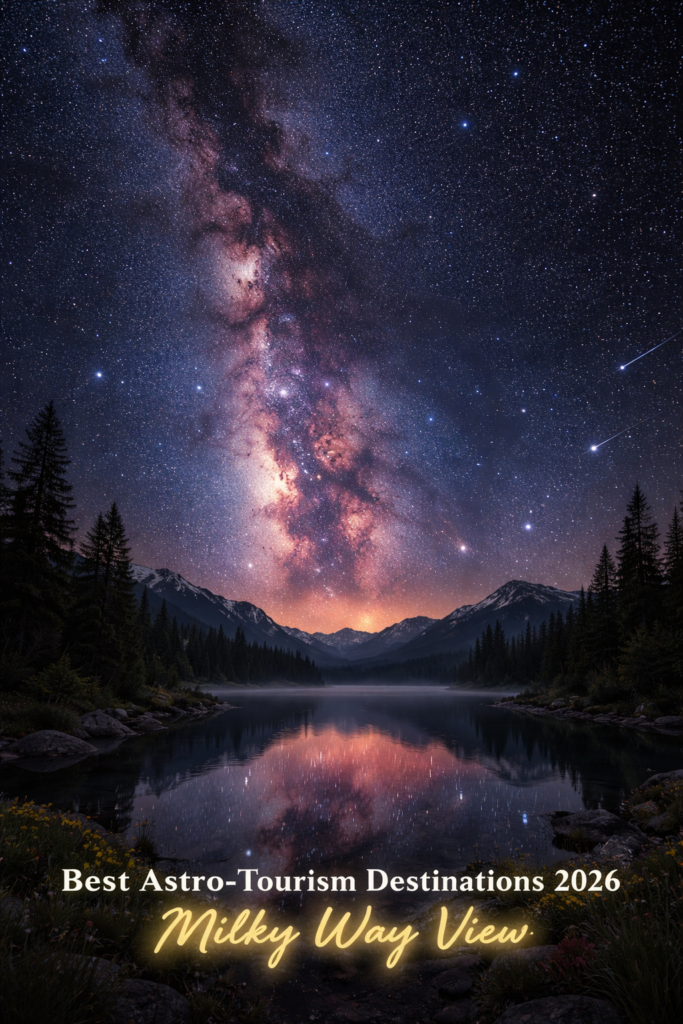
Why Astro-Tourism is Booming in 2026
1. The Solar Maximum Peak
The Sun follows an 11-year cycle, and 2026 marks the Solar Maximum. This means the Northern Lights (Aurora Borealis) will be more frequent, more vibrant, and visible much further south than usual, making it a record year for sightings.
2. The Total Solar Eclipse (August 12, 2026)
This is the most anticipated celestial event of the decade. A total solar eclipse will sweep across Greenland, Iceland, and Northern Spain. The “Path of Totality” is currently the most searched travel route on the web for 2026.
3. Mental Wellness & “Starbathing”
Much like “forest bathing,” starbathing is a recognized wellness practice for 2026. The vastness of the universe helps reduce cortisol levels and provides the “digital detox” that modern travelers crave to escape screen fatigue.
Top 5 Dark Sky Destinations for 2026
- The Atacama Desert, Chile: The world’s clearest window to the stars with 300+ clear nights.
- Teruel and Galicia, Spain: The premier location for the August 2026 Total Eclipse.
- Utah’s Mighty Five, USA: Home to the highest concentration of International Dark Sky Parks.
- Aoraki Mackenzie, New Zealand: The best place on Earth to see the Southern Cross.
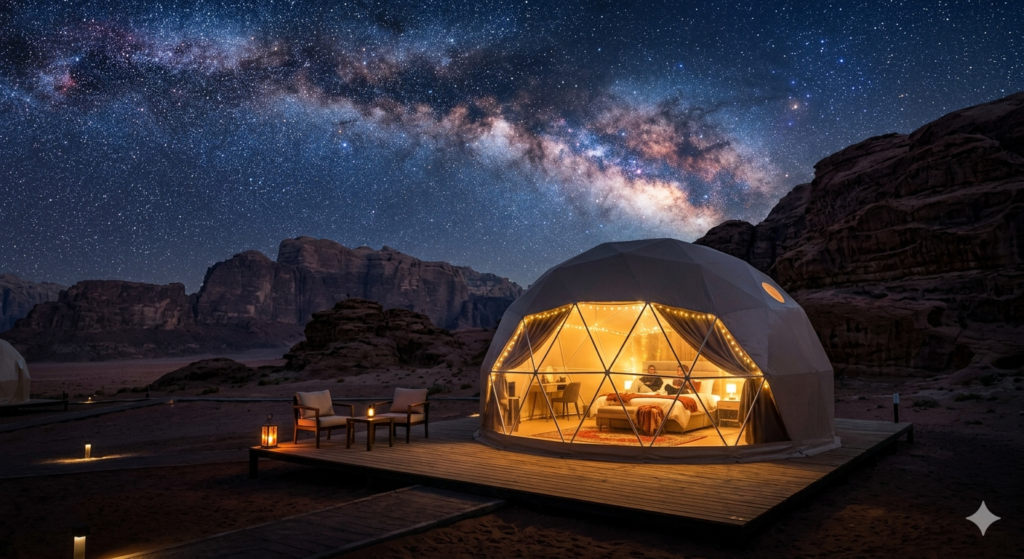
- Wadi Rum, Jordan: Sleep in a “Martian Dome” for an otherworldly celestial experience.
How to Plan Your Perfect Stargazing Trip
To reach the stars, your travel planning must be precise. Here is how to ensure your celestial journey is a success:
1. Check the Lunar Calendar
The “Golden Rule” of astro-tourism: Travel during the New Moon. A full moon acts like a giant streetlamp in the sky, washing out the faint light of distant galaxies. Aim for the window 3 days before or after a New Moon for the darkest skies.
2. Download Essential Astro-Apps
- Stellarium: A mobile planetarium that shows exactly what stars and planets are above you in real-time.
- My Aurora Forecast: Essential for tracking the probability of seeing the Northern Lights during the Solar Maximum.
- PhotoPills: The top choice for photographers wanting to align the Milky Way with specific landscapes or monuments.
3. Pack the “Dark Sky” Essentials
- Red-light Flashlight: Preserves your “night vision.” White light ruins your eyes’ sensitivity to dim stars for up to 20 minutes.
- Binoculars (7×50): Often more effective for beginners than a telescope; perfect for seeing the Moon’s craters and Jupiter’s moons.
- Thermal Gear: Even in the desert or during summer, temperatures plummet at night when you are standing still to observe the heavens.